
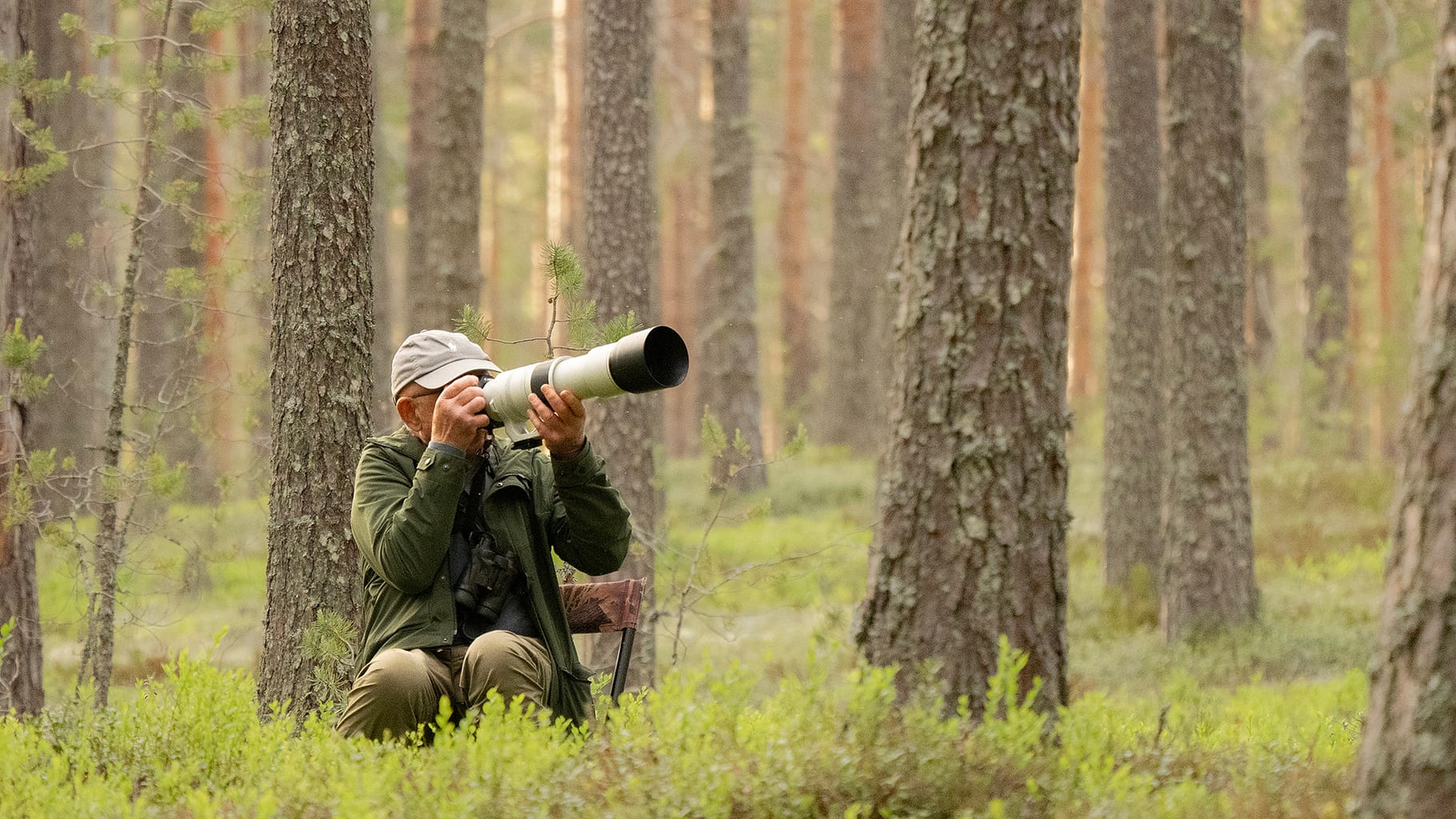
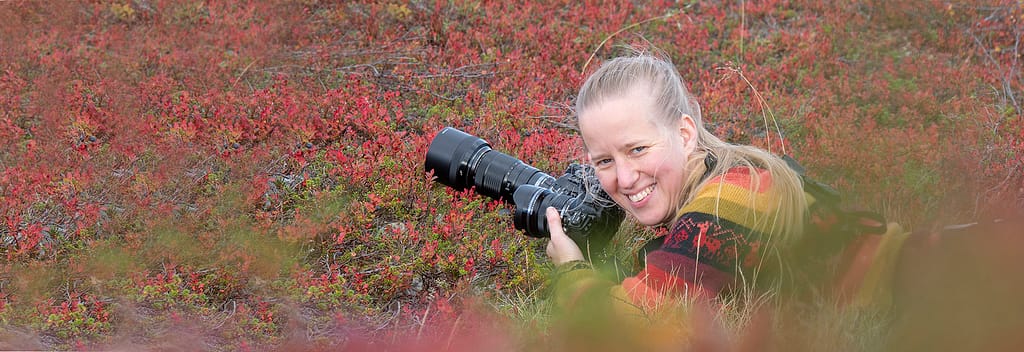
In early June, I had the pleasure of guiding a private wildlife photography trip for a good friend and client who has visited Finland several times with me.
Private trips are always a little different from group tours. With only one photographer in the field, we can make decisions entirely based on weather, wildlife activity, and opportunities that appear during the trip. Nature becomes the schedule rather than something we try to fit into a schedule.
This trip was booked only a couple of weeks before arrival, which actually worked in our favour. By early June, I already had a good understanding of what species might be available and where conditions looked promising. Before my guest arrived, we discussed a few target species, but we kept the plan intentionally flexible.
As is often the case, Great Grey Owl was the species my guest most hoped to photograph. However, this was never planned as a dedicated owl trip. One advantage of booking in early June is that we already have a fairly good understanding of what opportunities are likely to be available. At the time of booking, conditions looked particularly promising for species such as Black-throated Diver, Red-throated Diver, and Three-toed Woodpecker, all of which were of interest to my guest as well. If time and circumstances allowed, we might also have a chance with Ural Owl or Eurasian Pygmy Owl.
The trip was arranged at relatively short notice, only a couple of weeks before arrival. At that point, we already had a fairly good picture of what was happening in the field. That said, this is not always possible. During the busiest part of the season, guide availability is often limited, and last-minute bookings cannot always be accommodated. In this case, however, the timing worked well for both the wildlife and our schedules.
As always, nothing could be guaranteed. That is simply how wildlife photography works.
Although 2026 turned out to be an excellent year for owls, we did not advertise or run dedicated owl photography tours. The reason was simple: we could not reliably offer good photographic opportunities. In some cases, nest locations were unsuitable for photography, while in others the birds’ behaviour made consistent photography impossible. We shared many owl images during the season, but it is worth remembering that most of our owl sites this year were better suited for observation than for photography.
My guest was fully aware of this before the trip. For him, one of the main goals was to observe and experience wildlife in its natural environment rather than focus solely on creating the perfect image. That approach often leads to some of the most rewarding moments in the field.
Preparing for the Trip
Although our guides had been monitoring wildlife activity throughout the season, I spent additional time checking locations before the trip started.
I visited several diver lakes, checked known owl territories, and looked for active woodpecker nests. The day before my guest arrived, I also spent time searching for a suitable Great Grey Owl family.
This preparation often remains invisible to clients, but it is an important part of guiding. The more information I have before a trip begins, the better chance we have of being in the right place at the right time.
An Evening with Great Grey Owls
My guest arrived on Thursday afternoon under sunny skies. After a short break at the accommodation, we headed directly into the forest.
Our search for Great Grey Owl did not take long.
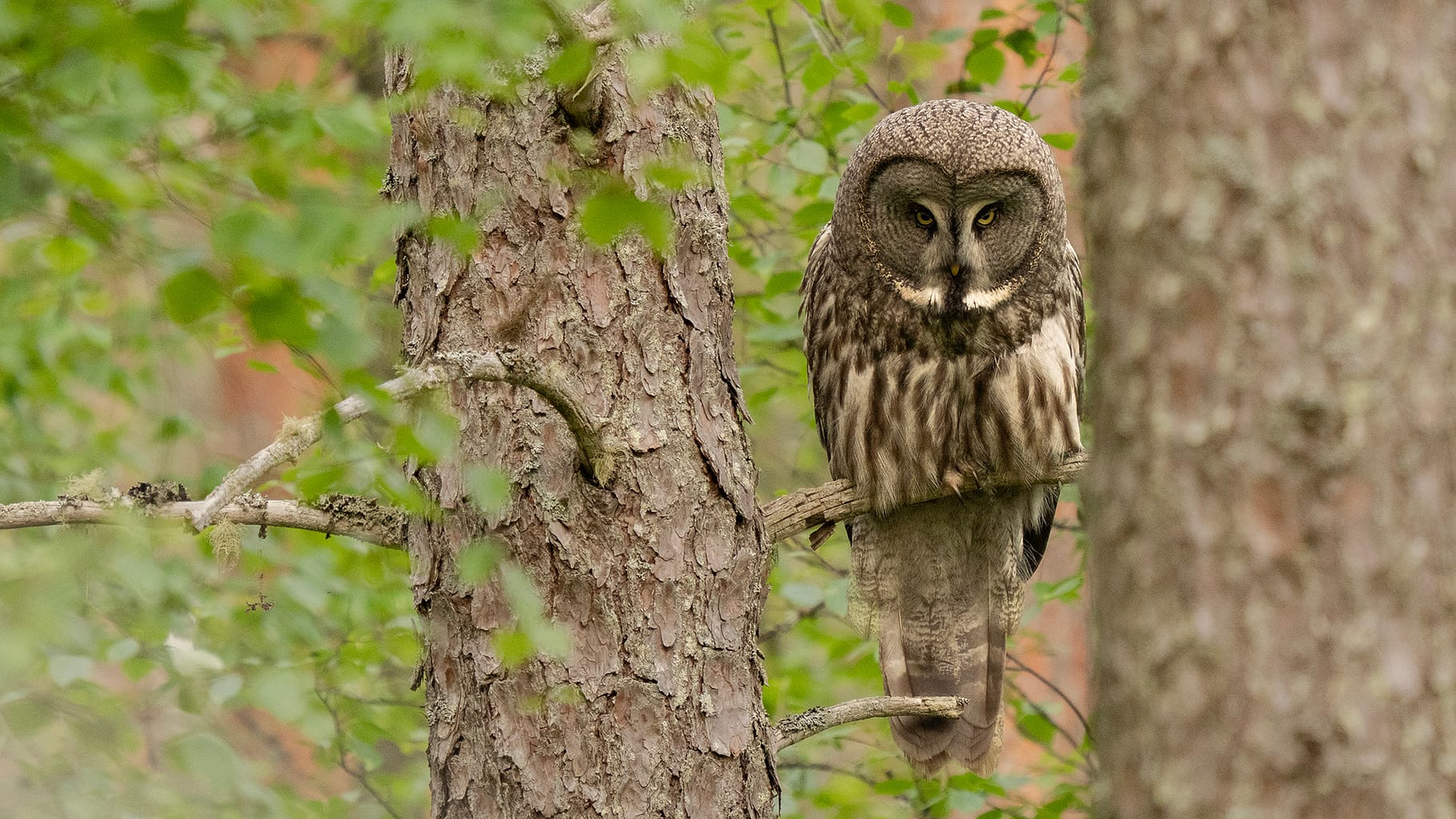
After some careful walking and observation, we located a female with three fledged young. During the evening we watched feeding events (although difficult to photograph) and saw the female hunting successfully for her growing family.
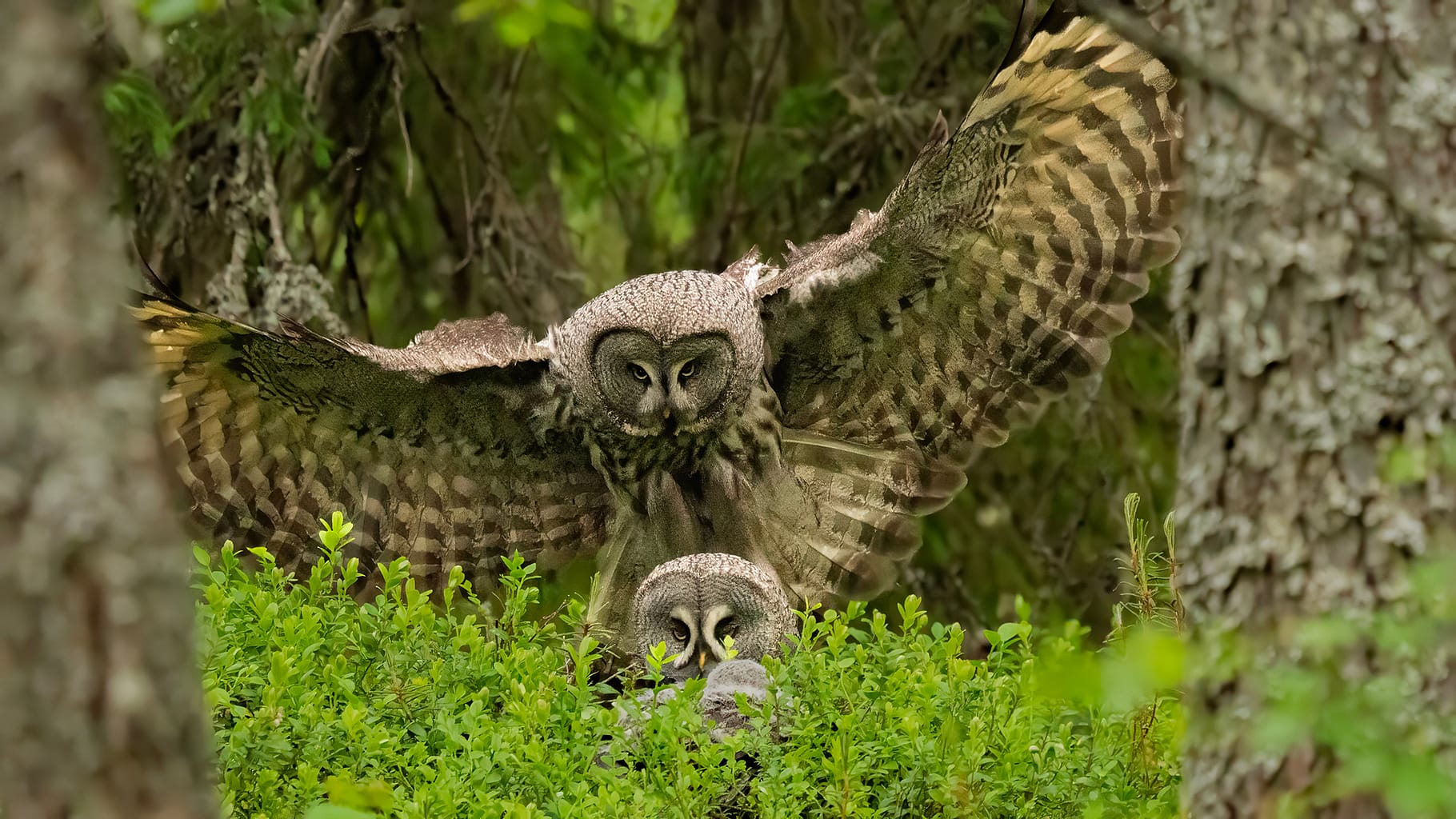
Moments like this are a reminder that distance matters.
When photographers give birds enough space and allow them to behave naturally, remarkable things often happen. This is one of the greatest advantages of private trips. With only two or three photographers present, disturbance remains minimal. When both guide and client share the same respect for wildlife, it becomes possible to witness genuine behaviour rather than reactions to our presence.
The evening could hardly have been a better start to the trip.

Rain, Patience, and Red-throated Divers
Friday brought heavy rain.
Instead of rushing out early, we enjoyed a slower morning and briefly visited a nearby Ural Owl territory. The owl was present at a nest box built by Finnature, but the viewing opportunity was not particularly photographic, so we continued towards a small lake where Red-throated Divers were breeding.
The species had unfinished business for us.
During my client’s previous visit to Finland, unusually warm weather had caused the birds to leave their breeding lake much earlier than expected. This time we hoped for better luck.
We arrived in light rain and immediately found two divers swimming calmly in the middle of the lake. The soft overcast light was beautiful, bringing out the rich reddish tones of their throats.
As the rain intensified, we retreated to the car for half an hour before returning to the lakeshore. The birds remained exactly where they had been.
We spent quite some time simply watching them.
Eventually one bird settled down to rest while the other remained nearby. As the activity slowed, we decided to move on and leave them undisturbed.
On the drive back, my client said that there was no need to photograph Red-throated Divers again on future trips. We had done so well that improving on the experience would be difficult.
As a guide, I felt the same way.
A Quiet Evening in the Owl Forest
That evening we returned to the Great Grey Owl family.
The rain had stopped, but strong winds made hunting difficult. The male failed to deliver any prey during our visit, and activity was much slower than the previous day.
Still, we spent several enjoyable moments photographing the young owls and watching the female continue her efforts deeper in the forest. At times she perched openly in the trees, giving us some good opportunities to photograph her.
One of the larger youngsters was already moving around on the forest floor, occasionally appearing in more open areas among roots and fallen trees. It never climbed particularly high, but that hardly mattered. Watching the family interact naturally was far more rewarding.
Not every session produces dramatic action, but time spent with wild animals is rarely wasted.

Three-toed Woodpeckers and a Surprise on the Lake
Saturday brought sunshine again.
We started at a Three-toed Woodpecker nest that our guides had located only a couple of metres above ground. The low position made it unusually photogenic.
After about an hour of waiting, the male arrived repeatedly with food for the chicks. The female also appeared, perching on several branches around the nest before disappearing back into the forest.
From there we continued to another lake in search of Black-throated Divers.
The previous summer had been challenging. We had photographed the species, but the birds remained distant and I never felt entirely satisfied with the opportunities we found.
This year was different.
As we approached the lake, we immediately noticed two adult divers swimming together. Then we spotted something even better—a small chick accompanying them.

For the next hour we watched the family. The adults fed the chick, escorted it across the lake, and dived a few times while the youngster seemed briefly confused when they vanished beneath the surface.
Eventually one adult and the chick returned to the nest while the second bird remained on guard nearby.
Experiences like this cannot be scheduled.
No amount of planning can guarantee a newly hatched diver chick on exactly the day you happen to visit. Sometimes nature simply decides to offer something special.

One Last Evening
After a quick meal, we returned once more to the owl forest.
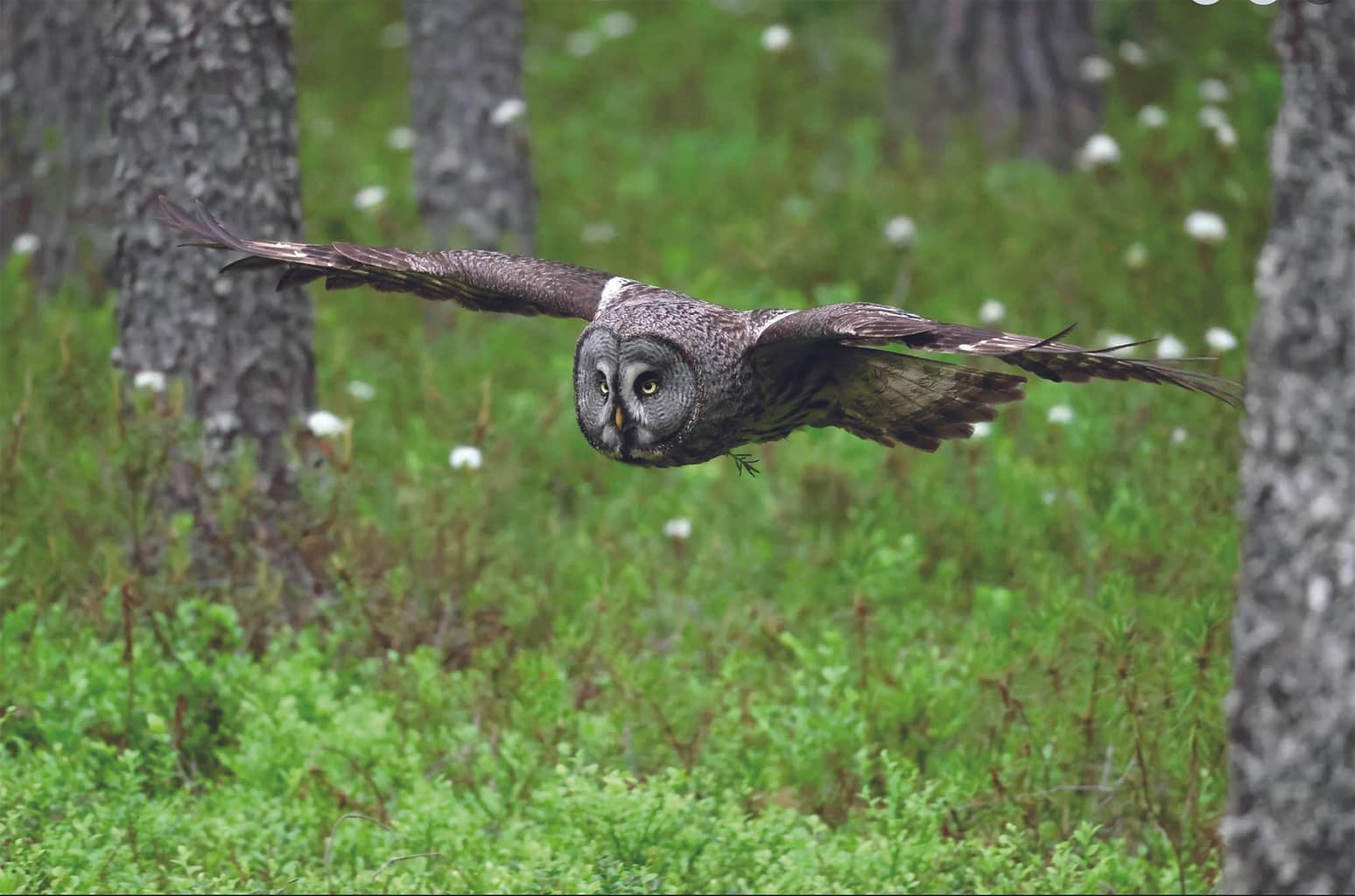
My client’s final goal was ambitious: a flight shot of Great Grey Owl in dense woodland.
Anyone who has photographed the species knows how difficult that can be.
For most of the evening it looked unlikely. Then, during the final hours of the trip, everything came together.
The owl crossed an opening in the forest, gliding perfectly through the trees.
Unfortunately, my own position was partially blocked and I missed the shot. My client, however, captured exactly the image he had hoped for.
As a guide, I naturally enjoy making good photographs myself, but seeing a client achieve a long-held goal is often even more satisfying.
We returned to the accommodation around 11 pm, tired but happy, and finished the evening with a simple meal and a glass of wine before preparing for the journey home.
Looking Back
The trip lasted only four days, yet it produced far more than photographs.
We spent time with a family of Great Grey Owls, watched Red-throated Divers in gentle rain, photographed Three-toed Woodpeckers at their nest, and experienced the unforgettable sight of a Black-throated Diver chick exploring its world.
None of those moments were guaranteed.
That uncertainty is exactly what makes private wildlife photography trips so rewarding. Flexibility creates opportunities. When the schedule leaves room for nature to decide, the best moments often arrive when least expected.

Leave a Reply