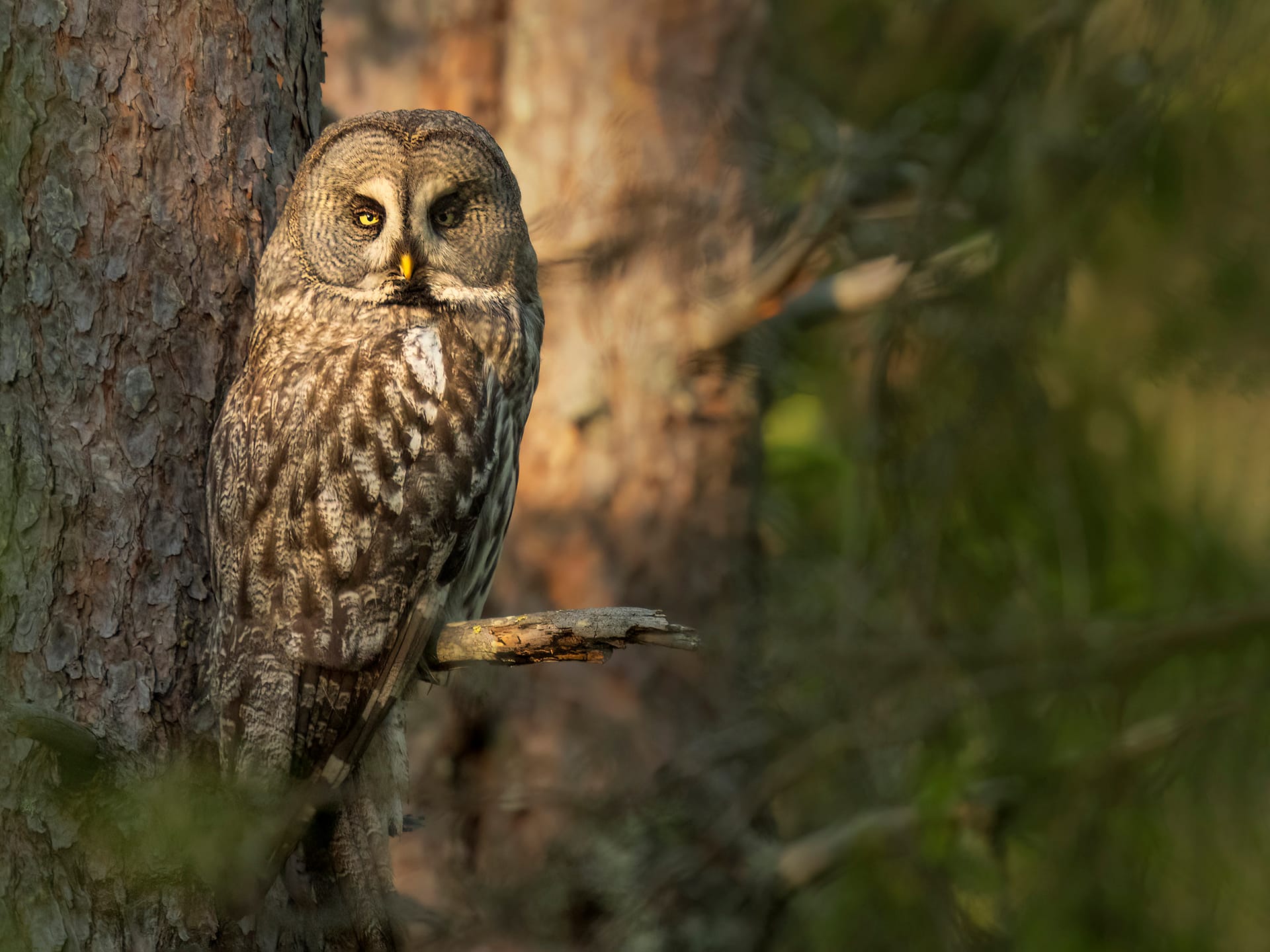
Is there a more sought-after bird for wildlife photographers visiting Finland than the Great Grey Owl?
Every year I receive emails from photographers around the world asking whether we organize Great Grey Owl photography tours. Many write months or even years in advance, saying they plan to visit Finland next March or April and would like to photograph one.
The demand is easy to understand. The Great Grey Owl is one of the most impressive birds in northern Europe. Its large facial disk, silent flight, and calm appearance make it a dream subject for wildlife photographers.
In fact, if someone could reliably offer close Great Grey Owl photography every year, they would have no trouble filling tours. Photographers would come from all over the world.
The problem is that nature does not work that way. Part of the appeal is that it is not easy. If the Great Grey Owl were easy to photograph, it likely would not attract the same level of interest from photographers.
Everything Starts with Voles
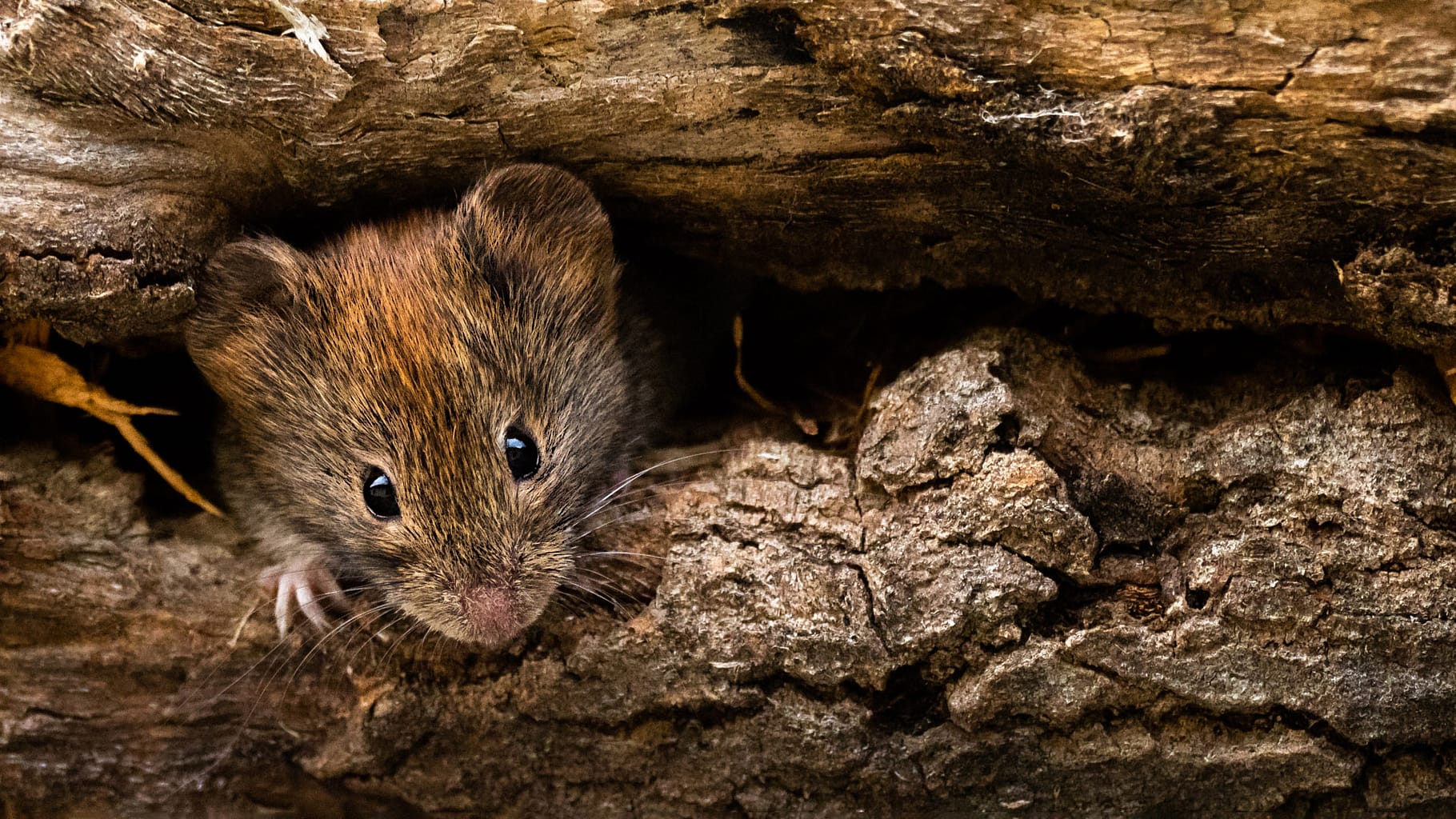
The story of Great Grey Owl photography in Finland begins with a much smaller animal: the vole.
Voles are the main prey of Great Grey Owls, and vole populations naturally rise and fall in cycles. In Finland, these cycles can vary between regions and years, but the overall pattern remains the same. Some years there are plenty of voles, while in other years they can be surprisingly scarce.
Great Grey Owls are highly mobile and follow their food. In some years, an area can hold several breeding pairs and offer excellent photographic opportunities. A year later, the same area may be totally empty.
Around Oulu, the fluctuations are often somewhat less dramatic than in many other parts of Finland. The River Oulujoki appears to separate vole populations, and the cycle is not always synchronized on both sides of the river. This can provide owls with alternative feeding areas nearby when conditions deteriorate locally.
Even so, owl numbers still vary from year to year, and predicting future seasons is never straightforward.

Why Winter Photography Is So Unpredictable
Many of the famous winter photographs of Great Grey Owls hunting over snowy fields are taken during winters when food becomes harder to find in the forest.
The situation can change dramatically during a long northern winter. Vole numbers may be high when winter begins, but populations can decline sharply beneath the snow cover as the season progresses. When prey becomes scarce in the forest, some owls are forced to spend more time hunting over open fields where finding food is easier.
Not every owl hunting over a field is there because conditions in the forest have deteriorated. Sometimes a field supports an unusually high vole population, attracting owls even when food remains available elsewhere. In those cases, the birds are simply taking advantage of a profitable hunting area.
Snow conditions also play an important role. Great Grey Owls are remarkably capable of hunting through snow, but exceptionally deep snow can make prey more difficult to reach. In some winters, alternating periods of thaw and frost create a hard icy crust on the snow surface. When the crust becomes too strong, hunting through it may be impossible, pushing owls to search for feeding opportunities elsewhere. Circumstances that are impossible to forecast months in advance.
And it is not just a question of whether Great Grey Owls hunt in open fields. A Great Grey Owl may hunt during the day or at night. If there are Northern Goshawks in the area, posing a potential threat to the owl, a bird that was actively hunting in daylight yesterday can quickly become almost entirely nocturnal. Nature is constantly changing, and wildlife rarely follows the patterns we would like it to.
The difficulty is that nobody can accurately predict when these conditions will occur. One winter may provide excellent opportunities to photograph Great Grey Owls hunting over snowy fields, while the next may see most birds remain hidden in the forest. Much depends on vole populations and snow conditions, both of which can change dramatically from year to year.
The Ethical Side of Close Owl Photography
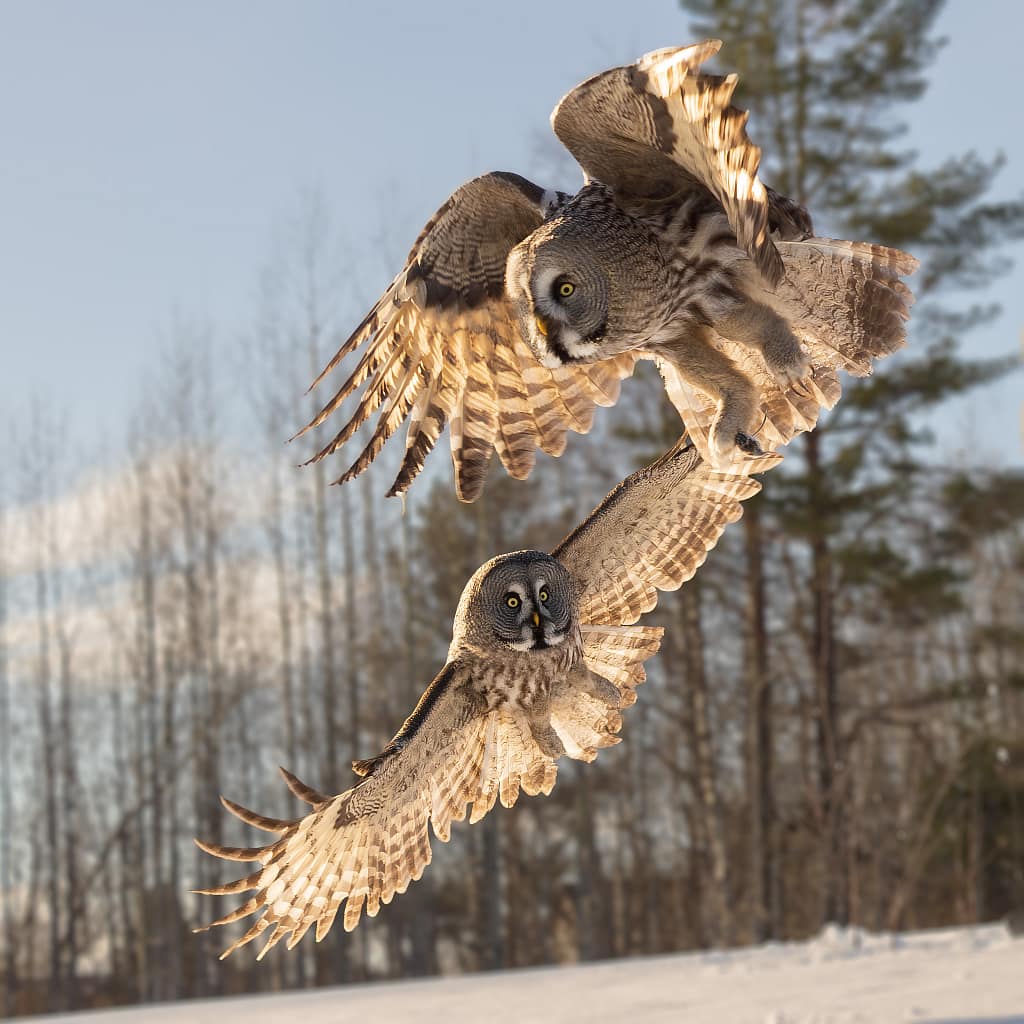
Many photographers dream of dramatic images of Great Grey Owls flying directly towards the camera at close range.
What is less obvious is that most of these photographs are created when hungry owls begin associating people with food.
In Finland, using live mice as bait is illegal. Practices that may still occur in some parts of the world should not happen here.
I am also strongly opposed to using artificial lures such as plastic mice to repeatedly attract hunting owls. A hungry owl may spend valuable energy investigating something that offers no reward. The bird pays the price while the photographer gets the image.
No photograph is worth that.
Wildlife photography should always respect the welfare of the subject. If our presence causes unnecessary stress or forces an animal to waste energy, we have crossed a line.
Difficult winters can create situations where supplementary feeding becomes genuinely important for the birds. When vole populations collapse or snow conditions make hunting extremely difficult, some owls face a real risk of starvation before spring arrives.
In these circumstances, providing food is not primarily about photography. It is about helping individual birds survive until natural prey becomes available again. The photographs may follow, but they are not the reason for the feeding.
What is often overlooked is the commitment involved. Maintaining a feeding typically requires regular visits over many weeks. It demands time, effort, and considerable expense. The people who do this successfully are usually making a long-term commitment to the welfare of the birds rather than simply looking for a quick photographic opportunity.
Summer Owls Are a Different Story
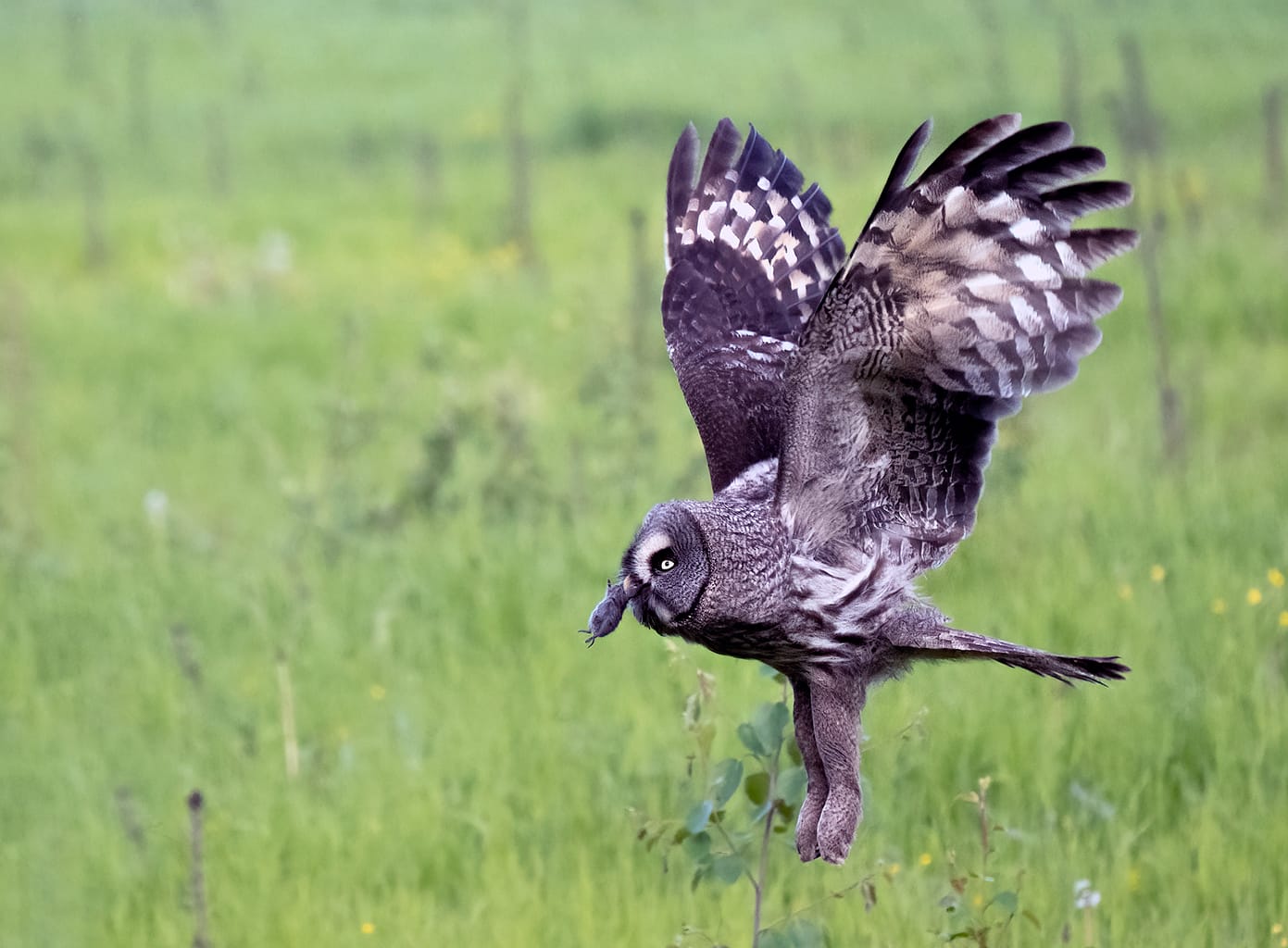
While winter photography depends heavily on food conditions and owl movements, summer photography is largely based on knowing where owls are nesting.
This is where long-term conservation work becomes important.
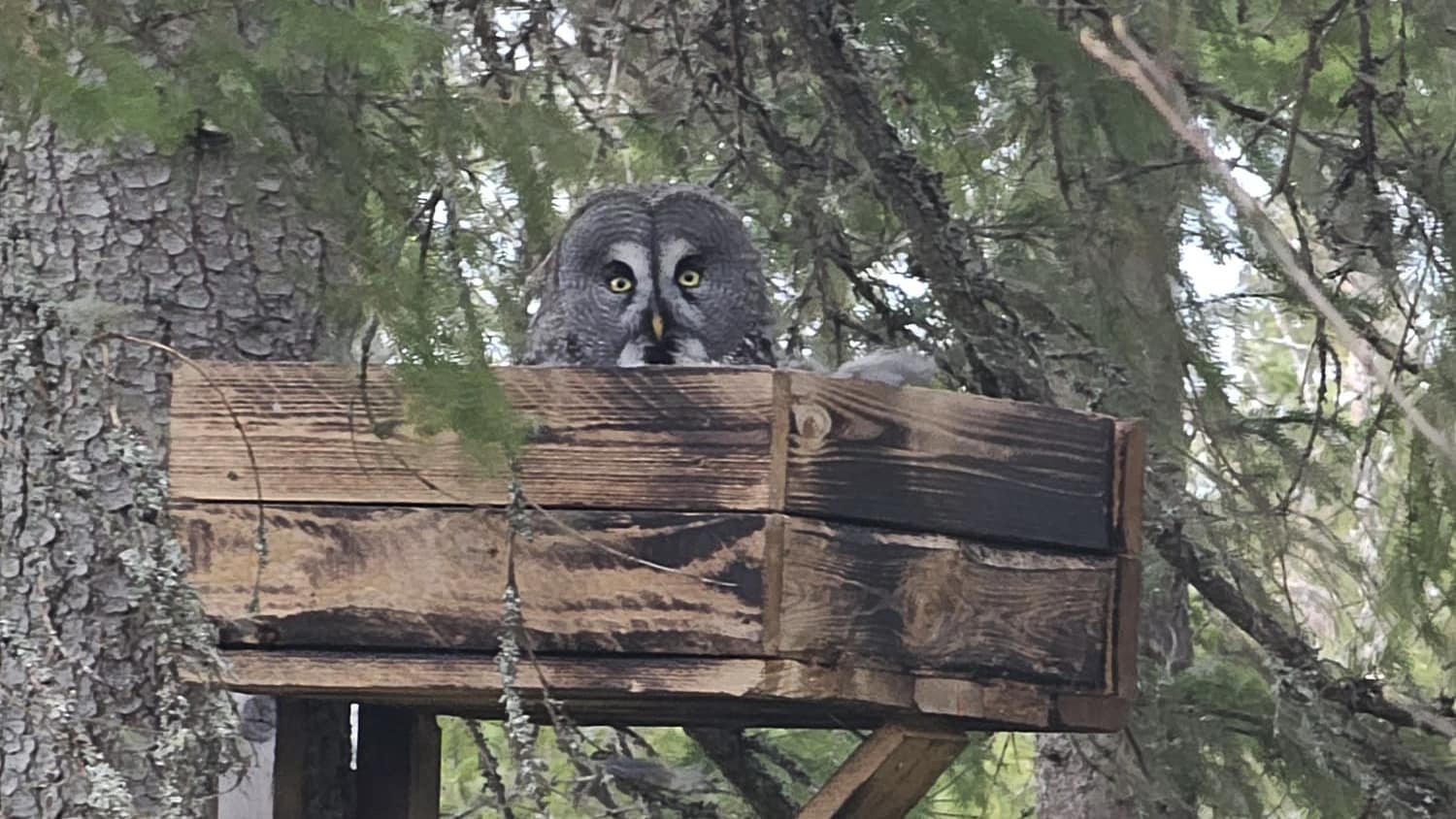
At Finnature, we install dozens of nest boxes and nesting platforms for owls every year. Many people assume Great Grey Owls require untouched old-growth forest, but suitable nesting sites are often a greater limitation than the forest itself.
Large areas of our region consist of commercially managed forest. Food can still be available, but natural nesting opportunities may be scarce. By providing nesting structures, we can help owls breed successfully.
The great grey owl is a friend of forest owners. Voles are among the most important prey species for the owl, and high vole numbers can lead to considerable damage in young forests. During the breeding season, a pair of great grey owls and their chicks consume large numbers of rodents, often well over a thousand voles over the course of a summer. By doing so, they help keep vole populations in check in a completely natural way.
Over the years we have established more than 500 nesting locations for different owl species .
Even then, nothing is guaranteed.
From Nesting Sites to Photography Opportunities
In April there is often still too much snow to begin checking nesting areas properly. Only around late April and early May can we start searching systematically for occupied sites.
Every spring our guides spend weeks in the field locating nesting owls and monitoring breeding activity. By early May we usually have a much clearer picture of what kind of season lies ahead.
Finding a nest is only the beginning. A nesting owl does not automatically create the kind of photographic experience we want to offer.
Most photographers are not interested in simply seeing an owl sitting deep inside a nest box or high on a nesting platform. Equally important is the behaviour of the individual bird.
Some owls tolerate people remarkably well, while others remain cautious and clearly show signs of disturbance when approached. An owl that is uncomfortable with human presence is not suitable for photography, regardless of how easily the nest can be found.
In many cases, an owl can be observed from a considerable distance through a spotting scope without causing any disturbance, but that does not mean photographers should move closer. The appropriate distance depends entirely on the individual bird and how it responds to people.
For this reason, locating nests is only one part of the work. Every site must be evaluated carefully to ensure that photography can take place without affecting the welfare or behaviour of the owls. Only a small proportion of nesting sites ultimately provide the kind of ethical and high-quality photographic opportunities we are looking for.
Part of responsible guiding is recognizing those differences and adapting accordingly.
This is also why nesting locations must remain confidential. Once sensitive information begins spreading, it becomes impossible to control how people behave around the birds. Repeated disturbance can affect breeding success and ultimately threaten the welfare of the owls. No image is worth risking that.
Social Media Doesn’t Show the Full Picture
When people see owl photographs online, it is easy to assume that Great Grey Owls and photography opportunities are everywhere.
The reality is very different.
Seeing an owl through a spotting scope during a birdwatching tour is not the same as providing a high-quality photographic opportunity. Sometimes we find an owl sitting fairly close in a tree and get nice shots, somedays we do not.
Neither situation is something I would feel comfortable marketing as a guaranteed photography experience.
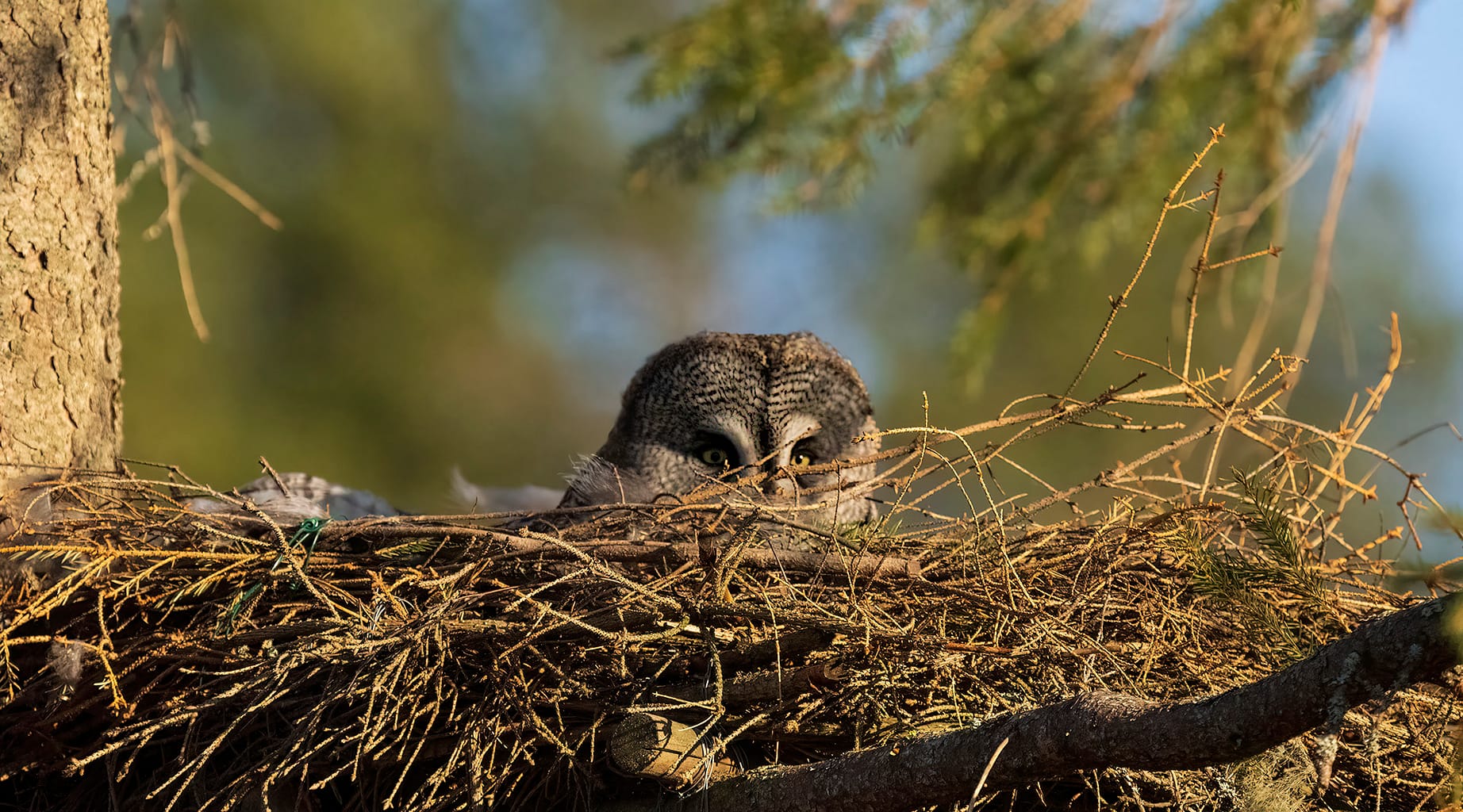
Social media naturally shows the successful moments. It rarely shows the countless occasions when an owl is present but remains hidden deep in the forest, offering little more than a glimpse of its tail through the branches. Nor does it show the seasons when conditions simply do not produce the kind of photographic opportunities people dream about.
The same applies to client photographs and testimonials. During exceptional owl years, we receive many images, stories, and enthusiastic reports from photographers who have enjoyed remarkable encounters. In more challenging years, when owls are difficult to find or difficult to photograph, there is naturally less to share.
That does not mean good opportunities disappear entirely. Even in difficult seasons, some groups are fortunate enough to encounter excellent owl photography. The difference is that these opportunities become less predictable and cannot be expected for every tour.
Why We Don’t Sell Great Grey Owl Tours
The challenge is not a lack of owls. The challenge is uncertainty.
When our photography tours are launched a year or more in advance, nobody can reliably predict what the Great Grey Owl situation will look like the following spring. We do not know whether the birds will be easy to find, whether they will be hunting in photographable locations, or whether we will discover nesting sites that allow photography to be conducted responsibly.
It would be very easy to market dedicated Great Grey Owl photography tours. They would probably sell out quickly. The difficult part is delivering the experience people expect.
This occasionally causes confusion. Over the years, prospective guests have asked why some international tour operators advertise Great Grey Owl photography in Finland while we do not. In some cases, we are even the local partner operating the Finnish portion of those tours.
Usually the issue is not bad intentions. Rather, many people underestimate how difficult Great Grey Owl photography really is. Seeing a Great Grey Owl is one thing. Finding a bird that can be photographed ethically, safely, and in a way that meets photographers’ expectations is something entirely different.
We prefer to be realistic. Some years provide excellent Great Grey Owl photography opportunities. Other years do not. Rather than promising something we cannot control, we believe it is better to give photographers an honest picture of what nature may offer during a particular season.
Many of the best Great Grey Owl photographs are not taken on dedicated owl tours at all. Instead, they are taken during wildlife photography trips that were booked long before anyone knew what the owl season would look like. The difference is flexibility. When conditions favour Great Grey Owls, we focus on owls. When they do not, we focus on the species and situations that offer the best photographic opportunities at that particular moment.
That is often how successful wildlife photography works. The strongest images come not from forcing a particular outcome, but from being prepared to take advantage of whatever nature happens to offer.
After more than three decades of organizing wildlife photography tours, we at Finnature have learned not to promise what nature itself cannot promise. Our goal has never been to make the easiest sale. Our goal is to create realistic expectations and provide the best possible experience under the conditions each season gives us.
And perhaps that is also part of what makes the Great Grey Owl so special.
If photographing one were easy and predictable, much of the fascination would disappear. The encounter means something precisely because it cannot be scheduled, ordered, or guaranteed.
When a Great Grey Owl finally appears over a snowy field or emerges silently from a northern forest, the moment feels memorable because it was never certain to happen.
And that is something no marketing promise can ever provide.

Leave a Reply