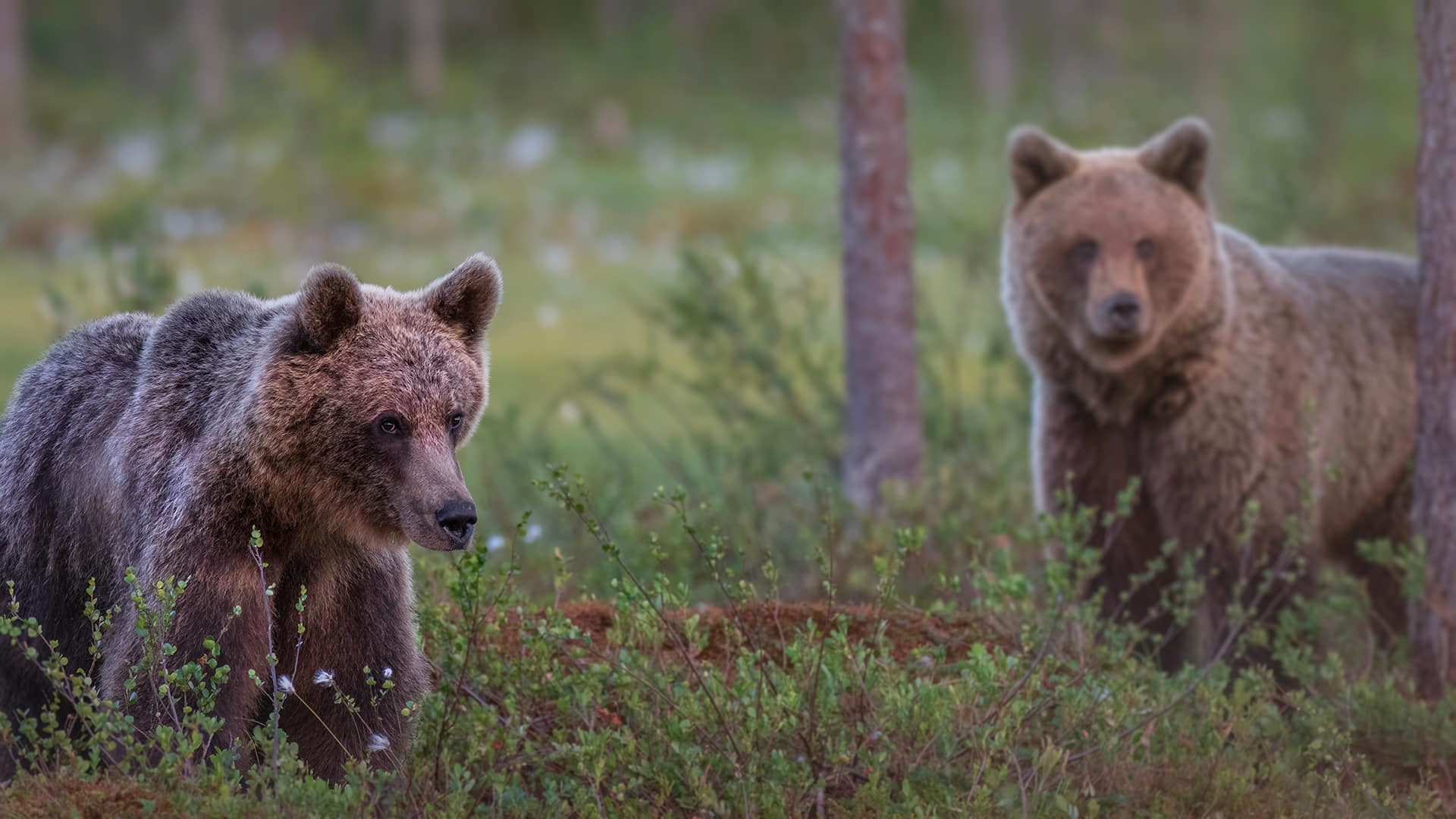
When should you visit Finland for bear photography?
They are probably one of the most desired wildlife photography subjects in Finland—not because they are the most difficult to photograph, but because almost everyone feels a connection to them.
We grow up with bears. From Winnie-the-Pooh and Paddington Bear to traditional European folk tales, bears have always been part of our imagination. They are powerful animals, yet somehow familiar.
Seeing a wild brown bear for the first time is therefore much more than simply adding another species to a list. For many visitors, it is the experience they have travelled to Finland for.
Naturally, one question comes up again and again:
When is the best time to visit Finland for bear watching and photography?
The honest answer is that there isn’t one perfect time.
Every part of the bear season offers something different. Some photographers dream of seeing bears walking through fresh spring snow. Others hope to watch tiny cubs exploring the world for the first time. Some prefer the soft light of midsummer nights, while others wait for the rich colours of autumn.
The best time to visit depends on the kind of experience you are looking for and of course the best time is when you have holiday.
After many years of guiding wildlife photographers in Finland, I’ve learned that every season has its own highlights.
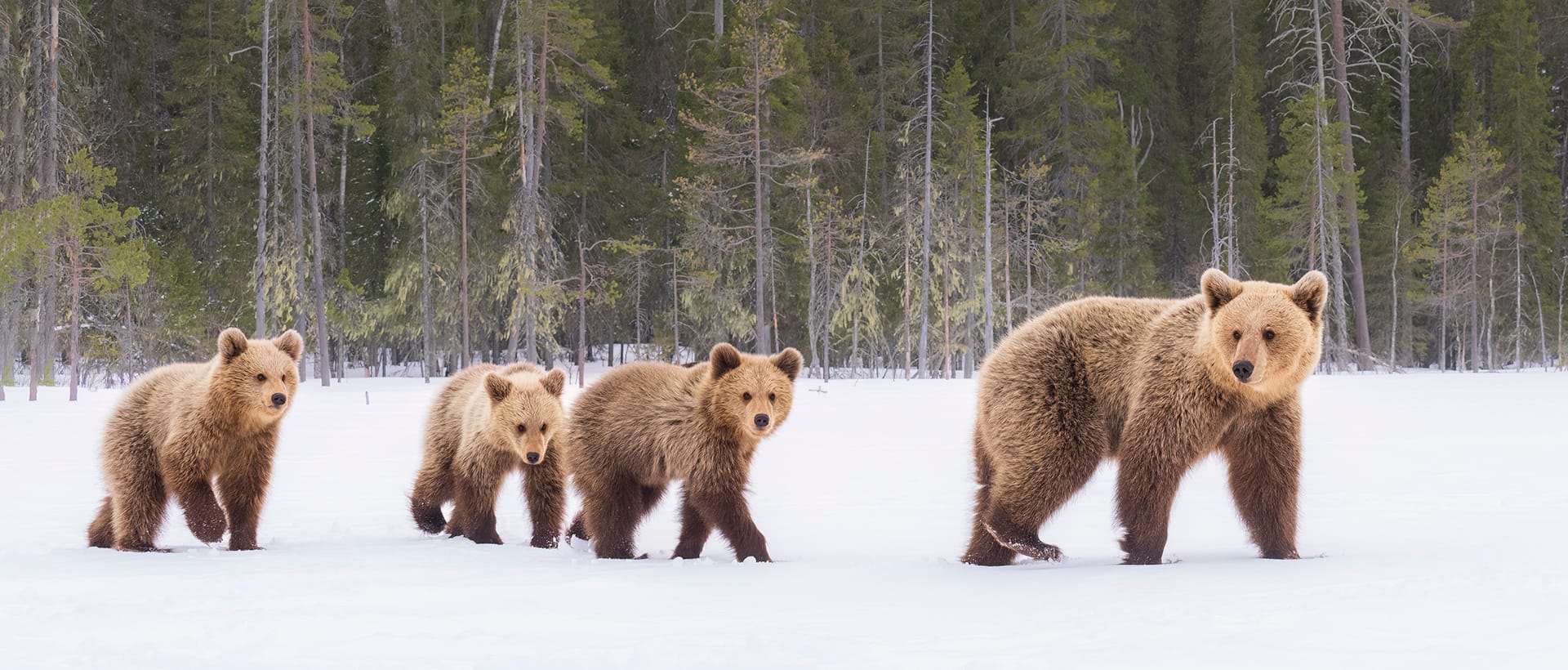
Bears on snow – late April
The bear season usually begins around the second half of April, although the exact timing depends on the spring. During exceptionally warm years, bears may appear even earlier.
For our own season planning, we normally consider around 20 April to be the safest starting point. When trips are booked months in advance, predicting Finnish spring weather with complete accuracy is impossible.
After spending five to seven months in their winter dens, brown bears have lost a significant amount of body weight. Adult bears may lose 20–40% of their weight during hibernation, making the first weeks after emerging an important period for feeding.
This is one reason why bears often visit feeding sites eagerly in spring.
Late April also offers one of the most unique photographic opportunities in Finland: Brown Bears on snow.
Along the eastern border, snow often remains well into early May. During good years it is possible to photograph both bears and wolves surrounded by snow while the first signs of spring are already appearing.
However, recent springs have become increasingly unpredictable. Some years the snow disappears much earlier than expected, while in others it lasts well into May. If photographing bears on snow is your main goal, it is worth planning your trip carefully and accepting that nature doesn’t always follow the calendar.
The season is short, but it produces images that simply aren’t possible later in the year.
If you visit this early, it’s worth remembering that many photography hides are still quite basic. Overnight sessions are common, heating is usually minimal, and temperatures can easily drop below freezing. Warm clothing is essential.
Road conditions can also be challenging as the snow melts. Many hides are reached by long forest roads that become soft during spring thaw, so a four-wheel-drive vehicle is often the safest option.
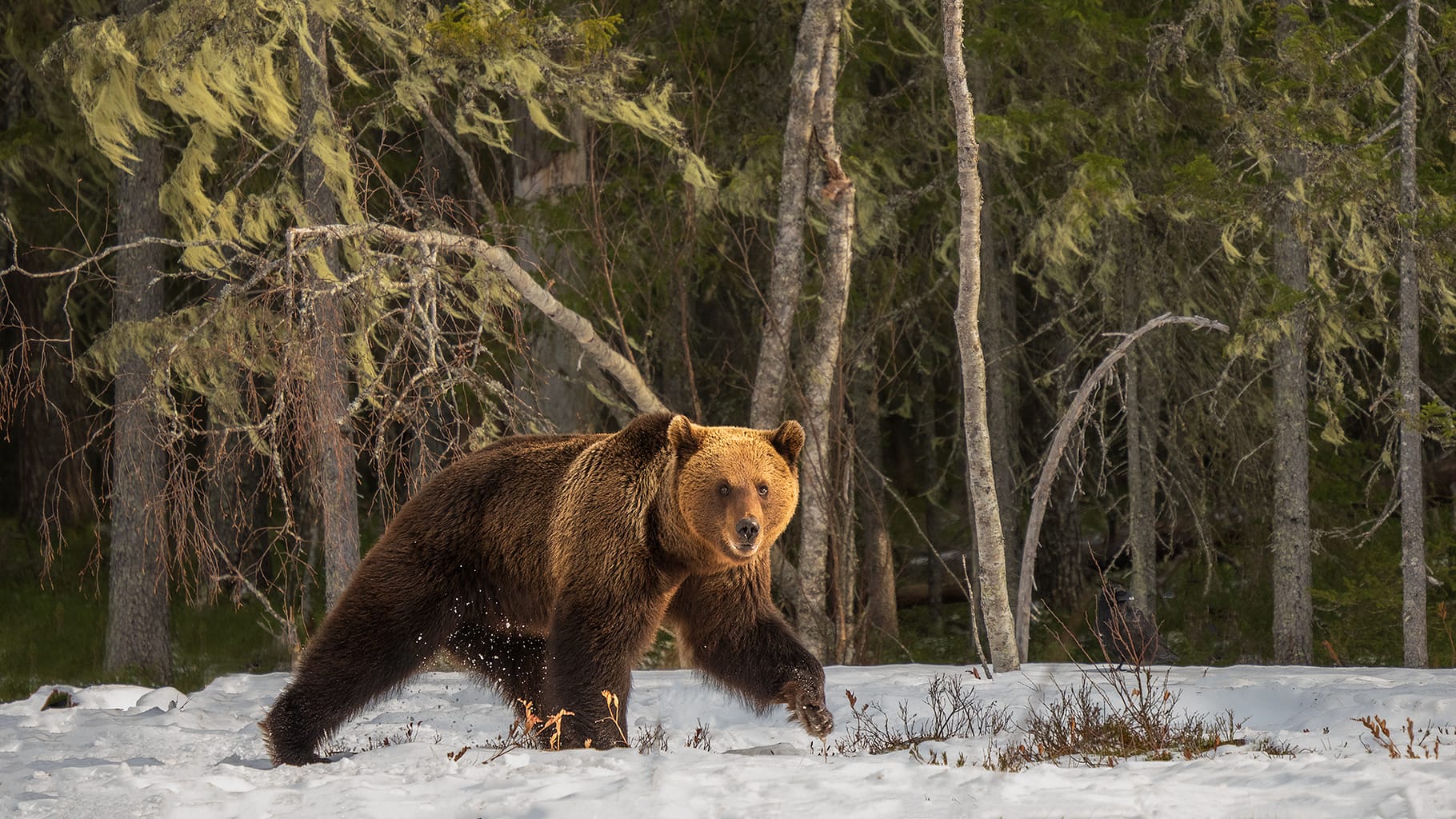
May – The Beginning of the Breeding Season
During May, the behaviour of bears gradually begins to change. As spring progresses, Finland’s brown bears move towards the breeding season, which typically extends from late May into July.
Large males still visit feeding sites, but as the mating season approaches, some individuals begin spending more time searching for receptive females and competing with rival males. This shift is gradual rather than sudden, and it varies from year to year.
For photographers, this means that bear activity at hides can become a little less predictable towards the end of May. Most evenings still offer good chances of seeing bears, but quiet nights become slightly more common as some males range more widely in search of females.
Brown bears mate between late May and July, but the fertilised egg does not immediately develop. Instead, bears use delayed implantation, meaning the embryo only begins developing in autumn if the female has accumulated enough fat for the winter. Cubs are then born inside the den during January or February while the mother is still hibernating.
At the same time, the Finnish forest changes rapidly. Fresh green leaves appear almost overnight, and the landscape looks completely different from just a few weeks earlier. Mosquitoes also tend to arrive towards the end of May, adding another unmistakable sign that early summer has arrived.
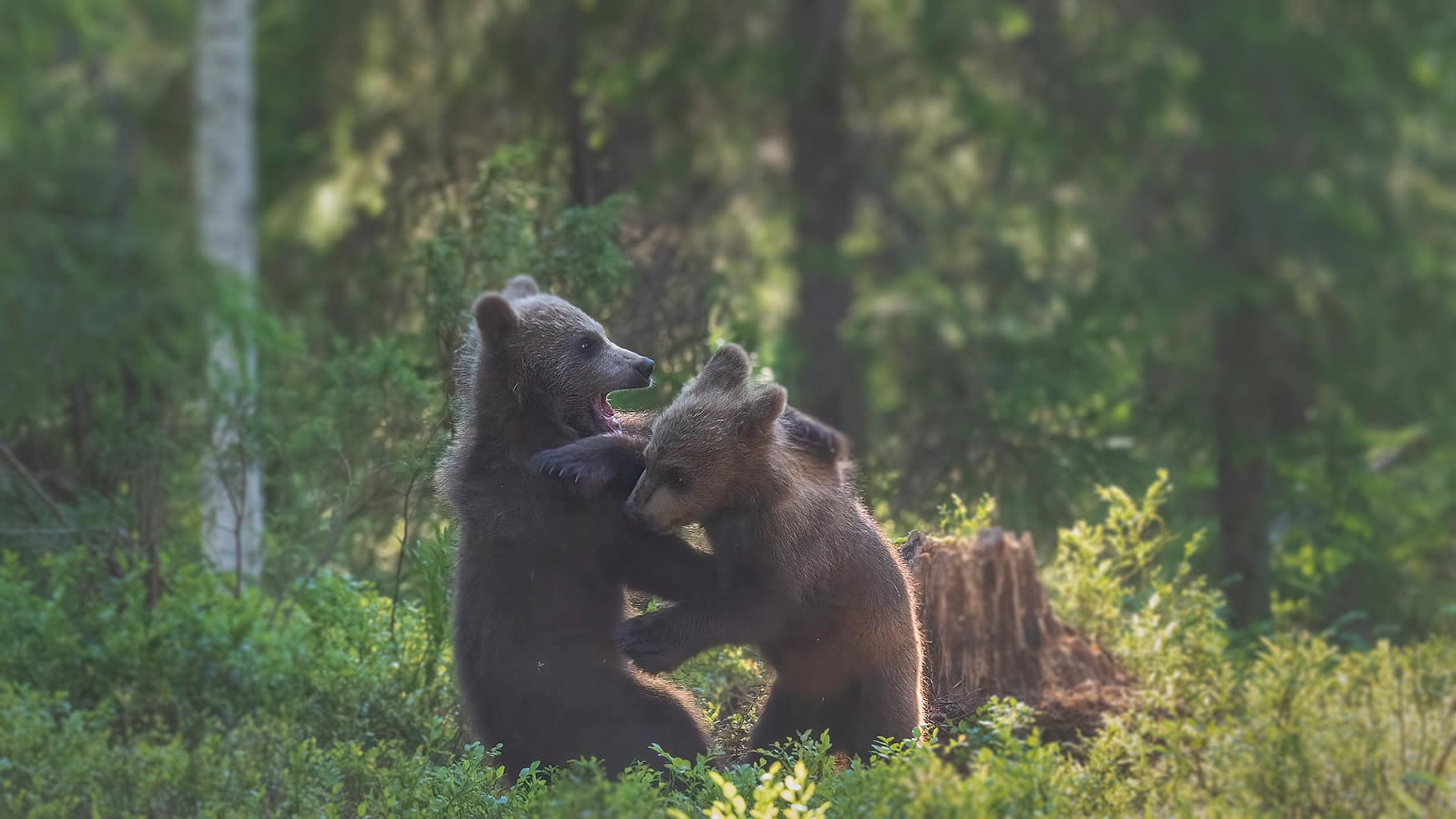
June – the first bear cubs
As spring turns into summer, bears begin visiting feeding sites more regularly again.
For many visitors, this is the most exciting part of the season because this is when mothers often arrive with their young cubs.
The exact timing varies every year. Normally families appear during the first weeks of June, while in some years they don’t arrive until July.
Watching young cubs is always special.
Everything is new to them. They investigate every sound, wrestle with each other, climb over fallen trees and constantly test their surroundings.
When another bear approaches, the atmosphere changes immediately. With only a quiet signal from their mother, the cubs often disappear high into the nearest tree within seconds, where they wait safely until the danger has passed.
If seeing bear cubs is your main goal, it is worth checking which hides regularly receive visits from family groups. Finland has several excellent bear photography locations, but cubs are not seen consistently at all of them.
Some hides have become particularly well known for reliable cub photography, and their busiest weeks often sell out well in advance.
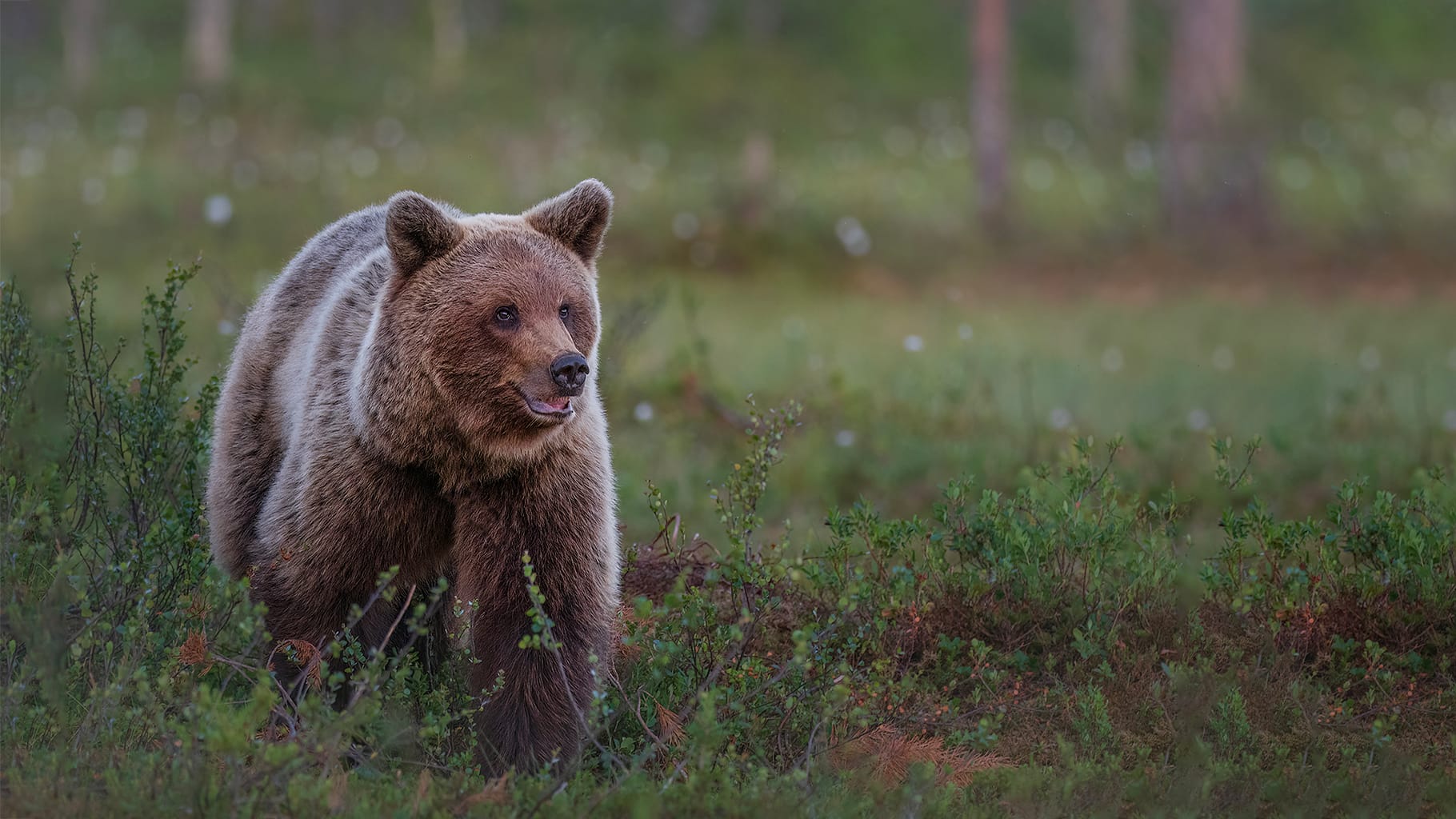
Midsummer – soft light and cotton grass
By late June and early July, another beautiful feature appears across Finland’s bogs.
Cotton grass turns many bogs completely white, creating one of the most characteristic landscapes of the Nordic summer.
Combined with Finland’s famous white nights, it creates wonderful conditions for wildlife photography.
The light remains soft for hours, sunset blends almost seamlessly into sunrise, and photographers can work throughout the night without experiencing complete darkness.
On colder nights, mist sometimes rises over the wetlands, adding another layer of atmosphere to the photographs.
For photographers who enjoy quiet, natural-looking images, this is one of my favourite times of the year.
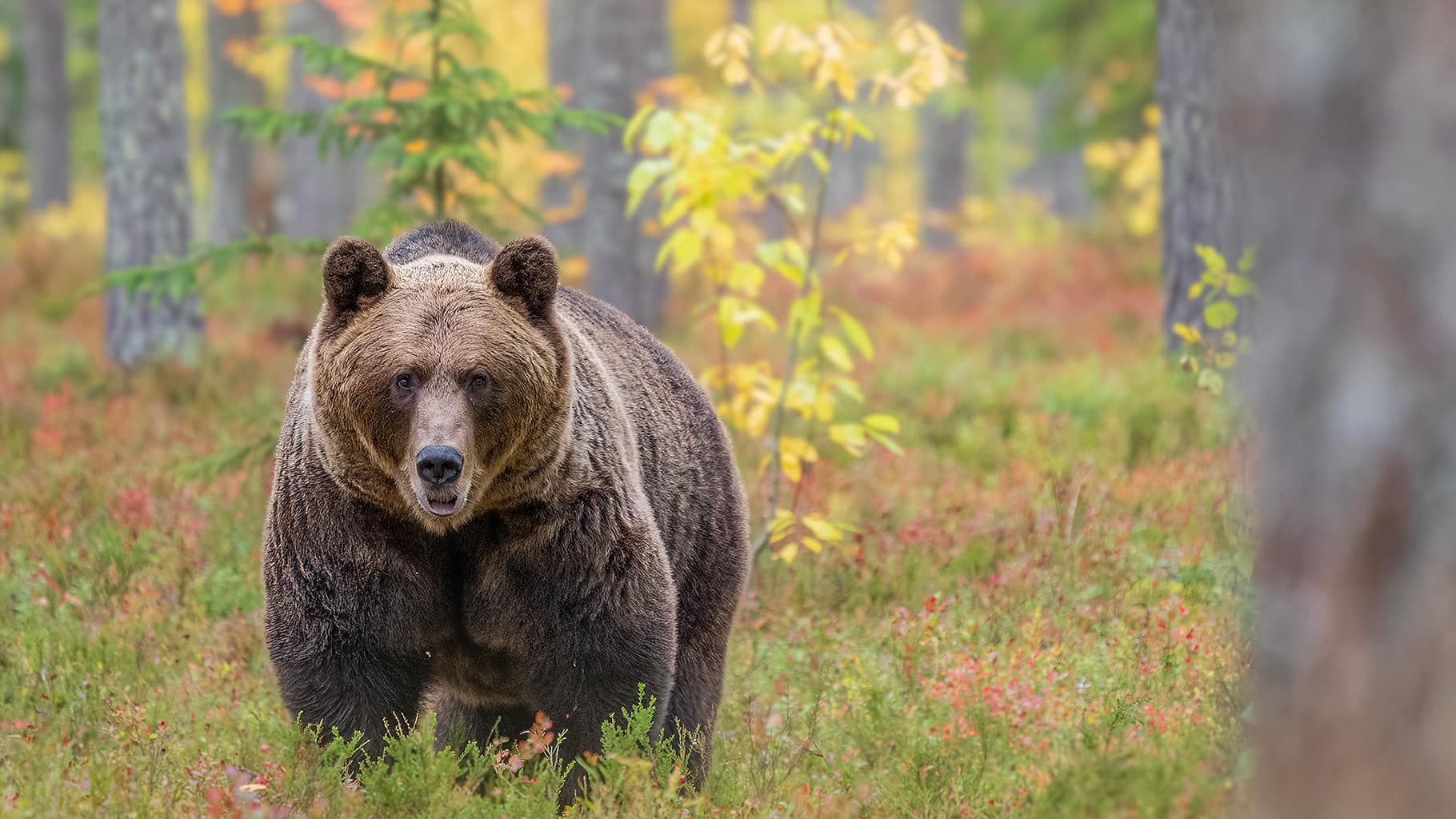
Autumn – Fat Bear weeks and autumn colours
As summer slowly turns into autumn, everything begins preparing for winter.
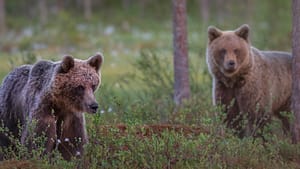
The cubs have grown considerably, and the large males become noticeably heavier as they build fat reserves for hibernation. Their fur also becomes thicker and more impressive with every passing week.
Instead of photographing tiny cubs, autumn is often about powerful adult bears.
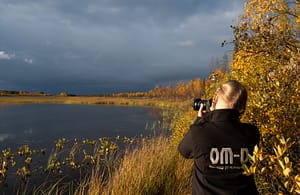
The forests gradually turn yellow and oarange as autumn colours spread across the landscape. Occasionally the first snowfall arrives surprisingly early, creating a rare combination of colourful forests covered with fresh snow.
For photographers, autumn also brings a practical advantage.
The nights become much shorter from a photography perspective. Instead of spending an entire night in a hide, many operators switch to evening sessions because darkness arrives much earlier.
It also means photographers finally get a proper night’s sleep.
If conditions are right, September evenings can become even more memorable. Around the autumn equinox, northern lights activity is statistically quite favourable, and after leaving a bear hide there is still enough time to photograph auroras reflected in calm lakes before heading to bed.
Another welcome change is that mosquito season is finally over.
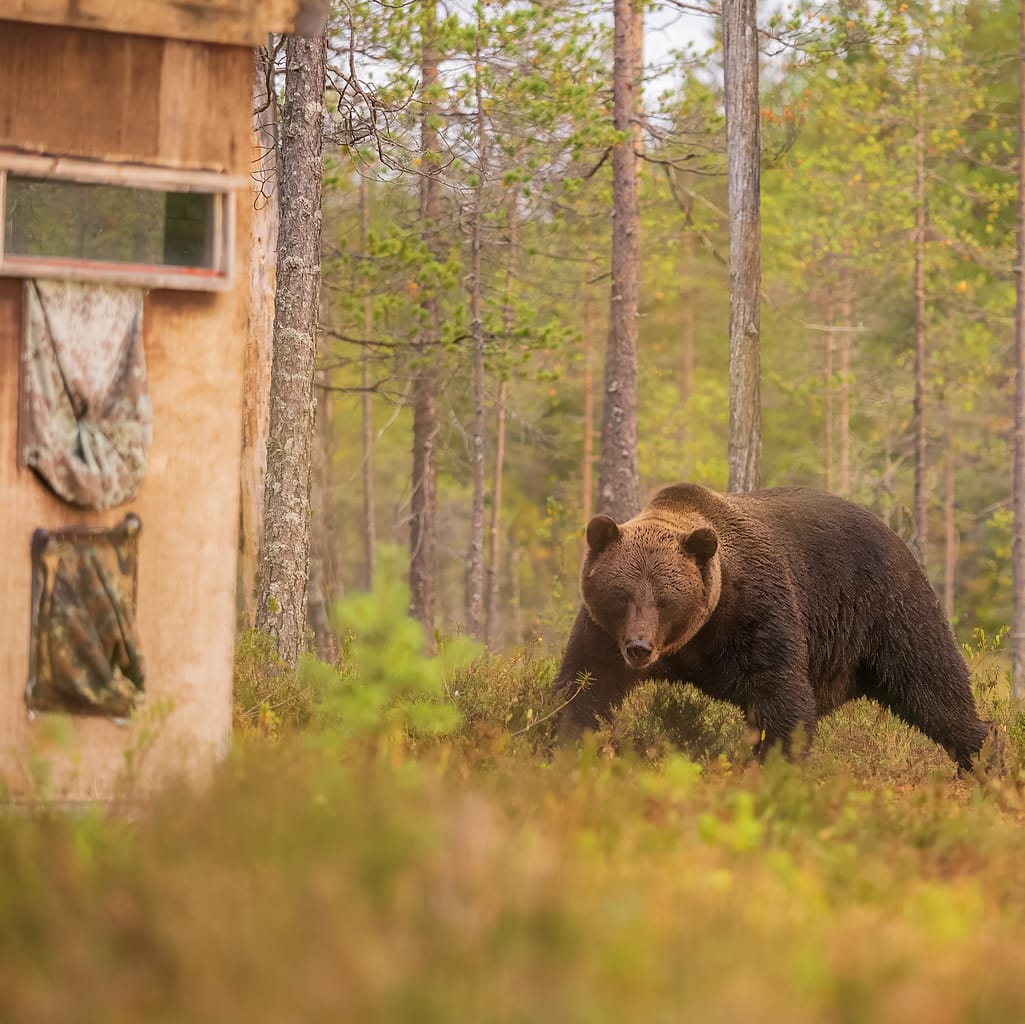
So when is the best time?
There isn’t a single best season for bear photography in Finland.
Choose late April if you dream of bears walking across snow.
Visit in June if your biggest wish is to see playful cubs.
Come during midsummer for soft light and endless nights.
Or choose autumn for colourful landscapes, massive adult bears and comfortable evening photography sessions.
Every season tells a different story.
That’s one of the reasons I never get tired of photographing bears in Finland.
If you’re still unsure which part of the season would suit your interests best, feel free to get in touch. At Finnature, we welcome visitors throughout the season and are always happy to help you choose the best time for a bear photography or wildlife watching trip and arrange all the bookings.

Leave a Reply