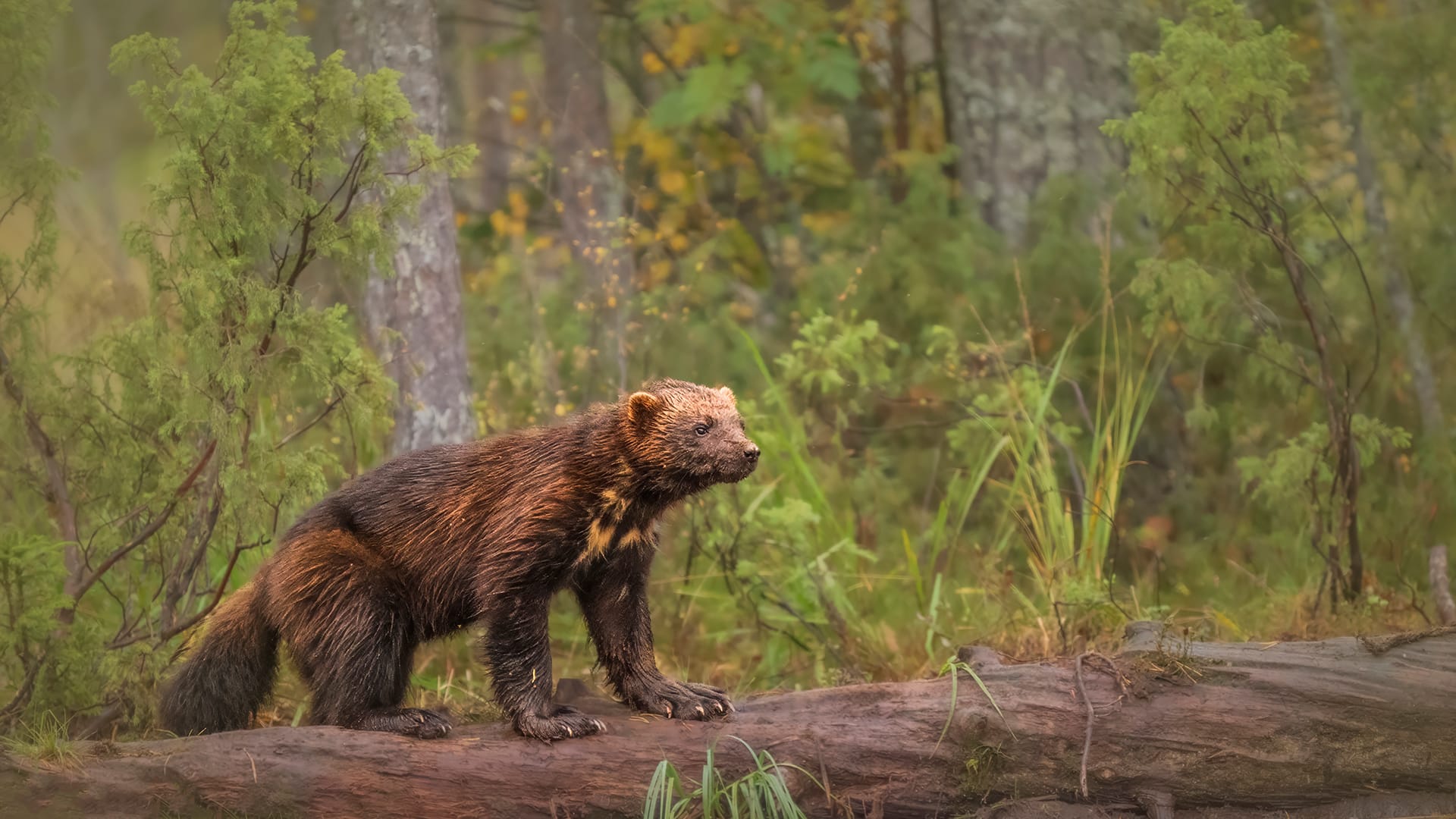
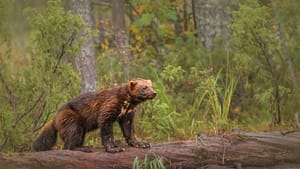
The wolverine (Gulo gulo) is one of Europe’s most elusive large carnivores. For many photographers wolverine is a true bucket-list species.
Although an adult typically weighs only 8–20 kilograms (18–44 lbs), it is remarkably powerful for its size and capable of travelling huge distances across the northern forests.
Sometimes described as the “hyena of the North,” not because the two animals are related, but because of the important role the wolverine plays as nature’s cleaner. Wolverines make excellent use of carcasses left behind by wolves, bears and other predators, while also being skilled hunters in their own right. In the wild, seeing one is a rare privilege, which is exactly why so many wildlife photographers dream of photographing one.
Few people realise that Finland is perhaps one of the very best places in the world to photograph wild wolverines.
Why Finland?
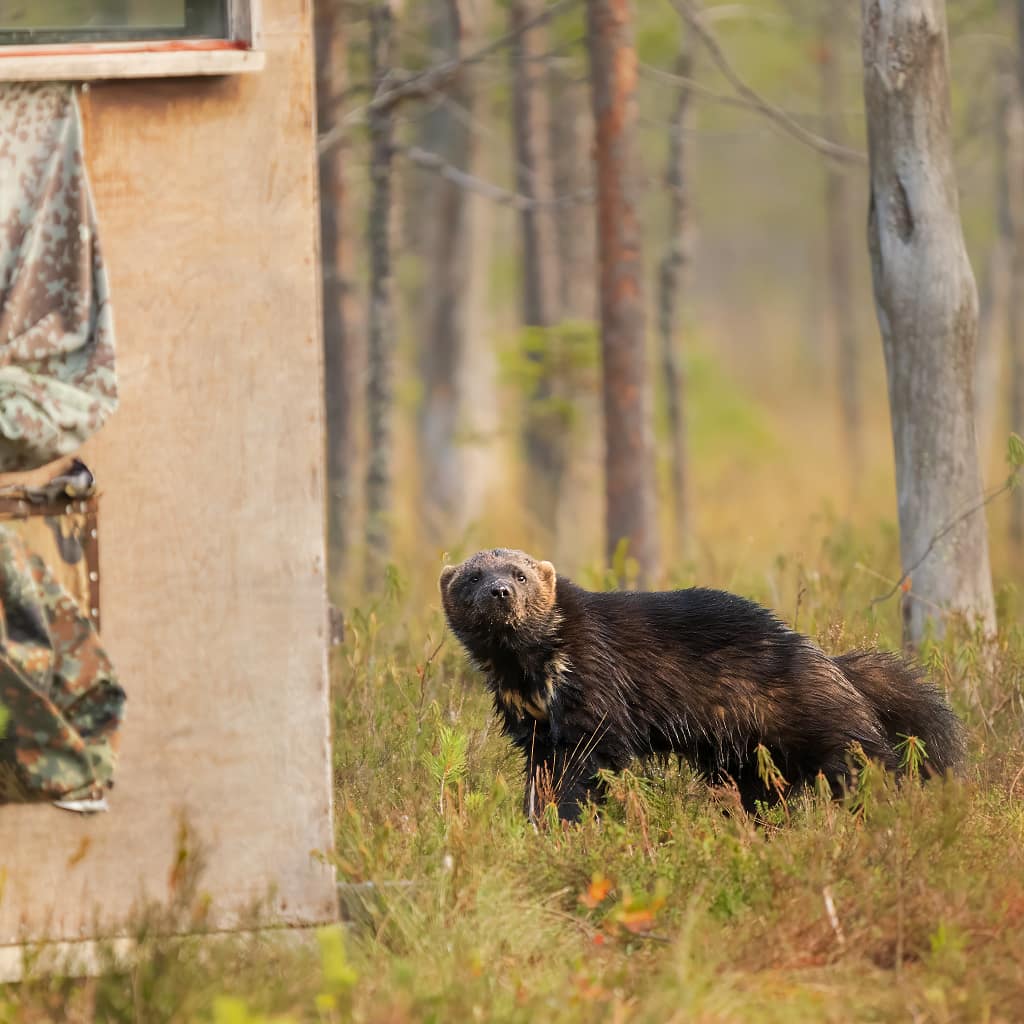
Several wildlife photography hides across eastern Finland offer opportunities to see wolverines. Many are primarily bear photography locations where wolverines appear occasionally, while a handful are dedicated almost entirely to wolverines.
The difference is significant.
Specialised wolverine photography sites manage their feeding in a way that encourages regular visits from wolverines, rather than focusing on bears or wolves. As a result, encounters are generally much more predictable.
At locations where all three of Finland’s large predators—bear, wolf and wolverine—visit the same feeding area, the wolverine is usually the one that gives way. Despite its toughness, it is still the smallest of the three and will often wait until the larger predators have finished feeding.
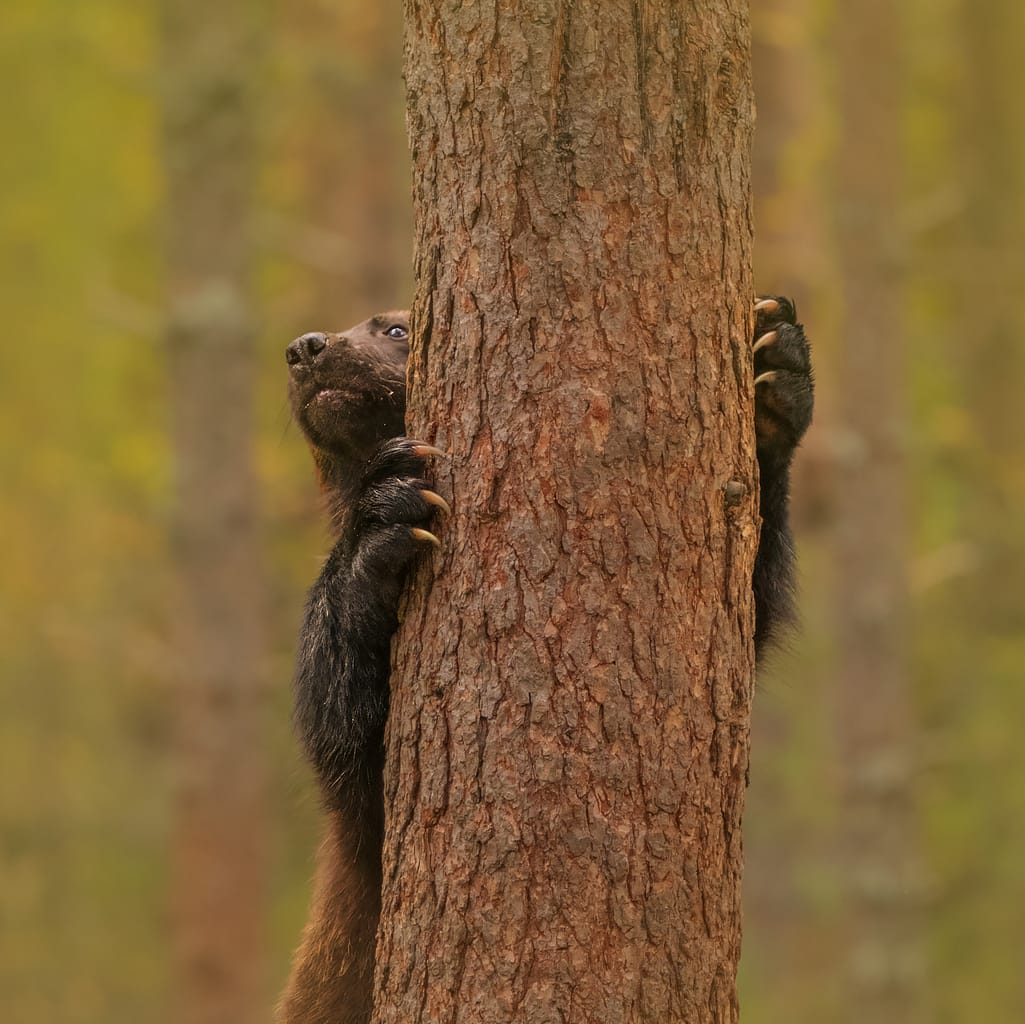
Occasionally this creates unforgettable moments. Watching a wolf chase a wolverine into a tree and standing guard below it is one of the most memorable wildlife encounters I have ever witnessed. The wolverine balancing high in the top of a slender pine and waiting is something few people ever get to see.
More often, however, this natural hierarchy means the wolverine arrives much later in the evening. At some locations the best activity may not begin until after the bears have disappeared.
If photographing a wolverine is your main goal, I always recommend choosing a location where wolverines are the primary focus. If your main hope is to photograph bears or wolves, with the possibility of seeing a wolverine as a bonus, then one of the mixed predator locations can be an excellent choice.
It’s also worth keeping in mind that many locations advertise wolverines as one of the species you might see, but in reality that may mean a visit only once every week or two. Of course, wildlife is unpredictable, and sometimes a wolverine may appear on several consecutive days, but regular sightings should never be taken for granted.
Whatever your destination, I usually recommend spending at least two nights. We are working with wild animals, and nature always has the final say.
Do Wolverines Come Without Feeding?
One question comes up surprisingly often: are the wolverines simply passing by these hides, or are they attracted with food?
The honest answer is simple. Of course they are attracted by food. A wolverine has no particular reason to walk in front of a photography hide unless there is something worth investigating, and that is usually a food source.
Some people see this as unnatural, but in reality it is not very different from photographing wildlife at natural waterholes elsewhere in the world. In Africa, for example, photographers often wait beside water because animals have to drink. Finland is different. With around 200,000 lakes, there are very few places where wildlife is naturally concentrated around a single water source. Food simply plays the same role here that water does in much drier landscapes.
The animals always remain completely wild. Feeding only influences where they choose to visit, not their natural behaviour once they arrive.
When is the best time?
In theory, wolverines can be photographed throughout the year.
From a photographer’s perspective, however, understanding Finland’s seasons is essential.
Finland is a northern country with four very distinct seasons. In summer the sun barely sets, providing almost unlimited photography opportunities. Around midwinter, daylight shrinks to only a few hours each day, depending on how far north you are.
The challenge is not that wolverines disappear.
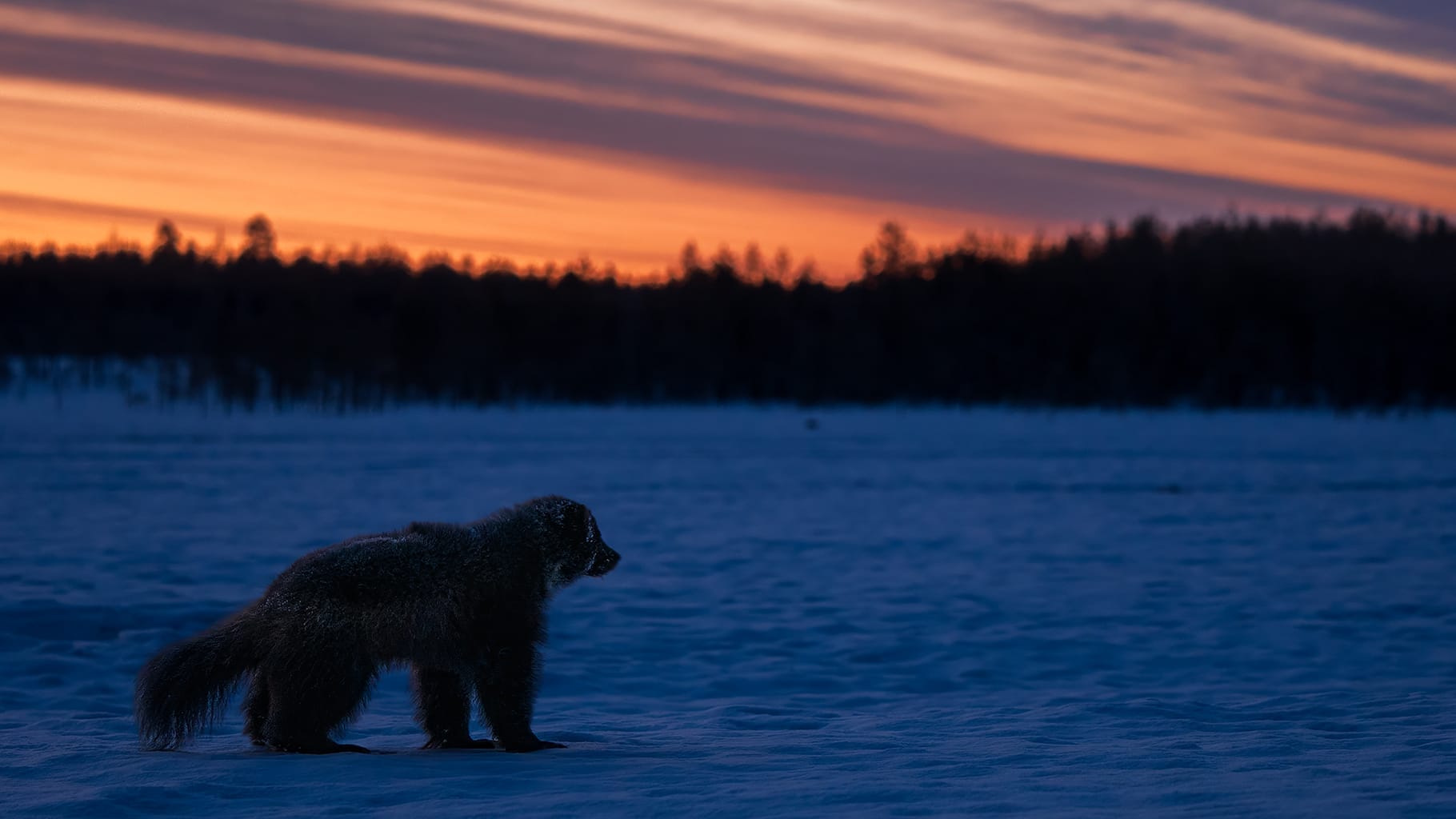
Wolverines can be active at any time of day, but during the darkest part of winter the window for photography becomes extremely short. Even if a wolverine is moving nearby, there is simply not enough natural light to photograph it for most of the day.
For this reason, I only recommend midwinter photography to very experienced photographers who fully understand the challenge. If your dream is to capture a frost-covered wolverine in deep snow, it can certainly happen—but you should also accept that several days may pass without producing any images.
Personally, I still don’t have that photograph. I simply haven’t been willing to dedicate enough winter trips to make it happen.
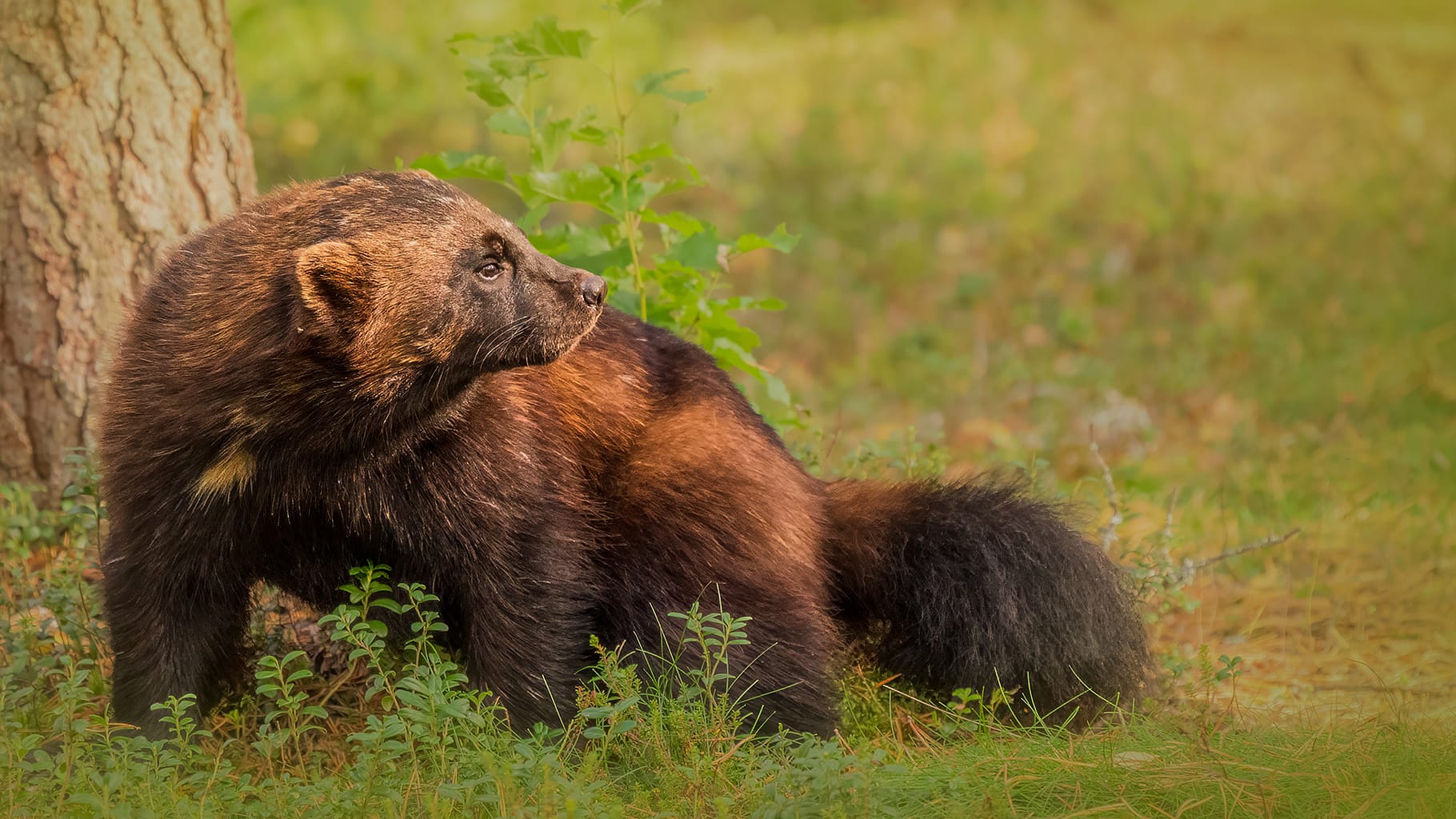
Spring – My favourite season for snow
If you want snowy images, late March and April are usually the best months.
Only a few years ago I would confidently have said that snow photography was possible until the end of April. Unfortunately, climate change has made spring much less predictable, and in recent years the snow has often disappeared much earlier than expected.
Even so, April remains the best opportunity to combine snow-covered landscapes with much longer daylight. Wolverines also tend to appear more frequently during daylight hours than they do in the depths of winter.
Early spring photography is often done from day hides, with photographers leaving before darkness falls. As the season progresses and daylight extends further into the evening, overnight hide sessions gradually become the norm.
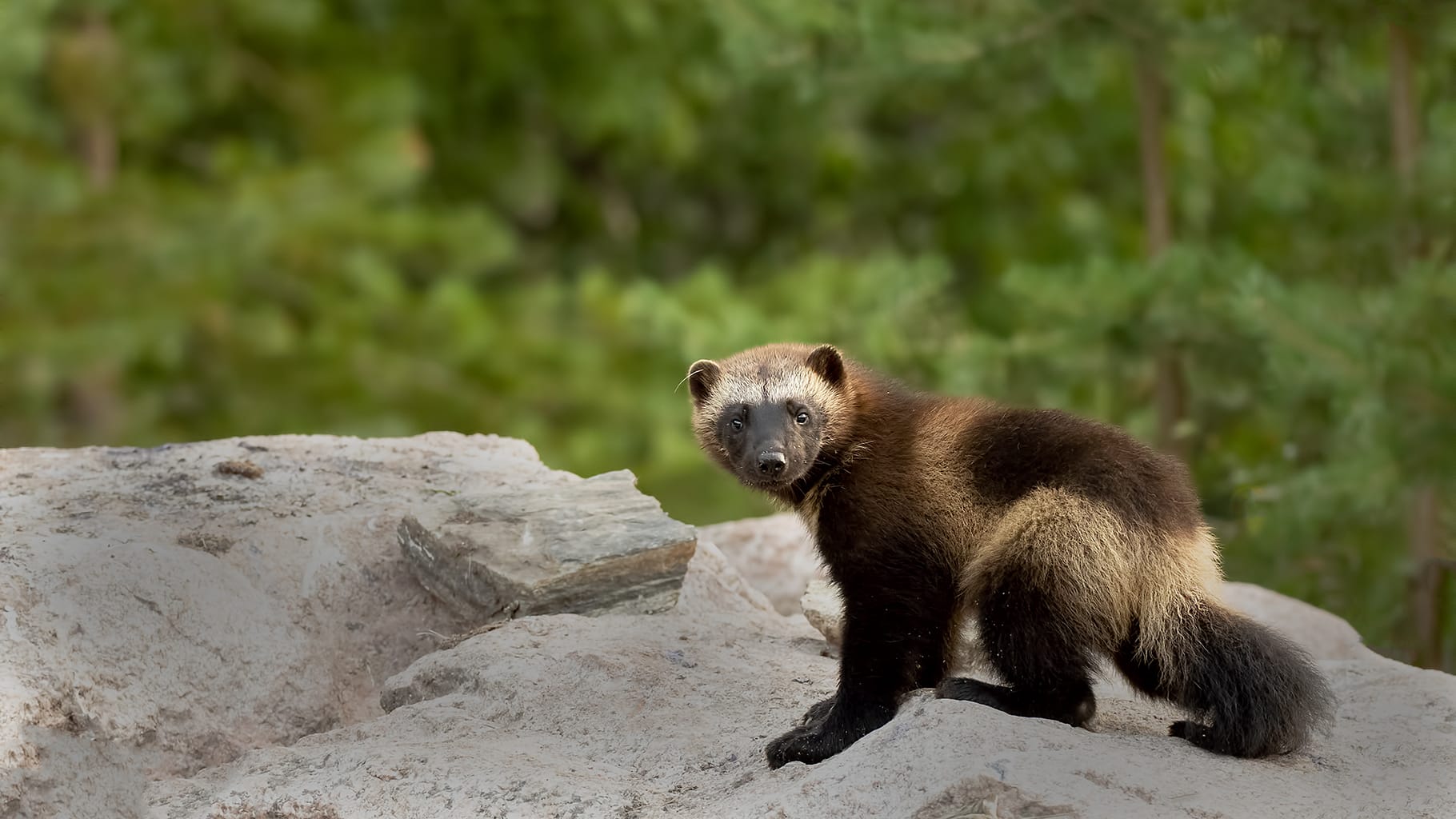
Summer – Endless light
By May the forests begin turning green.
As summer progresses, the vegetation becomes deeper and richer, while the nights remain astonishingly bright. Around midsummer there is enough natural light to photograph throughout the entire night.
Photographers usually enter the hide during the early evening and leave again just before the breakfast in the following morning.
Some years, young wolverines also begin appearing during July.
Don’t expect tiny cubs like bear cubs in early summer. By the time they start visiting feeding sites they are already close to the size of their mother. Nevertheless, they provide wonderful photographic opportunities, constantly running around and bringing energy to every encounter.
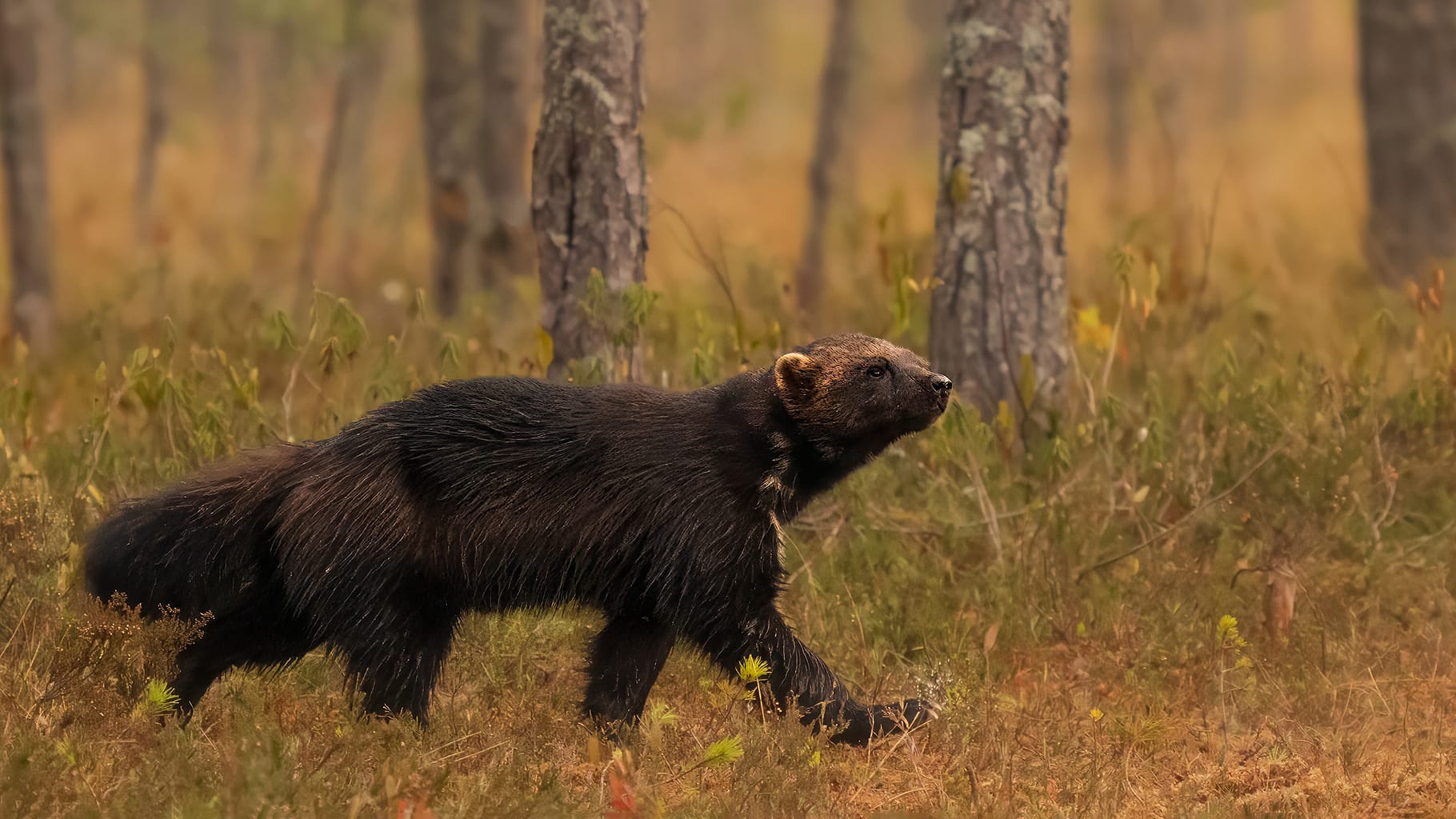
Autumn – Beautiful colours and thick winter fur
As autumn arrives, the forests gradually change from green to shades of yellow and gold.
At the same time, the wolverine grows its thick winter coat. The fur becomes noticeably fuller and more impressive than it is during summer, making autumn one of my favourite seasons for photographing the species.
Hide sessions also become easier again. Rather than spending the entire night in the hide, photography usually takes place during the afternoon and evening before returning to comfortable accommodation for the night.
By September the mosquitoes have disappeared as well—a welcome bonus for anyone who has spent time in summer in Finland.
September offers one more advantage.
Statistically, it is one of Finland’s better months for the Northern Lights. Nothing is guaranteed with aurora photography, but around the autumn equinox the chances are certainly worth hoping for.
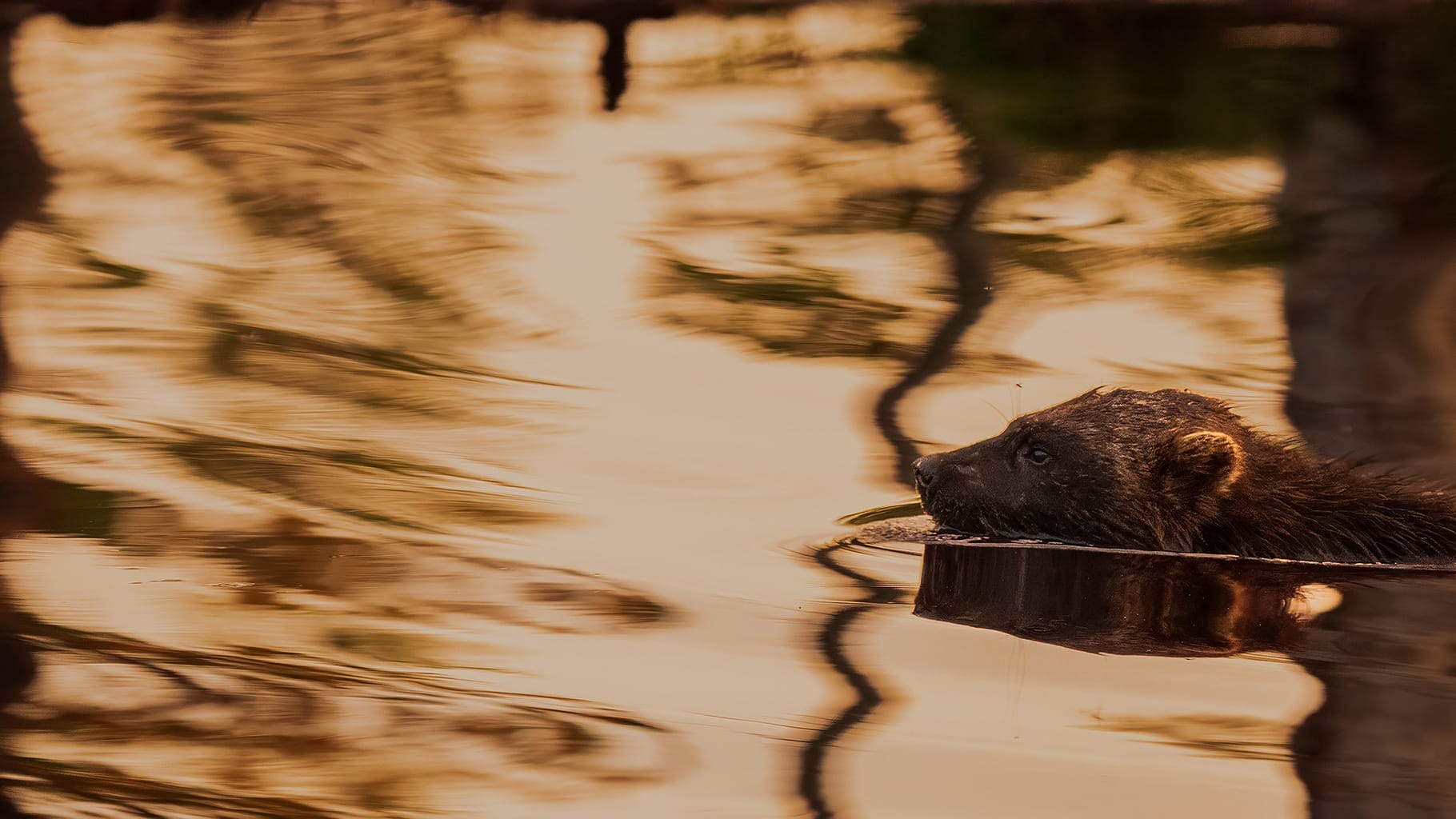
Final thoughts
If someone asks me for the single best time to photograph wolverines in Finland, my answer is always another question:
What kind of photographs are you hoping to create?
Winter offers frost-covered animals in snowy landscapes. Spring combines snow with much longer daylight. Summer provides endless light and the chance of seeing young wolverines. Autumn brings colourful forests, magnificent winter fur and even the possibility of photographing the Northern Lights during the same trip.
Every season has something unique to offer.
Although wolverines live across northern Europe and North America, they are incredibly difficult to see in the wild. Finland is different. Here, dedicated photography hides give photographers a realistic chance of photographing this elusive predator.

Leave a Reply