Arrival of an Early Spring
Last week I guided this year’s Finnature Ruff Break photography tour. The trip is timed for the best part of the Ruff season, usually just after the middle of May when lekking activity is often at its strongest and the birds spend long periods close to the hides.
This year spring arrived unusually early in Finland and the snow had already melted in March. The week before our trip was exceptionally warm, with temperatures even reaching +30°C in some parts of the country — something that is very unusual this early in the season.
Warm weather arrived far ahead of normal, and it quickly became clear that the migration of the ruffs was also ahead of schedule. The season is short, only around three weeks, and this year it seemed that the very best days may already have happened at the beginning of the season.
With ruffs, the situation changes almost daily. Many of the birds using the area are migrants moving north. When new birds arrive, activity increases immediately. More males appear around the lek, more movement starts, and there are suddenly birds everywhere. Then, after a good migration night, many of them continue north toward their breeding grounds and the wetland can feel almost empty again. There were still plenty of birds in southern Finland at the time, so it seemed likely that the situation could still change again.
That uncertainty is part of photographing migratory birds in spring. No two days are the same.
A Small Flood Meadow and Long Days in the Hide
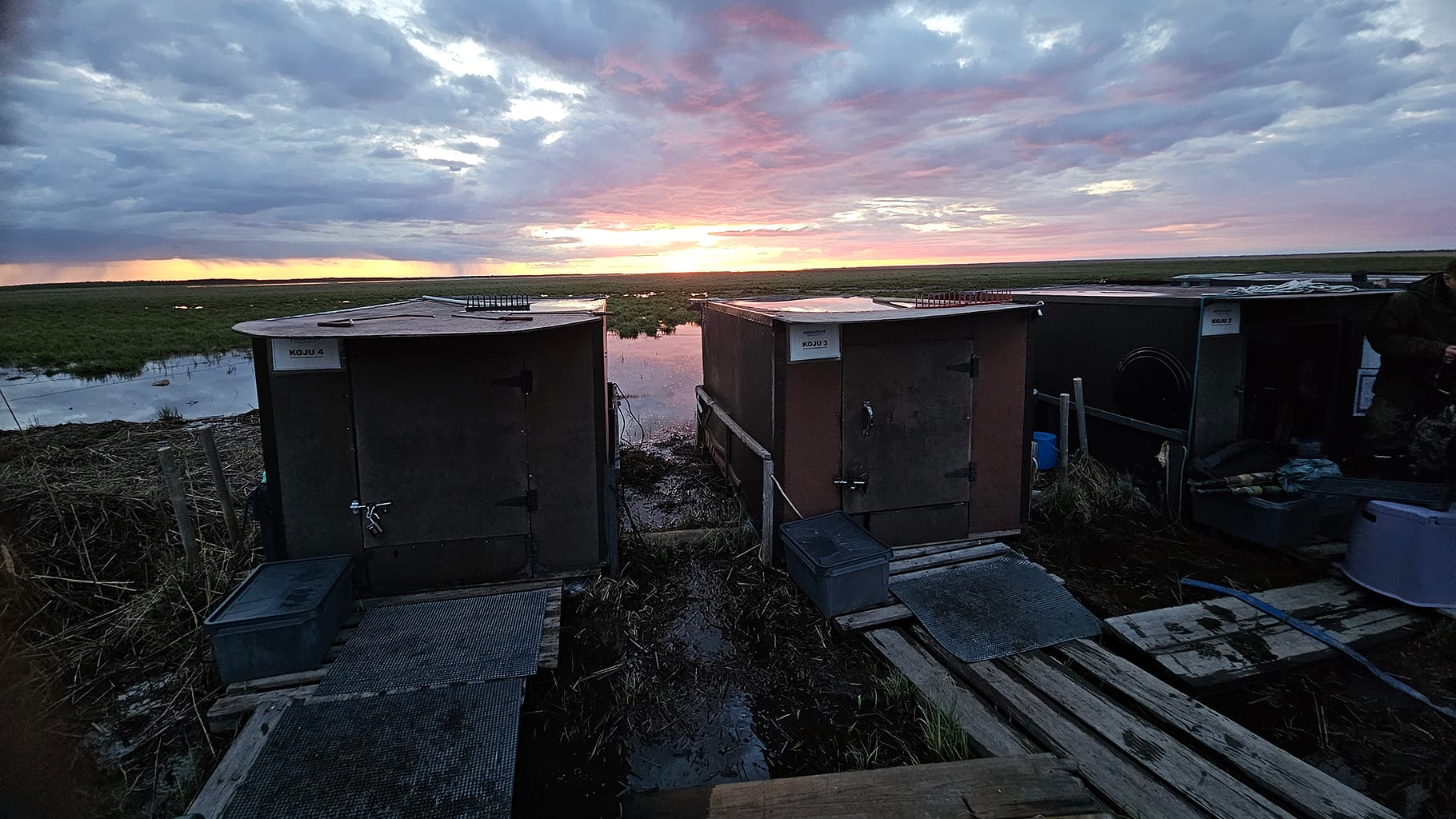
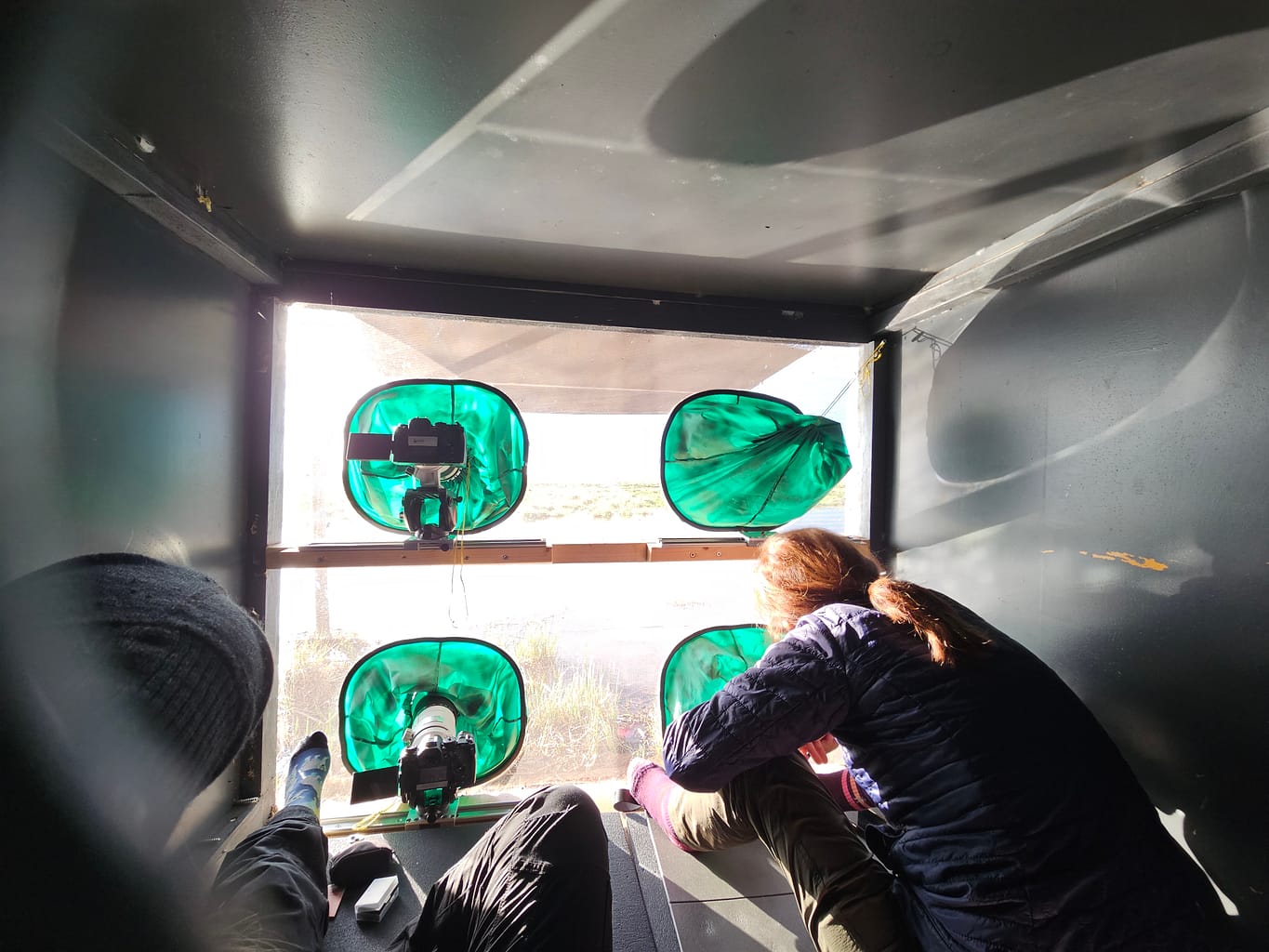
Our photography location is a small flooded meadow with hides placed along the shoreline. We use four two-person hides, and each photographer has both a low and high shooting position available. That setup makes it possible to work comfortably with two cameras ready at the same time, which is especially useful when behaviour changes quickly or birds suddenly move closer.
Normally the small lake offers both lekking behaviour and feeding opportunities. On calm mornings and evenings the reflections can be excellent. The shallow water often turns completely still, creating mirror-like conditions that work beautifully for low-angle photography.
This trip is always rewarding, but it is also physically demanding. Our daily rhythm follows the light completely.
In the evenings we usually leave for the hides around four o’clock first an early dinner and then to hides. On sunny evenings we stay until sunset, which at this time of year is close to 22:45. Even though the hotel is nearby, we are often back around 23:15 or later.
Then only a few hours later the alarm rings again.
Sunrise is already around 3:45 in mid-May, so on clear mornings we leave the hotel at 03:00 to reach the hides before the first light arrives. On dark cloudy days the schedule becomes slightly easier because the light remains flat for longer and there is less reason to sit in the hides during the darkest conditions.
Still, there is never much sleep during Ruff Break.
It is definitely something worth considering if you are planning to join the tour one day. The days are long and intense, but that is also exactly what makes this season feel special. Everything happens very quickly in northern spring.
Beautiful Light, Quiet Activity
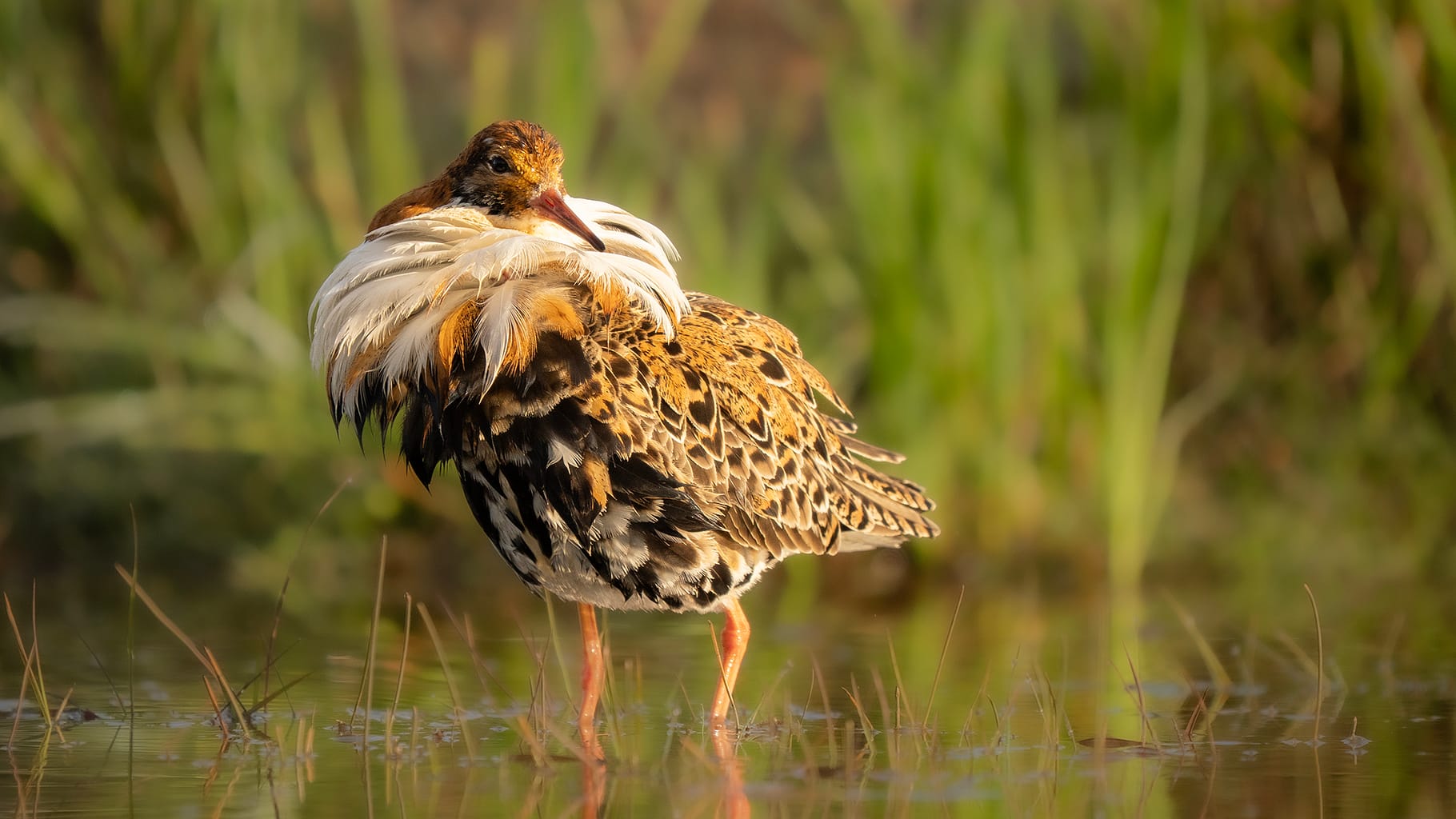
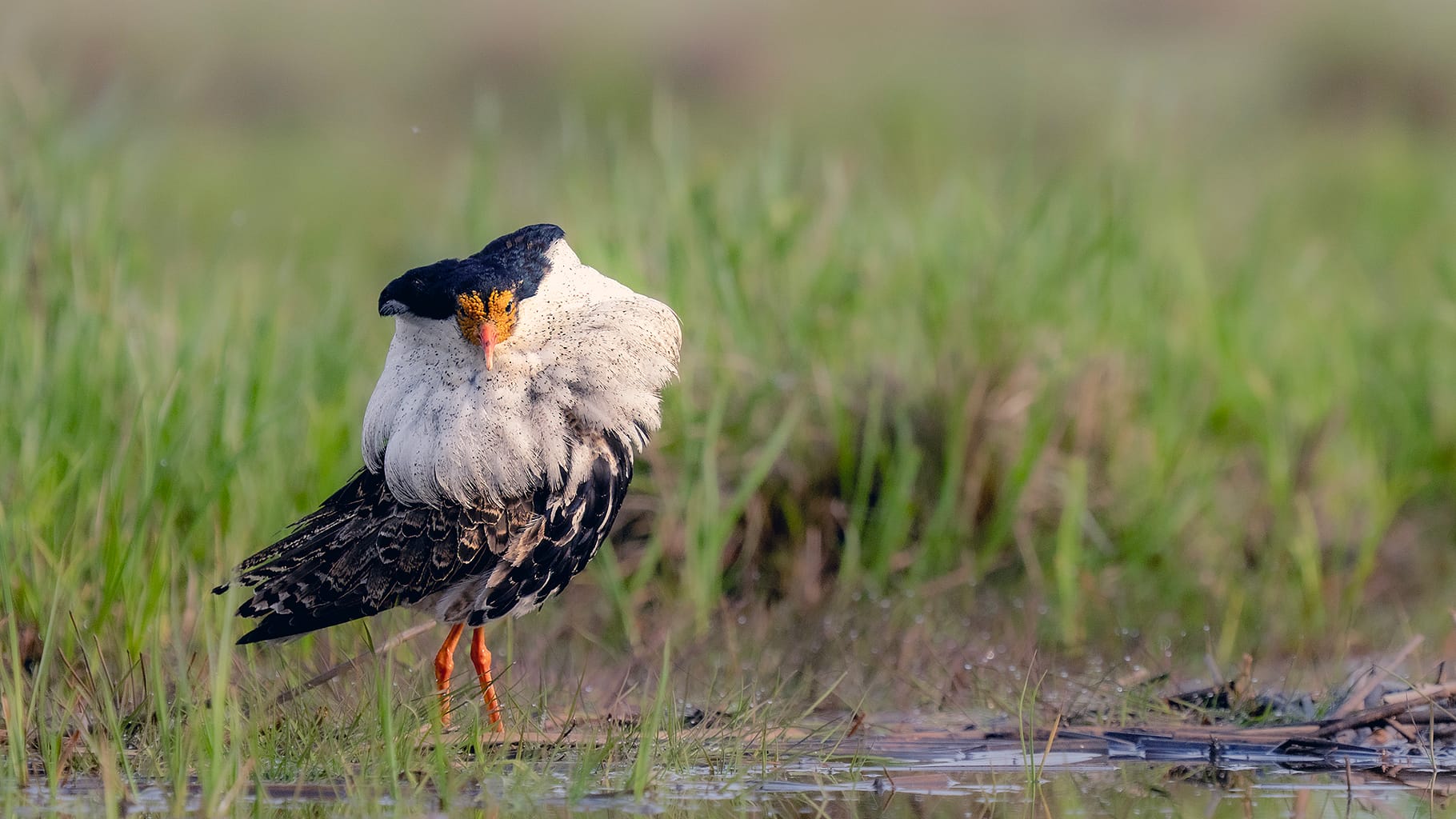
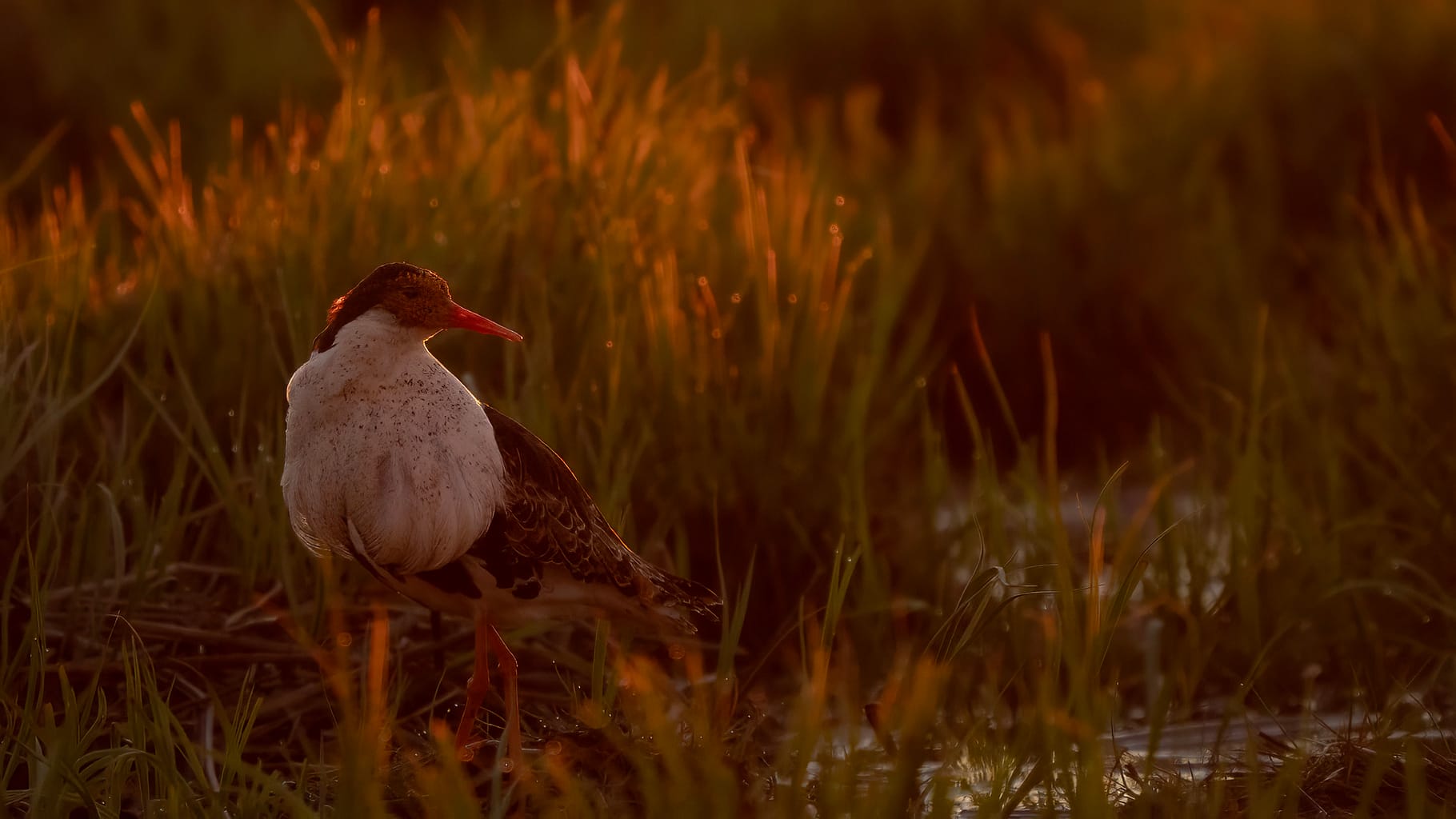
The first two evenings of the trip were beautifully sunny. Ruff activity in front of the hides was somewhat scattered, but we still photographed many different males – I think I counted more than 25 different individuals from the photos. Every male ruff looks unique. Some were almost completely black, others white or reddish brown, and many carried strange combinations of colours and patterns. I wrote more about these remarkable differences in another article about the strange world of male ruffs.
The third evening became dark and rainy quite early, so we decided to leave the hides sooner and finally get a little more sleep.
Out of our three morning sessions, two were bright and sunny. The light was absolutely beautiful. Unfortunately the birds did not fully cooperate during the best moments. As often happens in wildlife photography, the strongest activity started only after the finest early light had already passed.
That is sometimes how it goes. The conditions can look perfect and still the birds decide differently.
The final morning was cloudy and rainy, so we entered the hides much later than usual.
Waiting for Behaviour
Although lekking activity was weaker than I had hoped, we still photographed many different males during the trip. There was a variety of plumages and personalities in front of the hides. Unfortunately there were only a few females present, and females are usually what truly activate the males and increase territorial behaviour.
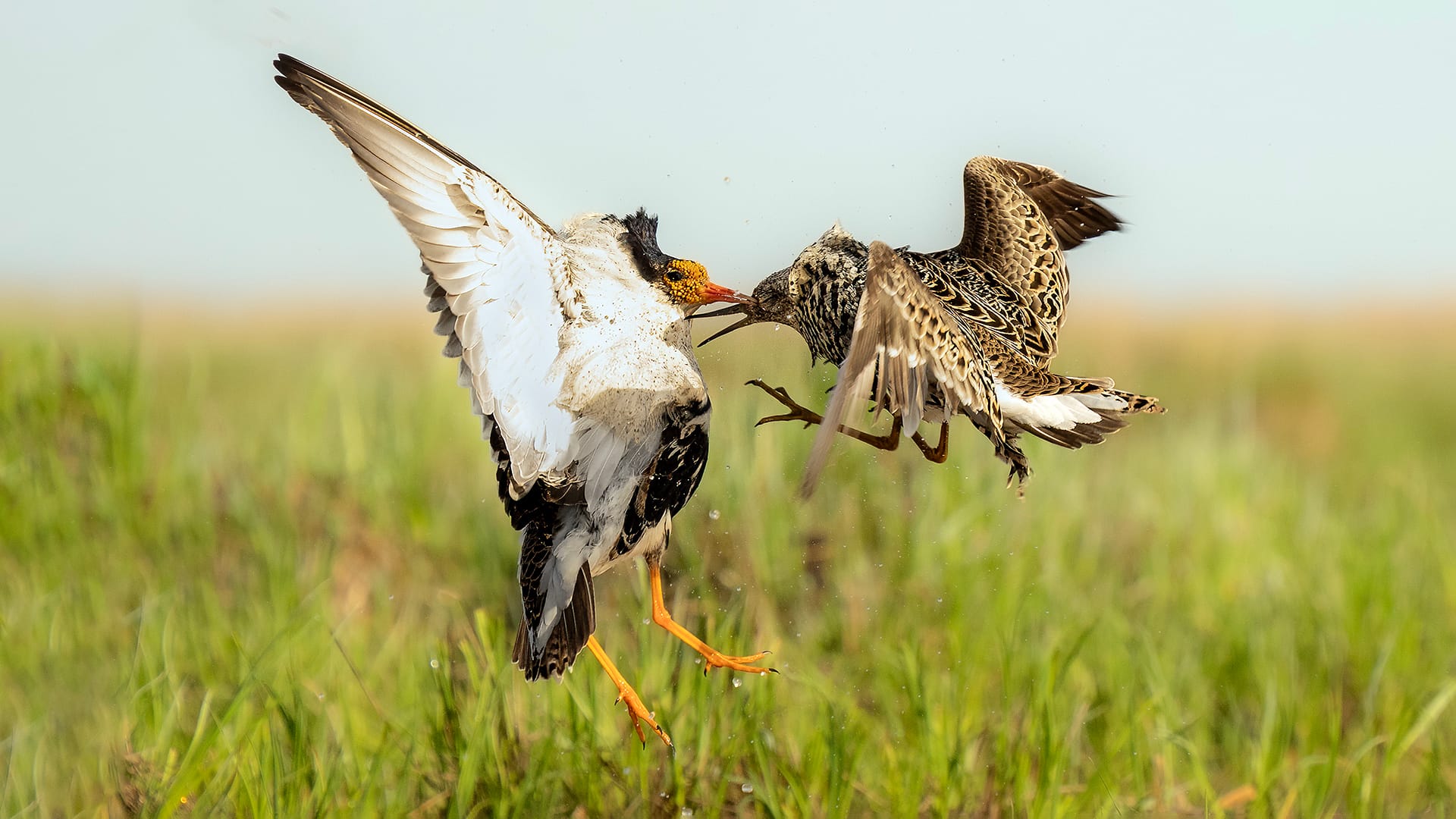
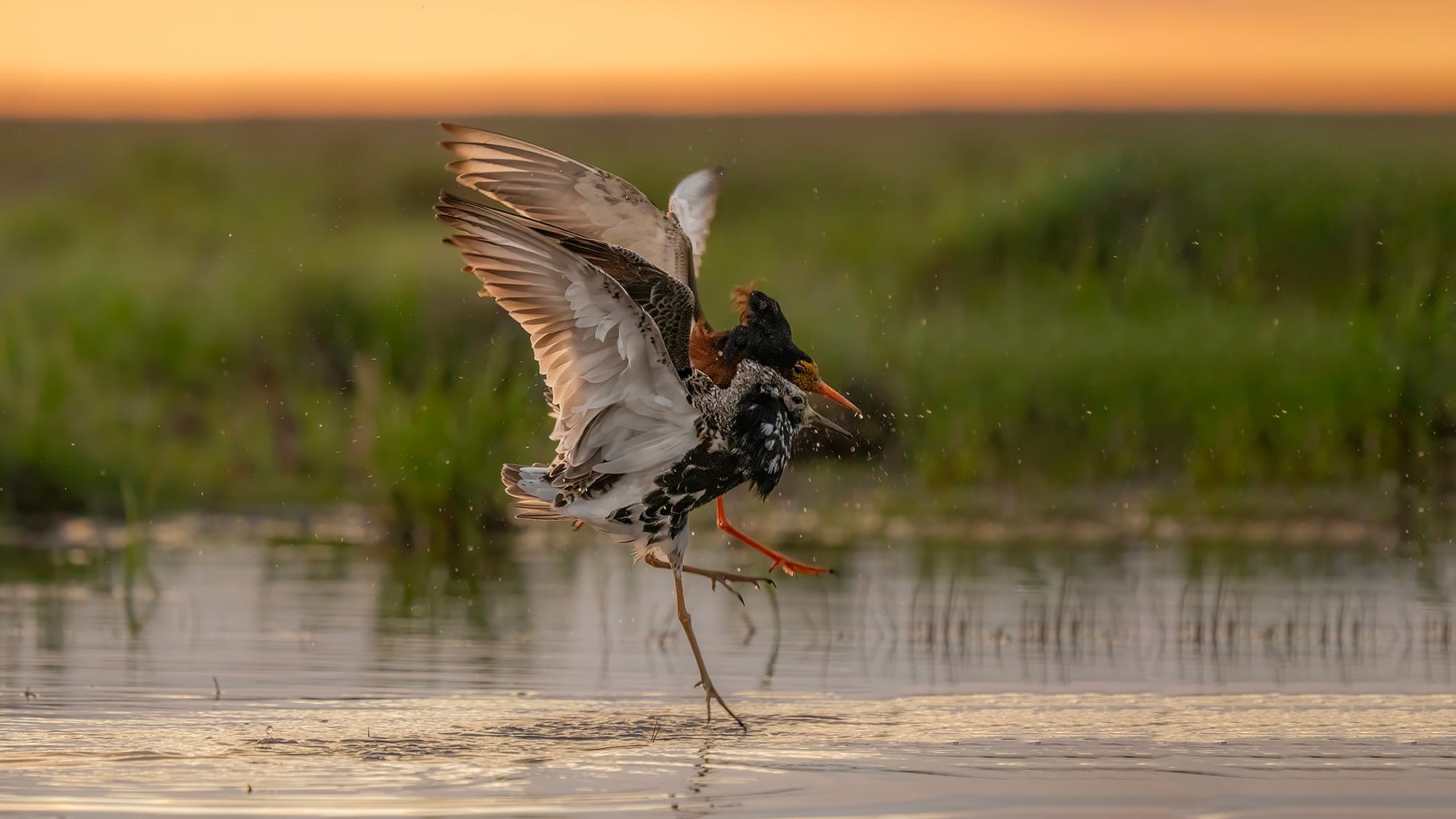
Still, we managed to photograph some fights and display moments. At times the action became very sudden and intense after long quiet periods. Those moments required concentration and patience from everyone in the hides. Sometimes nothing happened for quite a while, and then suddenly birds arrived.
Other Visitors at the Wetland
Thankfully the ruffs were not alone.
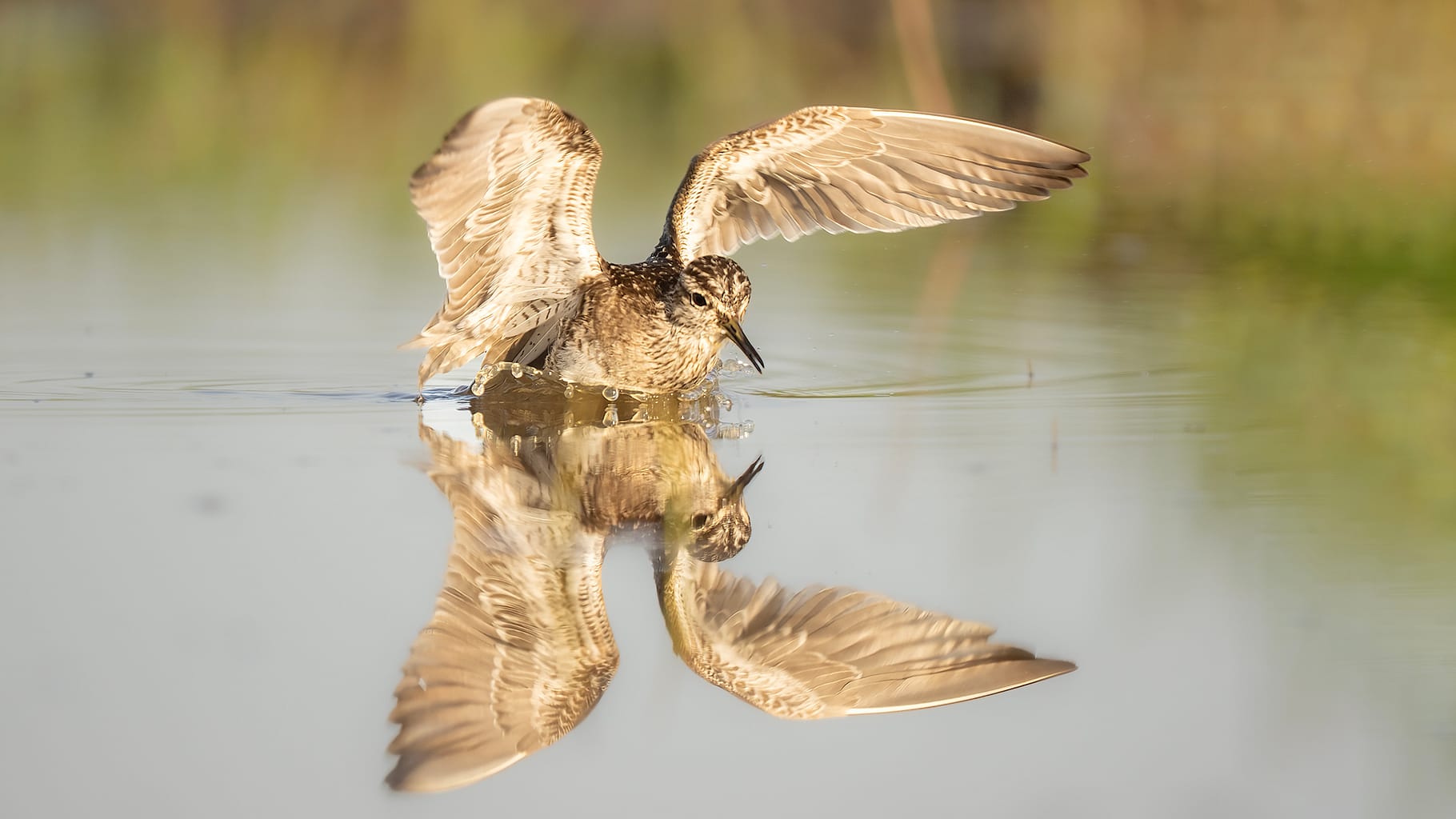
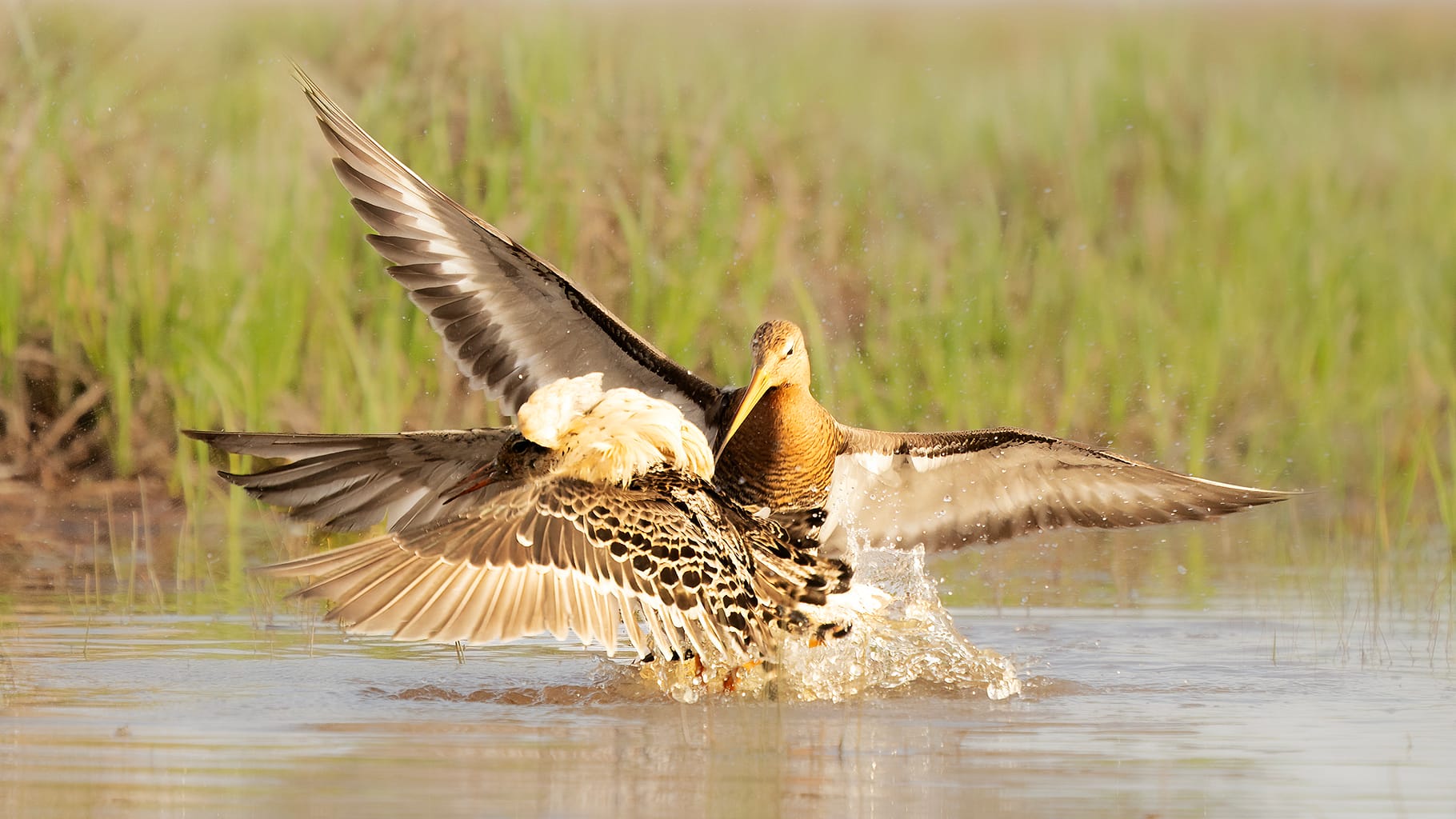
Wood Sandpipers spent a lot of time feeding near the hides and offered excellent photo opportunities. Eurasian Curlews also visited regularly, and one Black-tailed Godwit became particularly memorable. It seemed determined to dominate the feeding area completely and repeatedly chased the Ruffs away from the shoreline.
One especially stubborn male Ruff eventually challenged the much larger Godwit and defended its feeding spot surprisingly aggressively. Moments like that are often impossible to predict, and they become some of the most memorable parts of a trip.
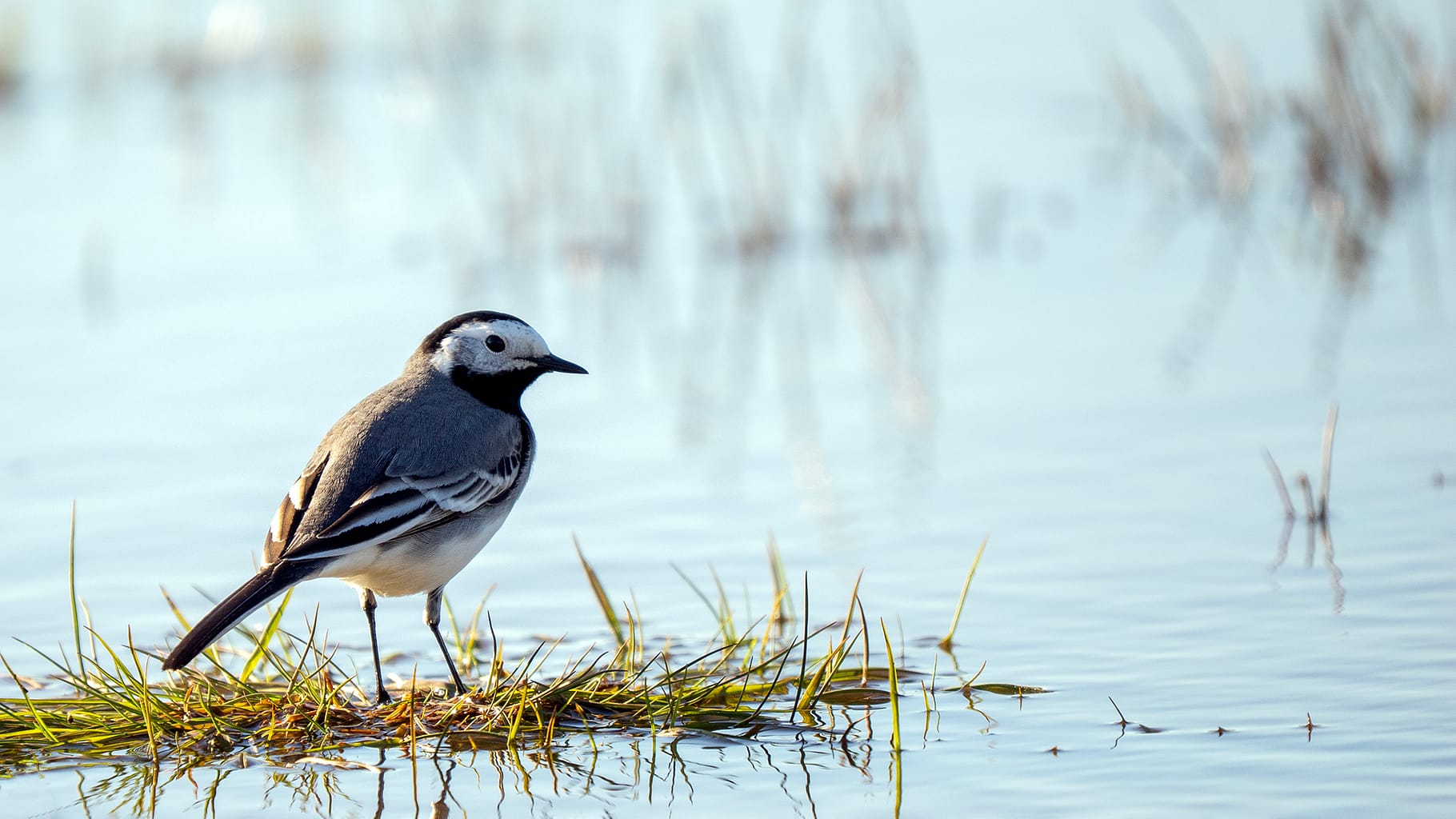
We had some smaller birds also near the hides. Common Reed Bunting and White Wagtails visited very close to us, and even a Northern Shoveler appeared in front of the hides for a while.
The Reality of Wildlife Photography
Although everyone certainly came home with photographs, I have to admit that the overall Ruff activity during this particular trip was not quite what I had hoped for. We saw less birds and less lekking behaviour than usual during these three days.
But this is also the reality of wildlife photography.
We can never guarantee behaviour, weather, or timing. During a short three-day trip almost anything can happen. Conditions may become perfect or very difficult. Birds may stay active all day or disappear exactly when the light becomes beautiful.
These hides have produced excellent lekking photographs also during this spring, but during our particular dates the strongest activity simply did not fully align.
Trips like this happen from time to time, and honestly they probably frustrate the guide at least as much as the participants. Of course I always hope the birds perform at their absolute best for every group.
At the same time, while going through my own images afterwards, I realised there were actually many photographs that I personally liked as well. The lower number of birds also created some advantages. It often allowed for perfectly clean reflections and calmer backgrounds, without other birds constantly disturbing the scene or making the images feel visually restless.
Why the Best Moments Still Matter
At the same time, I think this uncertainty is also part of what makes wildlife photography meaningful.
Even though the birds were not as active as we had hoped, everyone still came away with photographs of the ruffs. The most attentive photographers also managed to capture some fights and moments of lekking behaviour. On trips like this, getting good images often requires even more concentration, patience during the quiet moments, and constant readiness than when everything is happening all the time.
Sometimes everything works perfectly and photographs seem to come endlessly. Other times nature slows the rhythm completely and reminds us that we are only visitors waiting for brief moments that may or may not happen. Perhaps that is exactly why the successful moments still feel so rewarding after all these years.

Leave a Reply