Every spring, the same transformation happens again.
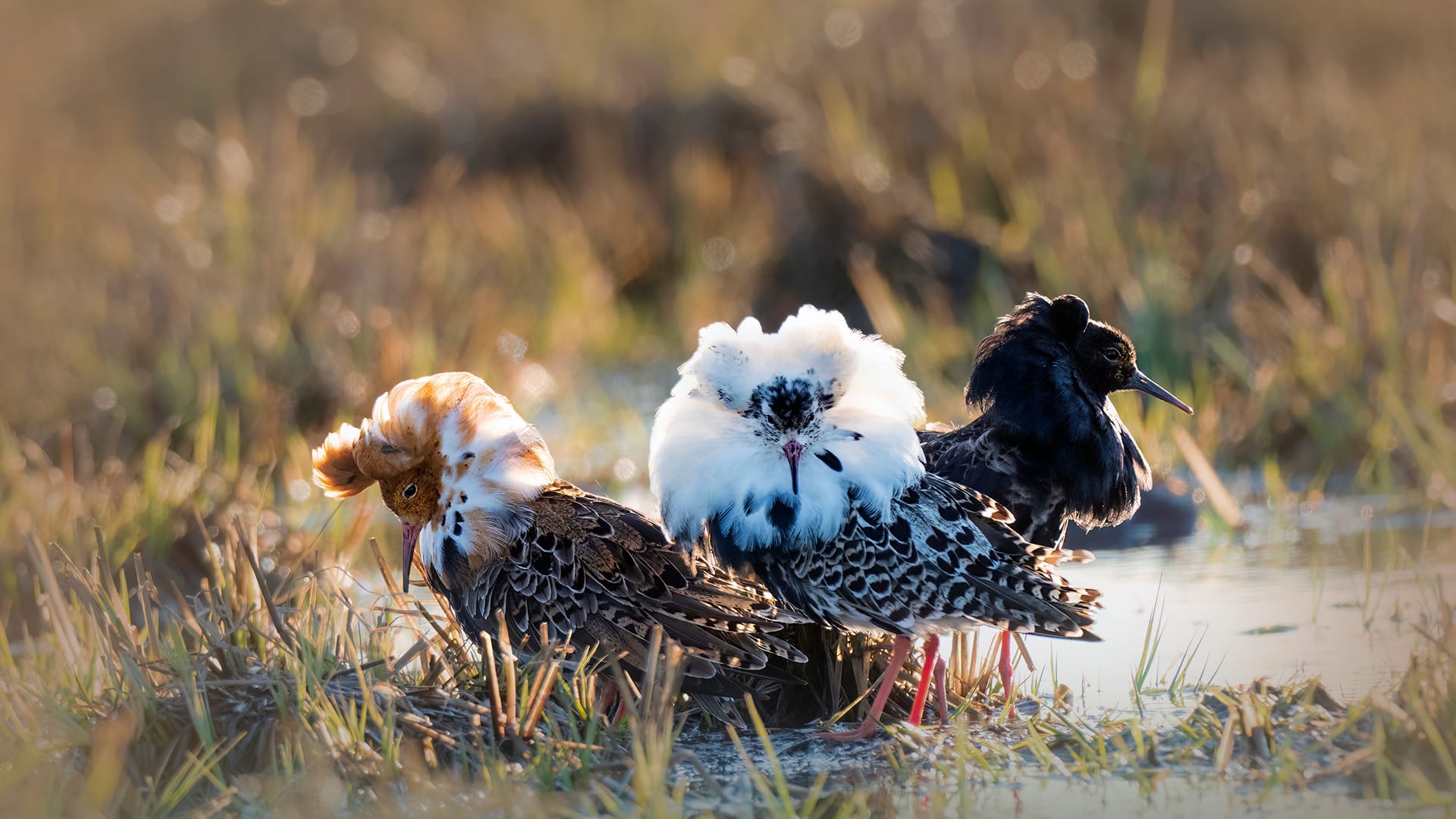
The shorelines begin to fill with movement, sound, and birds that almost look unreal in their breeding plumage. Ruff males arrive at the lek wearing colours and feather patterns so different from one another that they can seem like entirely separate species.
Some are dark and heavy-looking. Others almost white. Some carry large ornamental collars around the neck, while others appear far more restrained.
And no two birds look exactly alike.
At first, the differences seem purely visual. But after spending enough time watching them, it becomes clear that the variation goes much deeper than feathers alone.
The males do not only look different.
They behave differently too.
The Hidden Order Behind the Chaos
A ruff lek can appear chaotic at first.
Birds chasing each other. Wings raised. Short confrontations. Small territories forming and collapsing across the shoreline.
But after a while, patterns begin to emerge.
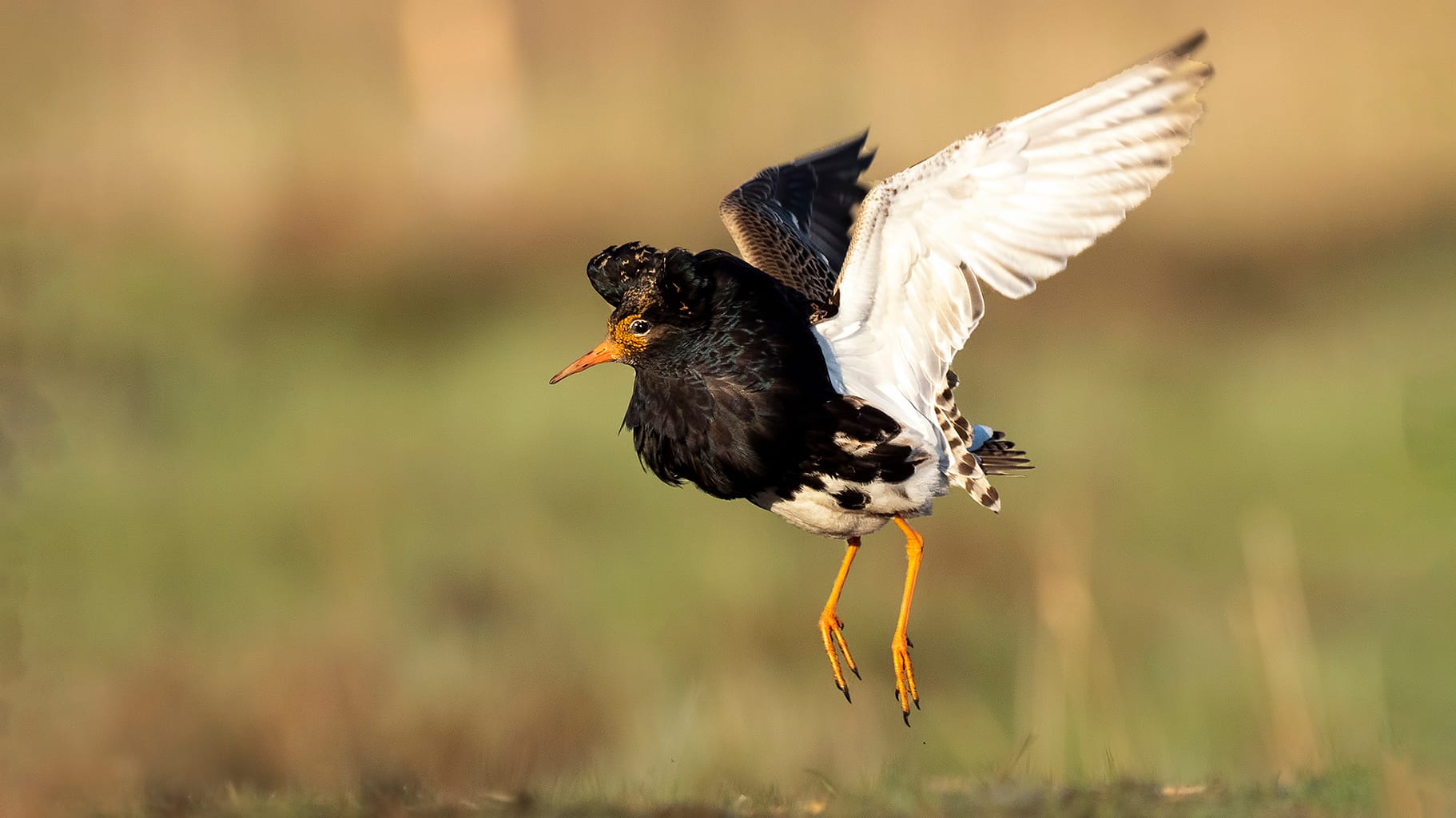
Certain males stay in the centre of the lek and defend small display areas aggressively. These are often the darker birds, constantly reacting to rivals entering their space.
Other males behave differently. They move more freely around the lek, spending less time defending territory and more time moving between dominant birds.
And then there are the strangest ones of all.
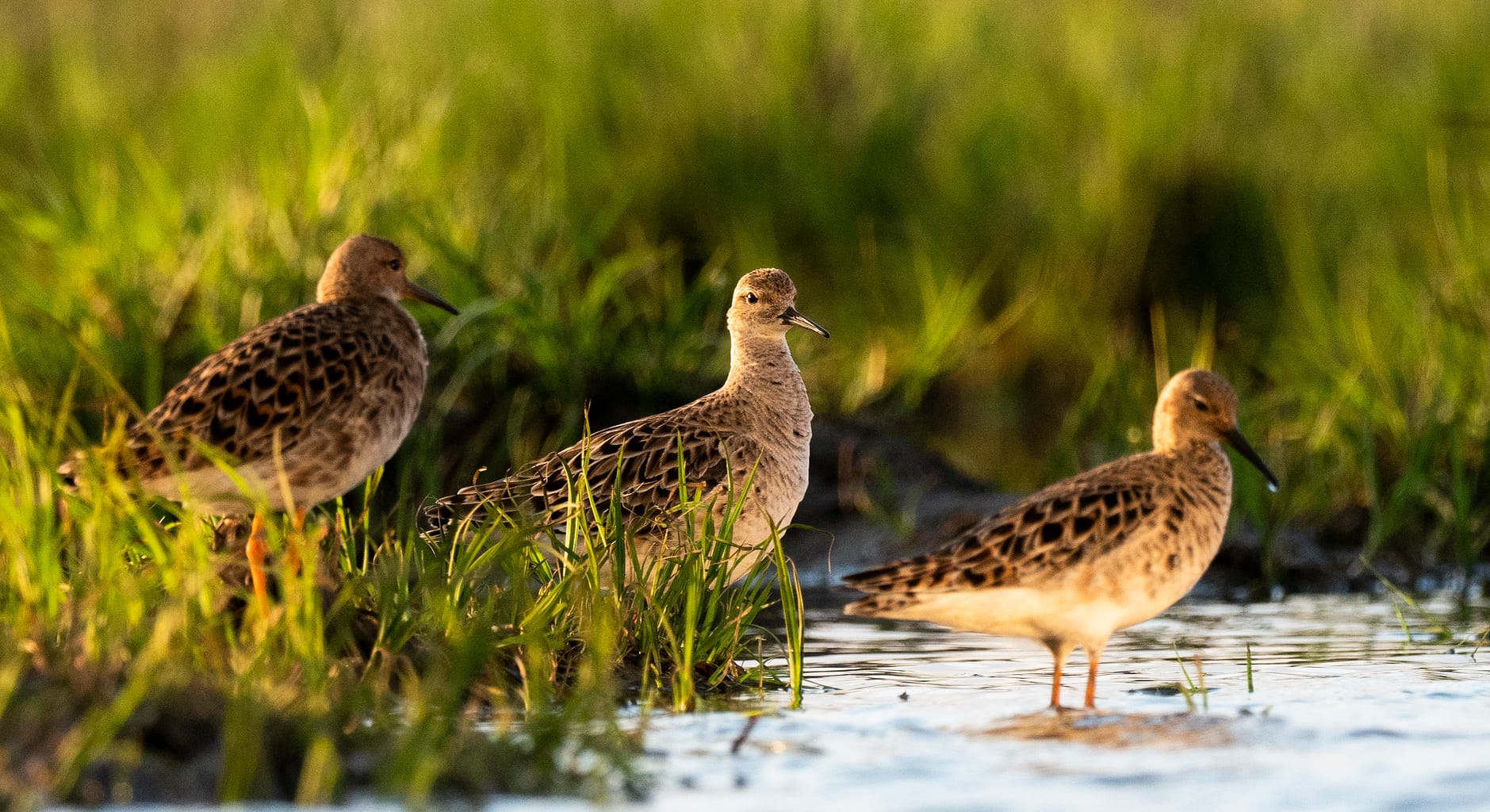
Small males that resemble females almost completely.
Not all males are trying to achieve the same thing.
A lek full of roles
Research has shown that these different appearances are connected to different mating strategies.
The dark territorial males are usually referred to as “independents.” They make up roughly 80–85% of the males on the lek.
The lighter birds moving around them are known as “satellites,” forming most of the remaining males.
And then there are the faeders.
Female-like males that make up only around 1% of the population.
Unlike the dominant territorial birds, faeders rely on blending in rather than standing out.
Research suggests that these differences are genetic. The males are effectively born into different reproductive roles, with appearance, behaviour, and mating strategy linked together.
Among birds, few species show this level of variation between males.
And standing near a lek in early morning light, it becomes easy to understand why ruffs have fascinated both researchers and photographers for so long.
Why behaviour matters for photographers
For a wildlife photographer, understanding behaviour matters just as much as recognising the species itself.
Once you begin to understand the different roles on the lek, the birds become easier to follow and easier to anticipate.
Certain males are constantly involved in conflict. Others remain more cautious around the edges. Some individuals return repeatedly to the same small patch of shoreline.
After a while, you stop photographing only colours and feathers.
You begin to follow individuals instead.
And that changes the photographs.
Moments become easier to anticipate before they happen. You start noticing tension between certain birds, small movements before a chase, or which males tolerate each other at close distance.
The lek slowly becomes less chaotic.
A short season
Part of what makes this time so special is how short it is.
The most intense display period lasts only a few weeks. Then the collars disappear, the birds lose their extravagant breeding plumage, and the shoreline slowly begins to look ordinary again.
For a brief moment each spring, though, the leks are full of some of the strangest and most theatrical birds in northern Europe.
And no matter how many times I return, I still find myself watching them the same way.
Looking at the exaggerated collars, colours, and display postures, it becomes surprisingly easy to understand where some older artistic styles may have found part of their inspiration.
At times, the lek can feel almost Rococo in nature — ornamental, theatrical, and slightly unreal.



Leave a Reply