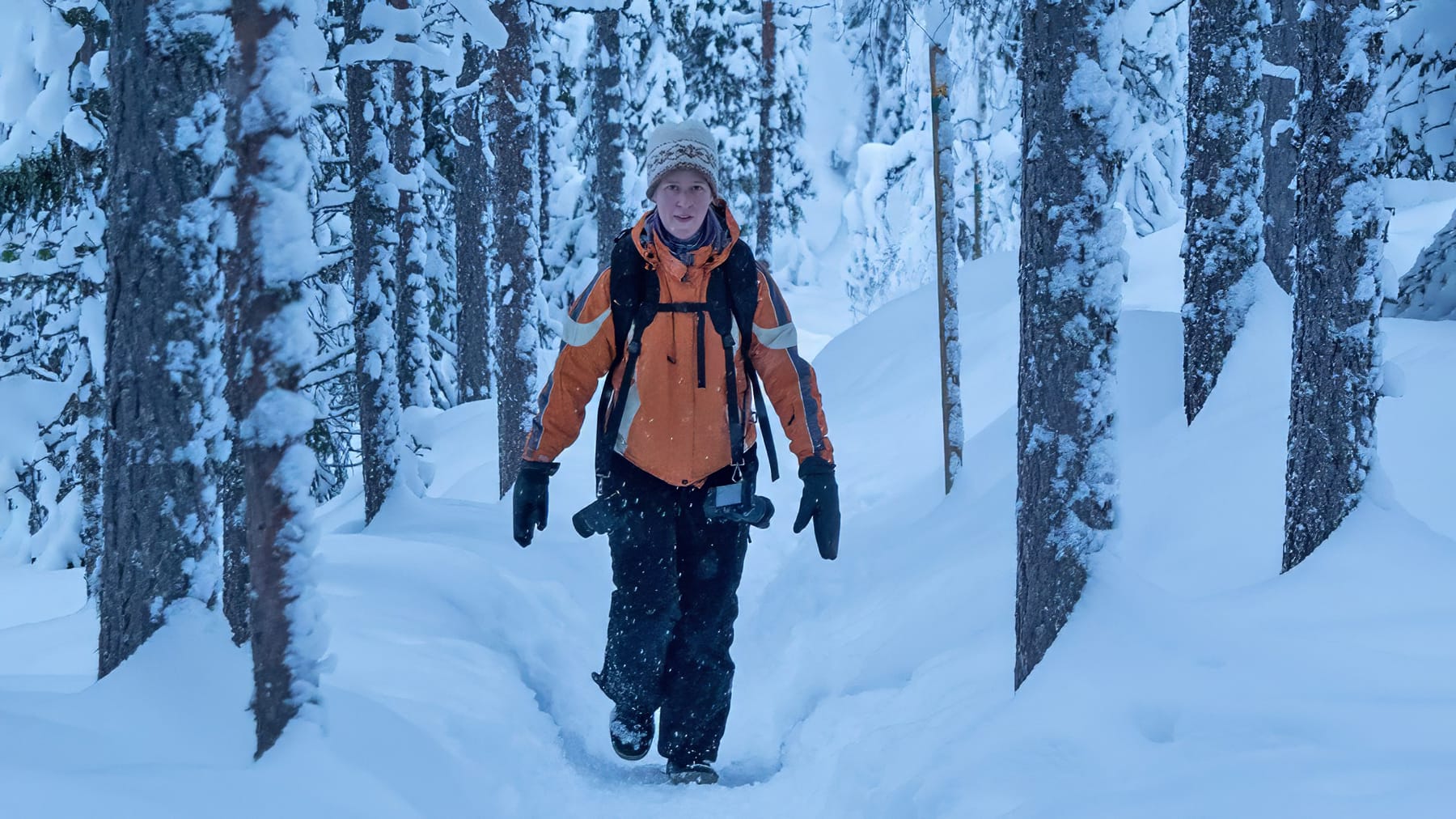
For someone used to warmer climates, photographing in the north can be a shock.
Cold means very different things to different people. For some, 0°C already feels uncomfortable. Here in Finland, we regularly work in -20°C, sometimes even -35°C. On those very cold days it is often calm, which helps. But I would say that -15°C with strong wind can feel just as harsh.
Cold is personal.
I know photographers who work comfortably in thin neoprene gloves at -20°C (my husband). My hands struggle in those same gloves at 0°C. I was given extremely poor peripheral circulation as a birth gift, and because of that I have probably tested more winter clothing combinations than most people.
That experience has taught me something simple:
Winter wildlife photography is not about toughness. It is about preparation. Cold conditions are not something to play with. They demand respect.
There Are Two Types of Northern Winter Photography
Before thinking about clothing, it helps to understand what kind of photography you are coming for.
Some trips are based in hides. Others happen fully outdoors.
Hides vary a lot. Some have proper heating. Some only have candles. Some have small gas or electric heaters. Some hides doesn’t have heating at all. If you are sitting still for five hours, this makes a significant difference.
Interestingly, winter hides in Finland almost always include some kind of heating, whereas in Norway it is quite common to sit in a hide without any heating at all.
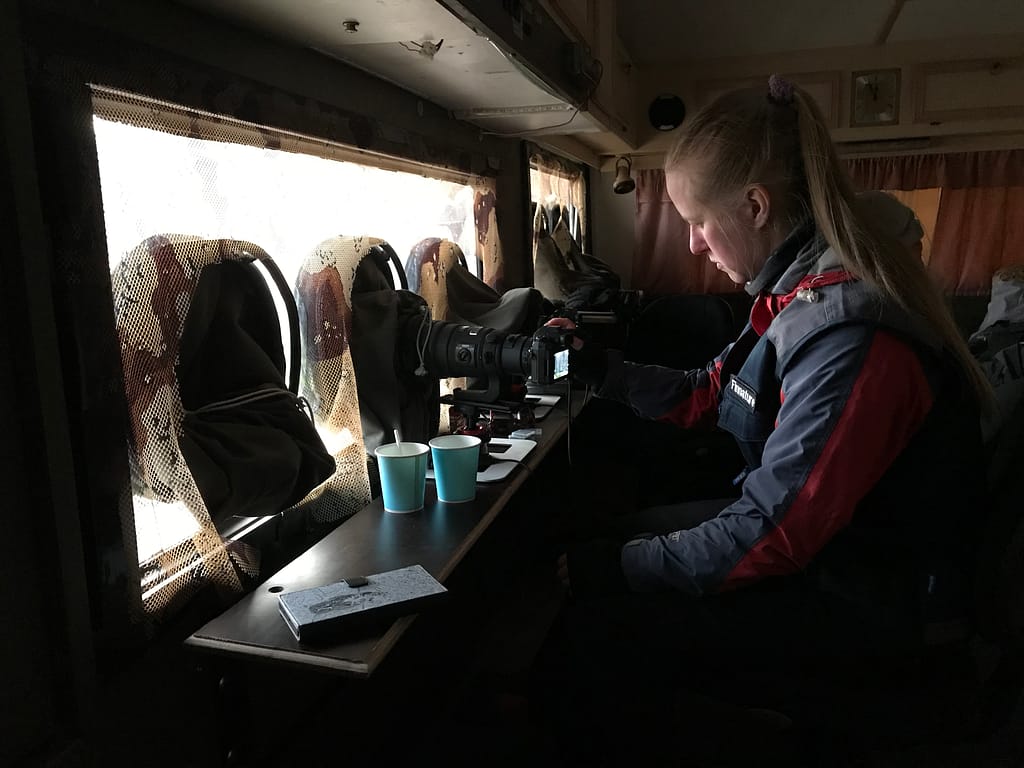
If the plan is to spend the entire day outside, it is important to know whether there is any chance to warm up in between.
Standing still in cold conditions is completely different from moving.
You may walk 20 minutes to reach a location and feel perfectly warm or even hot. Then you stop. Movement ends. The body stops producing heat. And that is when the real test begins.
The importance of the waiting I describe in Behind a Single Image Are Hours Spent in the Field. Wildlife photography often means long periods of waiting. In winter, that waiting requires proper protection.
When You Are Cold, You Stop Seeing
There is one important thing many people do not realise before they experience it.
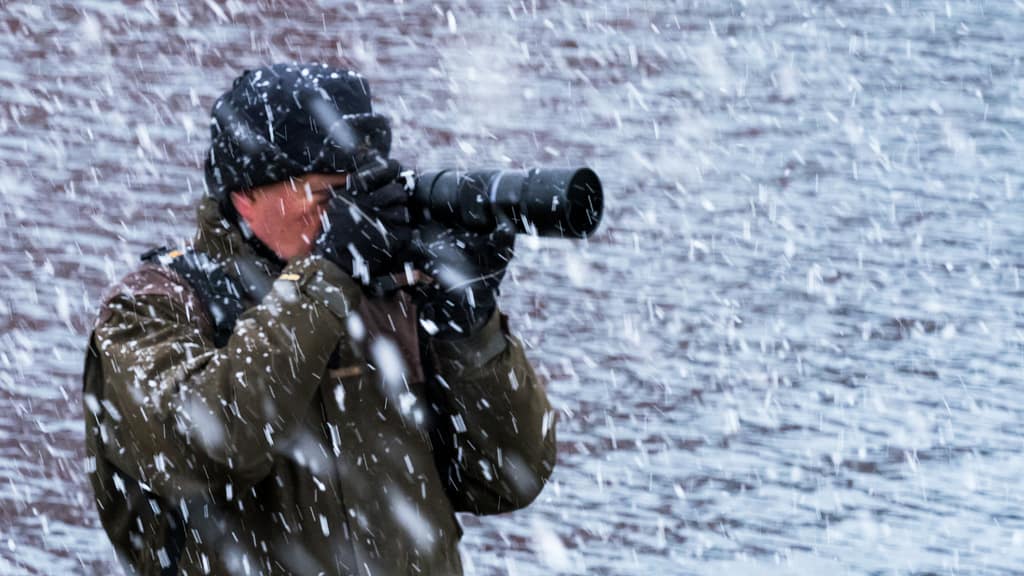
When you are cold, you cannot concentrate.
At first it is small. Fingers feel stiff. Shoulders tense. Slowly your attention shifts away from the scene in front of you. You are no longer thinking about background, light or behaviour. You are thinking about your fingers.
Wildlife photography demands presence. Small changes matter — a slight turn of the head, a moment of eye contact, a soft change in winter light. These are easy to miss when your body is trying to stay warm.
I have learned that investing in warmth is not about comfort. It is about staying mentally present.
If you are warm enough, you can wait.
If you can wait, you can observe.
And if you can observe, you can photograph.
Layering Is Not a Theory — It Is Practical Reality
Many photographers tell me they truly understood layering only after coming north.
Everything starts with wool. Merino (use only mulesing-free merino wool!), alpaca, proper thermal wool. Wool keeps you warm and moves moisture away from the skin. In very cold conditions, one thin base layer is rarely enough. I often wear two or three.
Thin does not mean warm even it’s wool.
On very cold days, I add a thicker wool layer on top of the first one. The key is air. Warmth needs space between layers. If clothing becomes too tight, insulation stops working. Too many tight layers also restrict movement.
You need warmth, but you also need to be able to operate a camera.
Insulation for Standing Still
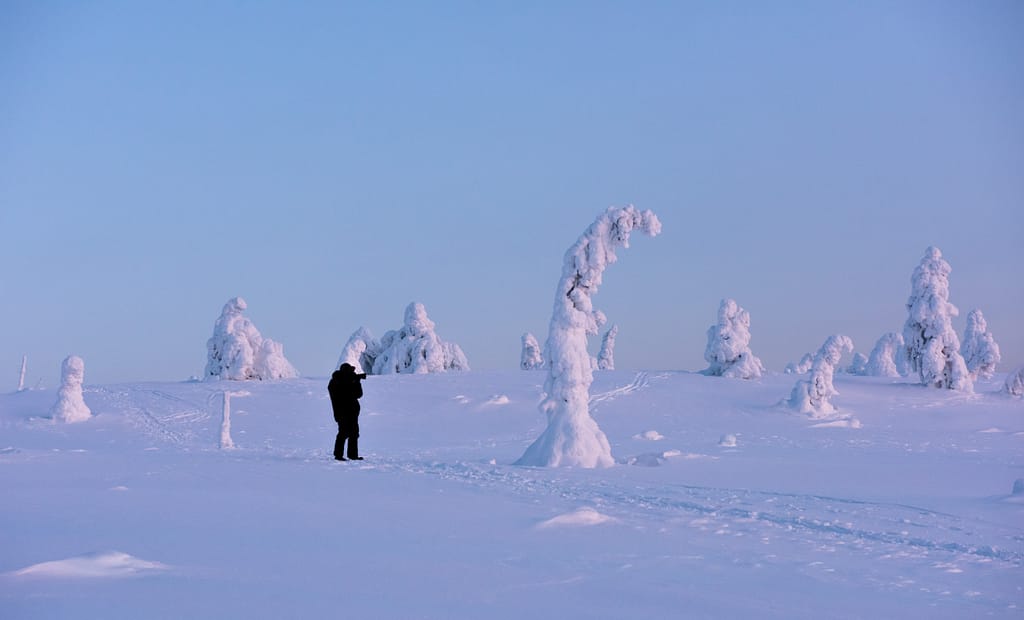
Winter sports clothing is usually designed for movement. Ski trousers sold as “winter trousers” in many countries are not built for waiting still in snow for hours.
In very cold weather, I often wear two insulated trousers (plus my wool base layers). First a warm layer, then a windproof outer layer that allows me to sit or kneel in snow without hesitation. In extreme cold, down trousers are excellent, but they might require wind protection.
The same applies to the upper body. Wool base layers. A warm wool sweater. On very cold days, a thin down jacket. On top of that, a thicker down jacket with a protective shell.
It sounds excessive, but wildlife photography in winter is often about patience rather than movement.
Head, Neck and Wind Protection
Heat escapes quickly from the head. A proper warm hat matters more than many realise.
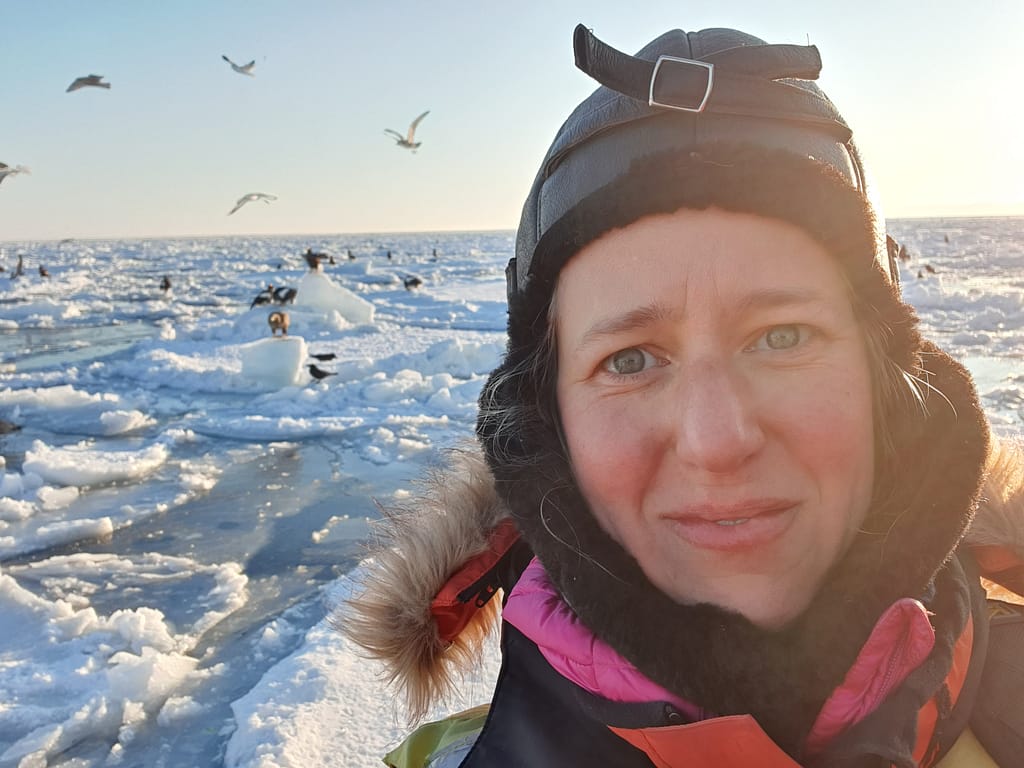
In windy conditions, I often use my father’s old leather “pilot hat”. It is not elegant, but it blocks wind and protects the neck.
A proper scarf or neck warmer that can be pulled over the face also helps significantly. Sometimes wind protection matters more than insulation itself.
Boots: The Difference Between Ending Early and Staying All Day
Cold feet will end your session faster than almost anything.
Thin soles allow cold to enter quickly. I prefer winter boots with thick insulation and removable inner liners. I personally use Sorel winter boots because the inner liner can be removed and dried overnight. On longer trips, moisture slowly builds up inside boots, and damp boots are never warm.
Removable liners make a real difference over several days.
Disposable toe warmers inside boots are also very effective, especially when sitting in hides with cold floors.
Heated Layers — Practical Tools, Not Luxury
In very cold conditions and in unheated hides, I use a heated vest.
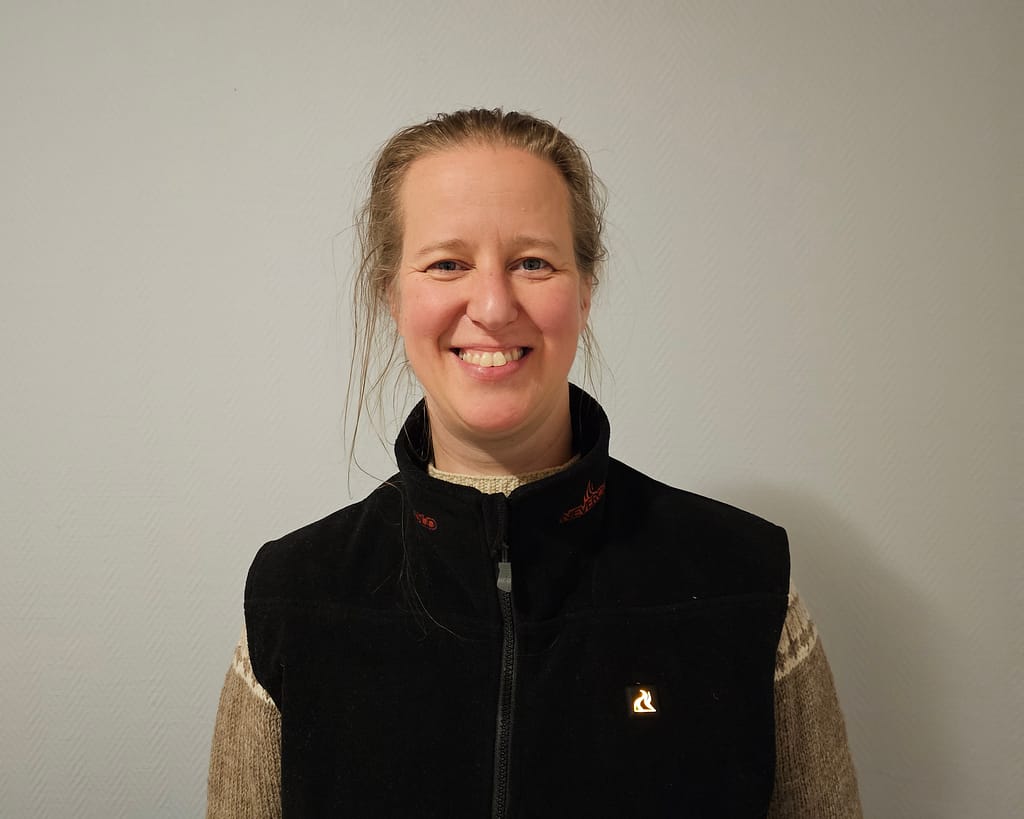
I use a Finnish Nevercold Tundra heated vest (collaboration). The heating elements are well positioned and the temperature is adjustable. With two batteries, I comfortably manage a full day.
The vest also means I do not need quite as many heavy insulation layers on my upper body. That makes movement easier and less restrictive, which matters when adjusting position or handling equipment.
When a day in the field includes both movement and long periods of waiting, a heated vest works well. Walking keeps you warm, and the electric heating becomes useful only once you stop and begin to photograph.
When the core stays warm, hands and feet stay warmer too.
For gloves, control is everything.
Very thick gloves may be warm, but if I cannot feel the camera buttons, they do not work for me. I prefer thin heated gloves and add windproof mittens over them.
I use Nevercold Ontario heated gloves, where the heating element runs around the fingers rather than only on the back of the hand. On top of those, I use shell mittens from The Heat Company, which can be opened easily. Only the fingers needed for adjustments come out. The others stay protected.
This system allows me to operate the camera properly while still keeping warmth.
Disposable hand warmers are a simple alternative and can work very well — not only in gloves, but also placed in inner pockets to keep the body core warm.
From Nevercold webshop you can get 20% discount with code FINNATURE20 until 31.6.2026.
Warmth Supports Good Decisions
There is another connection that is easy to overlook.
When you are physically uncomfortable, your decision-making changes. You rush compositions. You accept weaker backgrounds. You stop paying attention to subtle light.
In winter conditions, light is often soft and delicate. Snow reflects brightness in complex ways. If you are interested in how I approach winter exposure and light decisions, I write more about that in Best Camera Settings for Wildlife Photography in Snow — What I Actually Pay Attention to in Light and Exposure.
But none of those technical considerations matter if you cannot think clearly.
Warmth supports patience.
Patience supports observation.
Observation supports better photographs.
Do Not Panic
If you are coming north for the first time, do not panic.
Layering works. Disposable warmers work. Planning works.
Winter wildlife photography is not about suffering. It is about understanding that standing still in cold requires a different mindset than active outdoor sports.
I photograph in these conditions year after year and have built my system over time. If you come once in your life, prepare realistically. Think about how easily you get cold. Plan accordingly.
Winter rewards patience — but only if you are warm enough to wait.


Leave a Reply