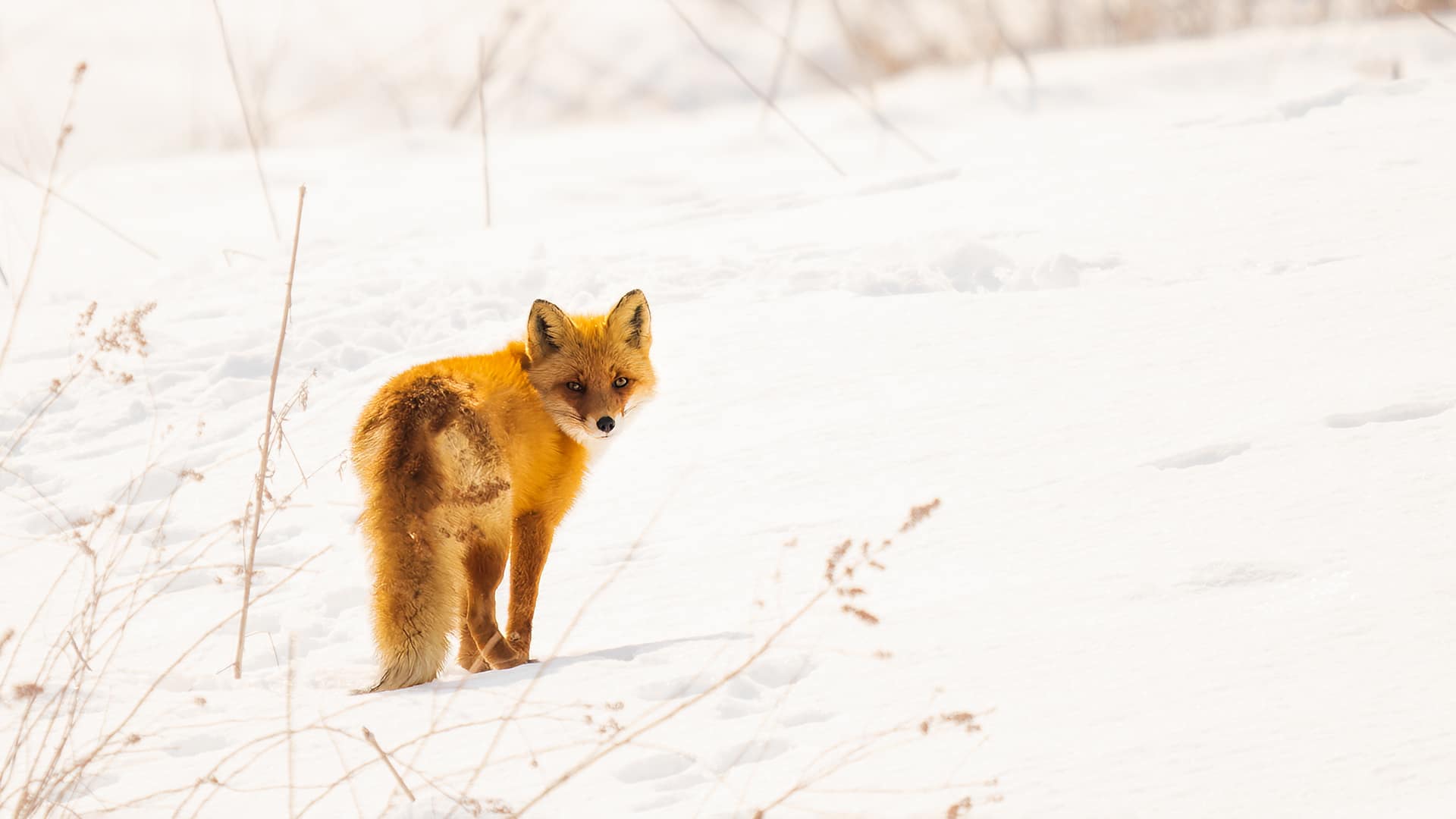
Photographing wildlife in snow changes everything about how light behaves. Snow reflects, simplifies and amplifies brightness in a way that few other environments do. Over the years, I’ve learned that winter wildlife photography is less about finding the “right” camera settings — and more about understanding exposure.
Why Snow Is Both Difficult and Beautiful as a Background
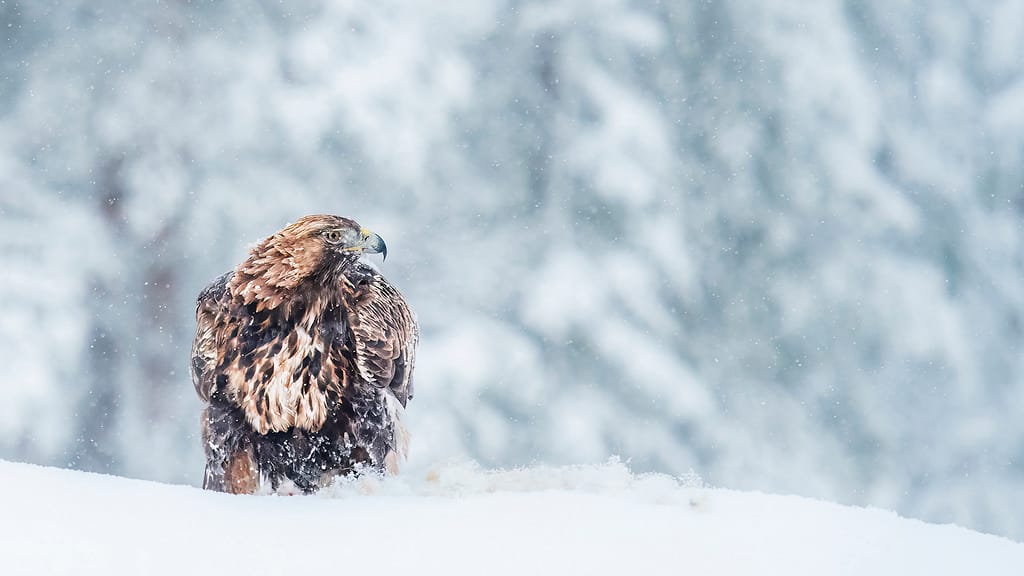
Snow is a surprisingly demanding background — but it also offers remarkable possibilities.
It simplifies a scene. Snow hides branches, rocks and uneven textures that might otherwise create visual noise. In wildlife photography, this can be incredibly valuable. A snowy background often makes a subject stand out with clarity and calmness that is difficult to achieve in other seasons.
But snow and sunlight are a difficult combination. Snow burns out easily. The brighter the day, the smaller your margin for error becomes.
The Real Problem With Snow and Exposure
I am often asked about the best camera settings for wildlife photography in snow. The honest answer is that there is no single correct setting.
Many photographers recommend simply following the exposure meter. But do you know exactly what kind of metering your camera is using? Matrix? Centre-weighted? Spot? If you don’t fully understand how your camera measures light, the exposure meter alone can be misleading.
The real challenge with snow is that you want to expose the subject correctly — not the background.
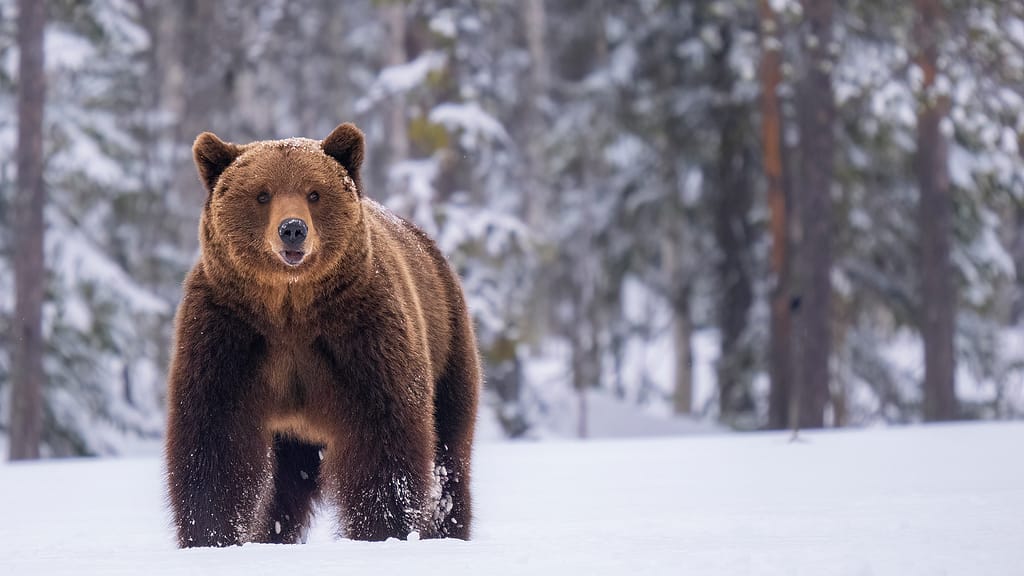
Imagine a bird flying low against white snow. Then it rises slightly and suddenly the background becomes a dark spruce forest. The light falling on the bird has not changed. But your camera’s exposure meter may interpret the scene very differently because the overall frame brightness has shifted.
This is why snow often confuses camera metering systems. The subject may remain perfectly lit while the meter suggests drastic changes.
Exposing the Subject Without Blowing Out the Snow
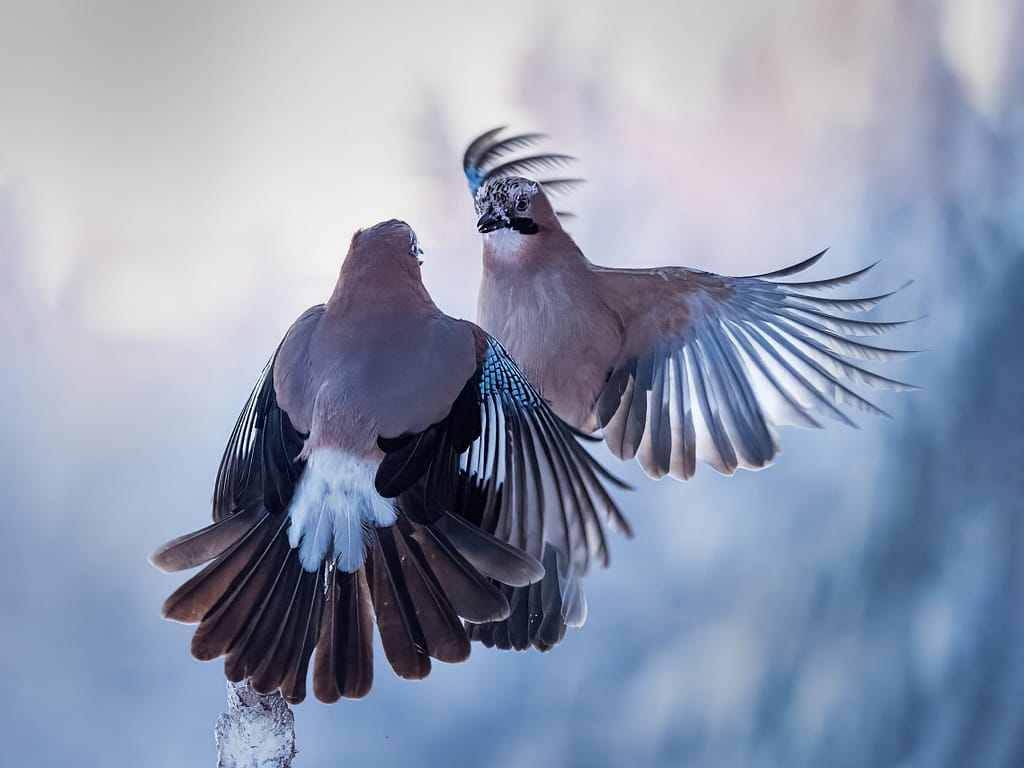
The goal is simple in theory: expose the subject correctly while avoiding blown-out highlights in the snow.
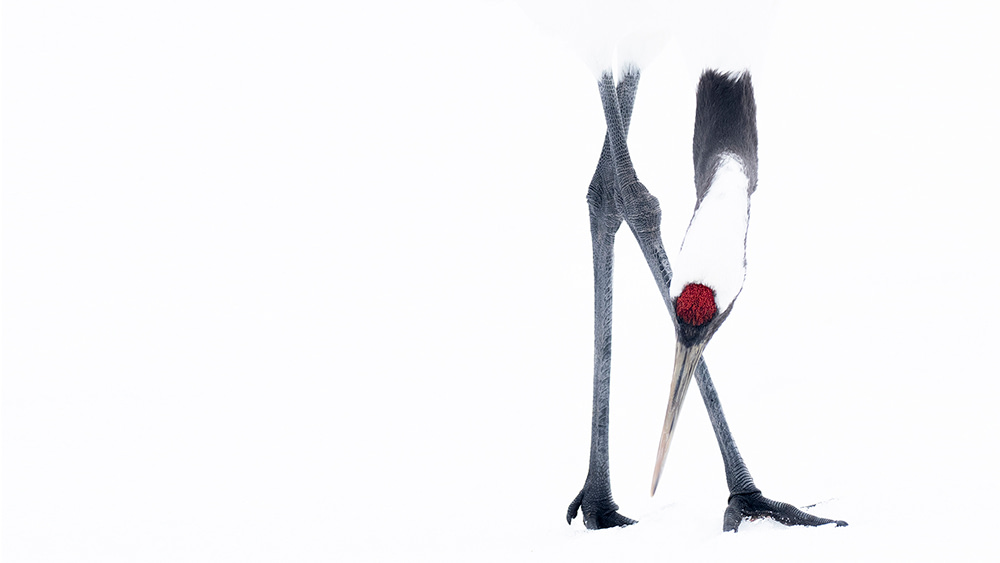
Unless, of course, you intentionally want to overexpose the snow for artistic effect — which can create beautiful high-key wildlife images. But that is a creative decision, not an accident.
Unintentional highlight clipping in snow is one of the most common mistakes in winter wildlife photography. Once the highlights are completely blown, there is no detail left to recover.
Why I Trust the Histogram More Than the Exposure Meter
In snowy conditions, I rely heavily on the histogram.
While shooting, I rarely pay attention to the exposure meter itself. Instead, I monitor the histogram to make sure the highlights are not clipped and the shadows are not blocked. The histogram gives a clearer, more objective picture of what is actually happening in the file.
On my OM SYSTEM camera, the histogram is small enough to keep visible while shooting, which makes this workflow practical in fast wildlife situations. I understand that not all camera brands display it as conveniently.
At the beginning of each session, I establish my base exposure according to the light conditions. From there, I adjust quickly as needed — but the histogram remains my reference point.
Shooting RAW in Winter Wildlife Photography
I almost always shoot in RAW, as it gives me more flexibility later in post-processing.
RAW files provide significantly more flexibility than JPEG, especially when recovering highlights or adjusting exposure afterwards. Modern editing software can rescue surprisingly imperfect exposures.
Still, post-processing should not be a replacement for careful exposure in the field. Avoiding blown highlights in the snow remains essential. I pay close attention to the right side of the histogram to ensure I am not losing detail unintentionally.
Overexposing snow deliberately can open up interesting artistic possibilities. That approach deserves a discussion of its own.
Exposure in snow is only one part of winter photography. I recently wrote more broadly about working in freezing conditions in Cold Weather Wildlife Photography — What Actually Matters in Freezing Conditions.


Leave a Reply