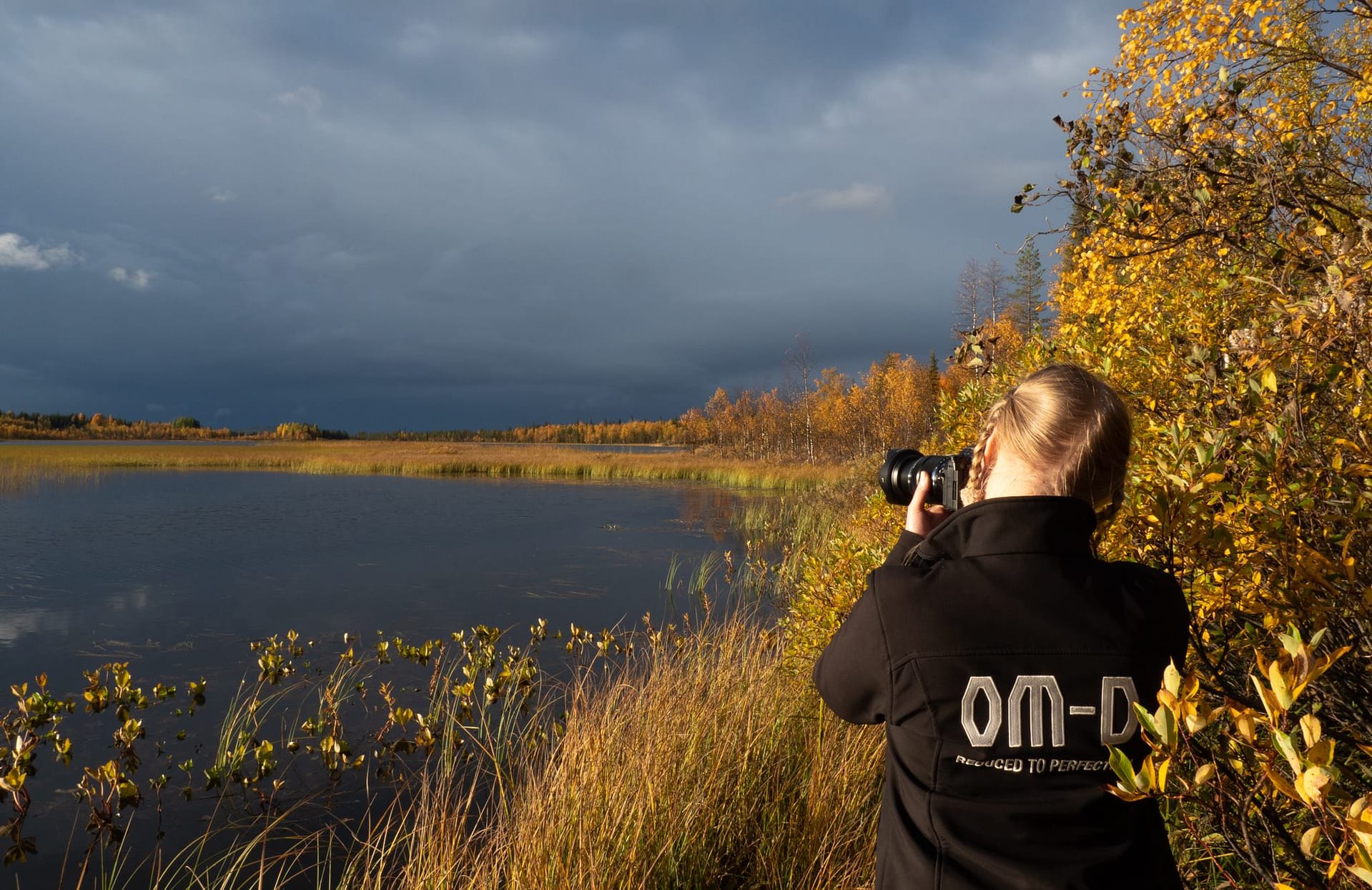
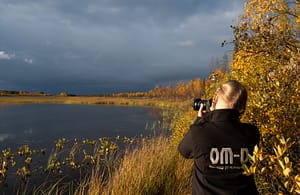
A few weeks ago I sat in a hide beside a small flooded meadow in northern Finland. The light was almost perfect.
The sun had just risen above the horizon. There was no wind at all. The water was completely still and reflections covered the entire wetland. Everything looked exactly the way wildlife photographers hope it will look when the alarm rings at three in the morning.
And yet, for long periods, there were almost no birds in front of us.
We were photographing ruffs during our annual Ruff Break tour. The conditions looked excellent, but the birds simply were not active during the best early light. They arrived later. We still photographed many beautiful males during the trip. But those magical moments where perfect behaviour, perfect light, and perfect positioning all happen together remained surprisingly rare during those mornings.
That is wildlife photography.

What Many People Imagine Wildlife Photography Looks Like
I think many people outside the wildlife photography world imagine that experienced photographers succeed almost constantly. They see the finished images and naturally assume that finding those moments is simply part of everyday life.
That is probably why many beginners head into the forest expecting wildlife photography to be a matter of walking with a camera and waiting for something interesting to appear. When their own results look very different, it is easy to wonder what everyone else is doing differently.
In reality, even in excellent locations there are long periods when nothing happens. Birds disappear just as the light becomes beautiful. Weather conditions look perfect, but animal behaviour remains surprisingly slow. Occasionally everything comes together, but far more often it does not. And experience changes this much less than most people expect. Behind many successful photographs lies far more patience and hard work than most people ever see.
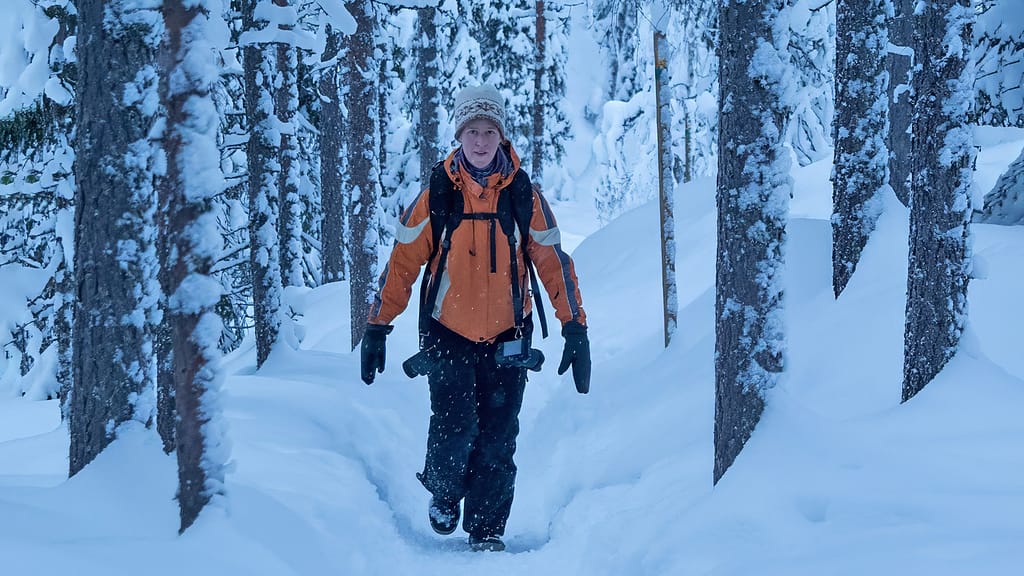
Social Media Only Shows the Final Moments
Social media often reinforces this misunderstanding. Most photographs appear without any context, and many videos make it look as if remarkable wildlife encounters simply happen while someone is quietly walking through the forest with a camera.
Some creators even encourage that impression because it makes for a more exciting story and brings far more likes and publicity. A short reel showing a photographer strolling through the woods before suddenly encountering a wolf, then a bear, and later another spectacular subject attracts far more attention than explaining that those moments may have taken days—or even years—of preparation, scouting, and waiting.
In reality quite often the images were made from commercial hides, where much of the fieldwork had already been done long before the photographer arrived. There is nothing wrong with hide photography, of course. What is problematic is deliberately creating the impression that extraordinary wildlife encounters happened purely by chance.
The reality is usually much less dramatic. The photographs people remember are often the result of countless quiet hours when nothing happened at all.

Experience Does Not Control Nature
Years in the field help us understand animal behaviour, recognise opportunities, and anticipate what might happen next. But experience does not control nature.
Nature does not perform on schedule.
Black grouse photography is a good example. During a lek there may be birds displaying and fighting all around you. It can be tempting to follow every burst of action. But experience teaches you that not every fight will become a memorable photograph.
If the morning light creates beautiful backlit conditions in one particular part of the lek, that is often where it pays to keep your attention.You may watch several exciting fights happen elsewhere, knowing the light is not right. Then, sooner or later, two birds move into that perfect backlight, and suddenly everything comes together.
Experience cannot make the birds choose the right place. It simply helps you recognise where the best opportunity is most likely to appear—and gives you the patience to wait for it.

Patience Is Part of the Skill
I sometimes think one of the biggest differences between experienced wildlife photographers and beginners is not technical skill or camera equipment. It is patience with uncertainty.
Experienced photographers usually understand that quiet days are normal. They understand that unsuccessful sessions are part of the process, not evidence that something has gone wrong. They also know that patience is not just about waiting—it is about staying mentally engaged. After long periods when nothing happens, it is tempting to look at your phone or browse through the images you’ve already taken. But the best moments often last only a few seconds, and photographers who remain focused are far more likely to capture them.
Wildlife photography often rewards patience more than speed.
Why the Best Moments Still Matter
And honestly, I think this unpredictability is part of what keeps wildlife photography meaningful after all these years.
If every session produced perfect images, the experience would slowly become routine. The successful moments would lose part of their weight. But because nature remains uncontrollable, the rare moments where everything finally aligns still feel genuinely exciting.
Sometimes you sit for hours with almost nothing happening.
Then suddenly the light becomes perfect, two birds start fighting directly in front of the hide, reflections appear on completely still water, and for a few seconds everything comes together exactly the way you imagined.
Those moments never feel ordinary.
Perhaps that is precisely because they are never guaranteed.
Internal link suggestions:



Leave a Reply