
By September, the nights are properly dark again in Finland.
For wildlife photography, this changes quite a lot. Summer nights in a hide can be long, but there is light for most of the night. In autumn, the usable photography time becomes shorter almost every week.
At the same time, bears, wolves and wolverines are changing too.
Winter is approaching. Bears are feeding heavily before hibernation, while wolves and wolverines are developing their thicker winter coats.
For me, this makes autumn a particularly interesting time to photograph Finland’s large mammals.
There is still enough daylight to work with, the landscape has autumn colour, and the animals themselves are beginning to look very different from summer.
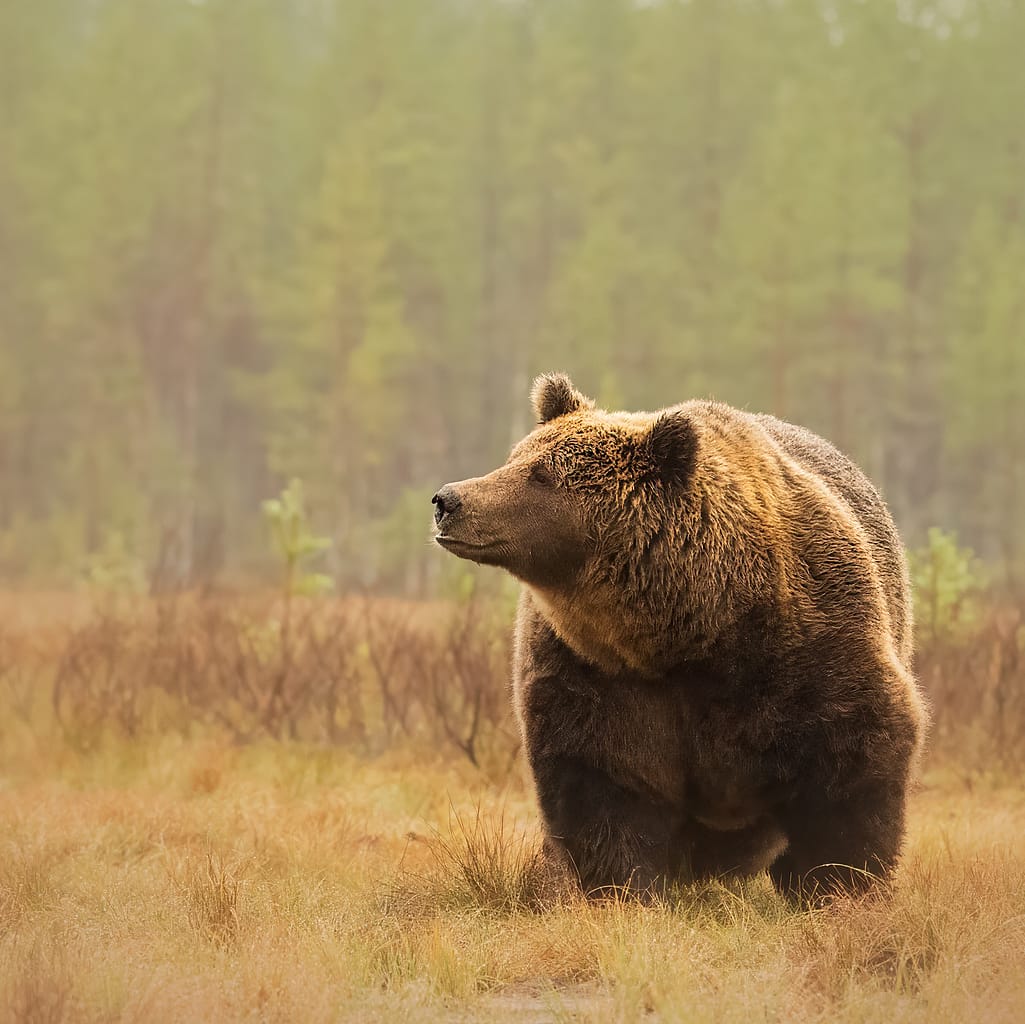
Bears preparing for hibernation
Bear photography in Finland normally continues from April until October.
By autumn, the bright summer nights are already behind us. The small cubs and long nights of summer photography belong to an earlier part of the season.
Now the bears have another priority. They need to prepare for hibernation.
During autumn, bears feed more and continue gaining weight. The difference can be quite noticeable. A bear that already looked large in summer can look considerably heavier towards the end of the season.
For photography, this makes September and early October interesting.
The bears do not all disappear for winter at the same time. Females and younger bears normally enter their winter dens first. As the season progresses, the animals still active are increasingly the large males.
If I want to photograph a really big bear, I find the period around late September and early October particularly interesting.
By then, there may be fewer bears moving around, but the ones that remain can be impressive.
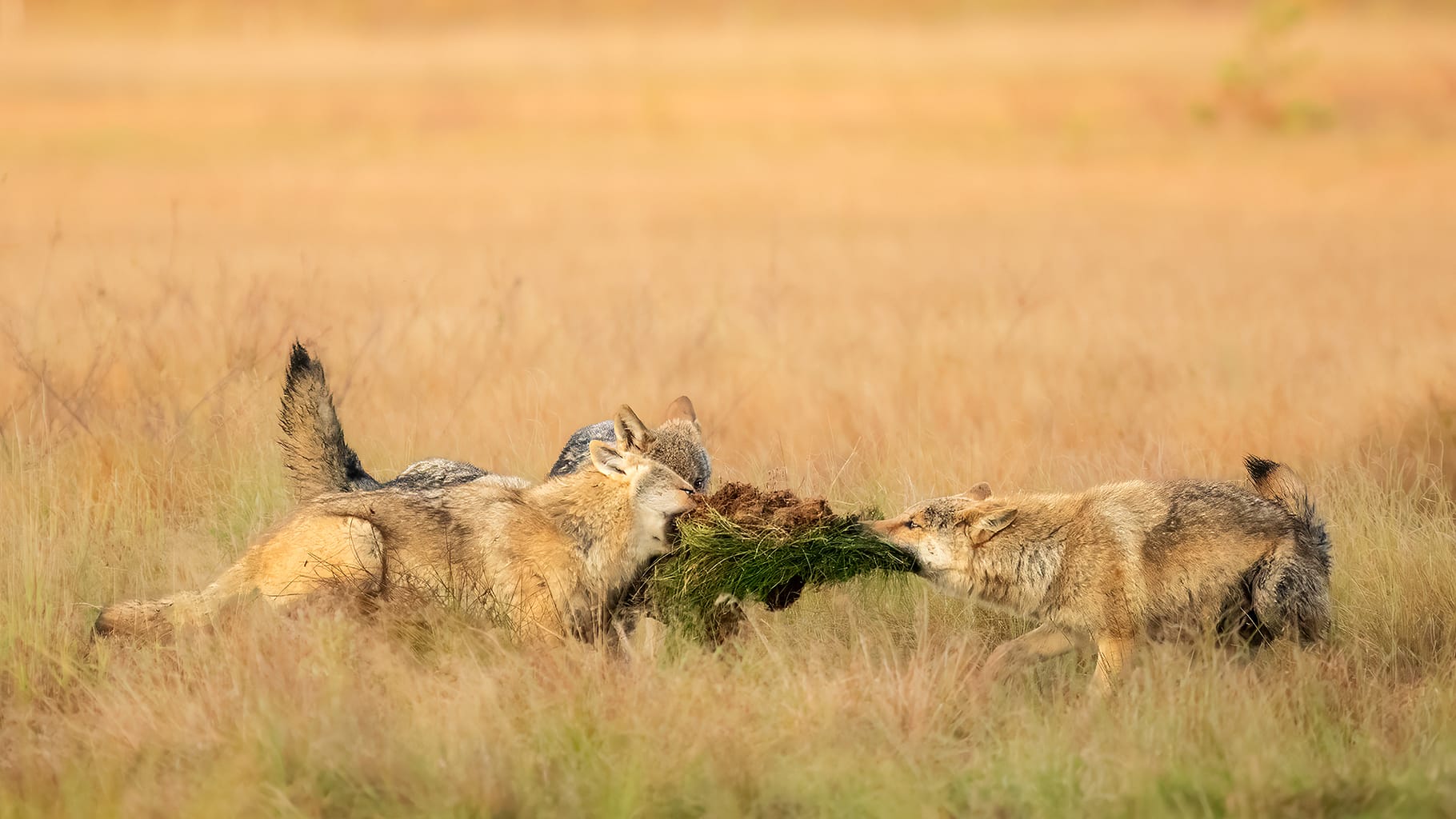
Wolves before winter
Wolves remain active throughout the year, but being active and being photographable are two different things.
This becomes very clear during the Finnish winter.
Wolves often move during the darker parts of the day. In midwinter, darkness at these latitudes can last for more than 20 hours. That leaves a relatively small window when a wolf and usable photography light happen to be in the same place at the same time.
Autumn gives us more possibilities.
There is still considerably more daylight than in winter, and while the bears are awake there is also competition for food.
A wolf cannot necessarily wait until the quiet hours of the night before approaching. Bears are still moving around the same feeding areas, and this competition can bring wolves into view earlier.
Of course, wolves remain wolves. There are no guarantees that they will arrive when the light is good.
But compared with the darkest winter months, autumn gives me more hours when photography is realistically possible.

Wolves Begin to Look Like Wolves Again
There is another reason I like photographing wolves at this time of year.
They simply look different.
As winter approaches, their coats become much thicker. They also gain some weight.
Compared with the thinner appearance of a summer wolf, an autumn wolf already begins to have the heavy coat that I associate with winter.
Personally, I find them particularly photogenic at this stage.
The surroundings can still have autumn colour, but the animal already looks ready for the season ahead.
It is another one of those combinations that only exists for a relatively short period.
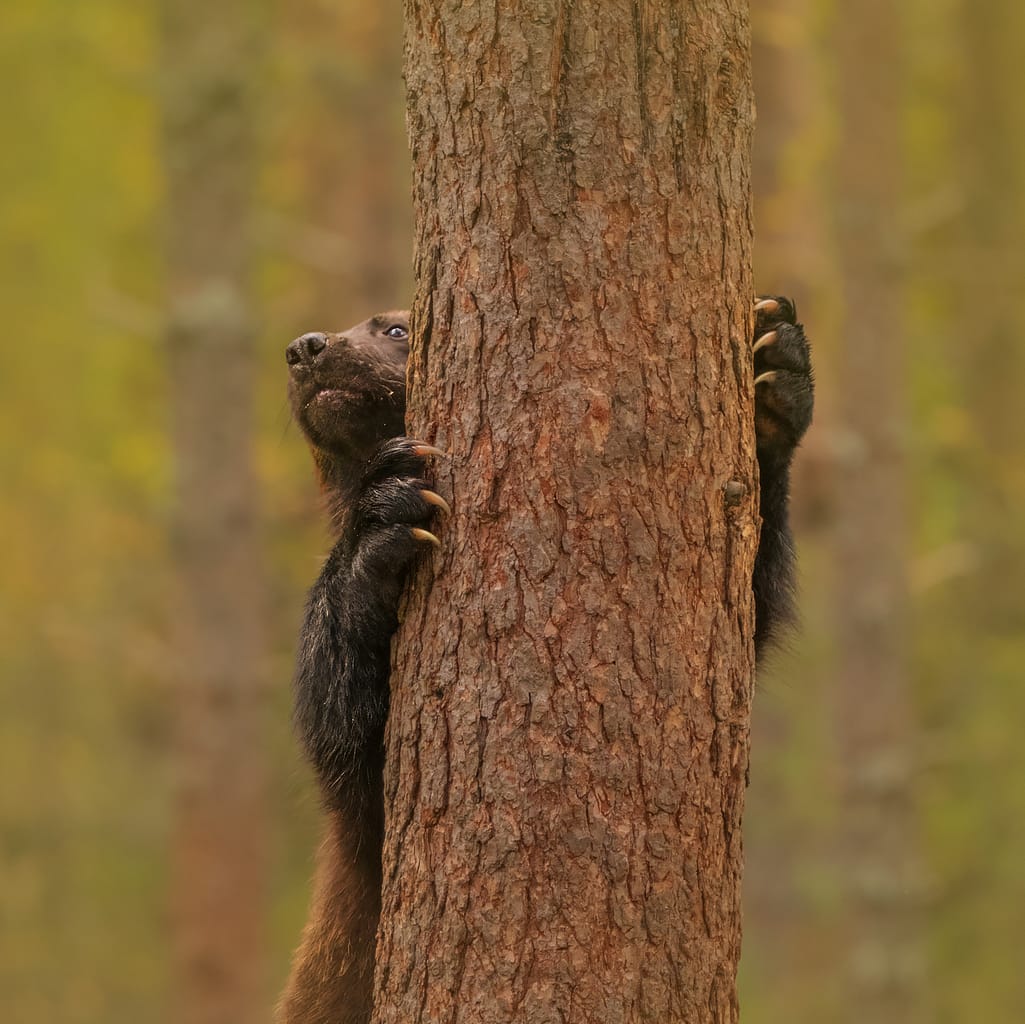
Wolverines in autumn
Wolverines are active throughout the year.
From a photographer’s perspective, however, they have much the same problem as wolves during winter: there are simply so many hours of darkness.
Autumn gives us a better balance.
The nights are getting longer, but there is still enough daylight to have a realistic possibility of photographing a wolverine from a hide.
And there can be another advantage at this time of year.
The young wolverines have grown.
By autumn, the youngsters are already around adult size. They may also start visiting feeding sites.
This means that, in terms of numbers, autumn can be one of the most interesting periods at a wolverine site.
For photography, they are also very different animals from bears. Wolverines are often on the move. They can appear suddenly and disappear just as quickly, so one need to stay alert. Once they are there, following them through the trees and vegetation can be just as challenging.
That is part of their character. They are fascinating animals to photograph, always keeping the photographer alert and ready to react.

Autumn colours and darker animals
There is also the landscape itself.
Bears, wolves and especially wolverines can be quite dark subjects. In autumn, yellow and reddish vegetation can give them a very different background from the green of summer or the white of winter.
The season also brings more mist and rain.
I don’t see these conditions as a problem. Quite often they are what make an autumn photograph look like autumn.
A wet bear in the rain, a wolf against yellow vegetation or a dark wolverine moving through autumn colours gives me something that I cannot photograph during the summer season.
The light may be more difficult, but the atmosphere can be better.

Shorter evenings in the Mammal hides
The autumn season also changes the practical side of photography.
During summer, mammal photography can mean spending the entire night in a hide. Finland’s summer nights are light enough that there can be photography opportunities through much of the night.
Autumn is different.
The evenings become dark, and eventually there simply isn’t enough light to continue photographing.
In practice, the overnight hide gradually becomes more of an evening hide.
For some photographers, this is actually an advantage. Not everyone wants to spend an entire night in a photography hide.
In autumn, once it becomes too dark to photograph, I can return to the accommodation and sleep in a proper bed. There is little reason to remain in the hide when the camera cannot see much more than I can.This can make an autumn mammal photography trip surprisingly comfortable. The hours available for photography are shorter, but the nights do not necessarily have to be spent in a hide. For someone looking for a slightly easier and more relaxed experience, autumn can be a very good time.
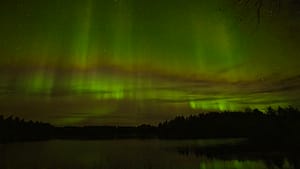
Of course, there is one possible problem. If the northern lights appear, a comfortable night in bed can quickly turn into another night outside with the camera.
The sessions are shorter, but that does not necessarily make the photography easier.
Every week we lose more light.

A season of change
A season of change
Autumn mammal photography in Finland is very much about timing.
The change can happen surprisingly quickly. In September, there can still be plenty of daylight, but week by week the useful photography hours become shorter. At the same time, the landscape changes from green to yellow and finally towards the more muted colours of late autumn.
Weather plays a big part in what kind of autumn I get to photograph. A rainy week can mean very little light, but rain also deepens the autumn colours and brings its own atmosphere. A clear week can be completely different, with low autumn sunlight and yellow leaves glowing in the background.
There is no way to know which one it will be.
And by October, I am also quietly hoping for something else: the first snow. It does not always come, and it may disappear almost as quickly as it arrived. But when autumn colours and fresh snow meet for a short time, the landscape can offer something that belongs only to this brief moment between autumn and winter.
Read More
- Wildlife Photography in Finland in Autumn
- Autumn Bird Photography in Finland
- Testing a New Wolverine Photography Hide in Eastern Finland
- Best Time to See and Photograph Bears in Finland
- Summer Wildlife Photography in Finland: Bears, Wolverines and Wolves
- What To Consider Before Booking A Wildlife Photography Hide



Leave a Reply